An Empire Ruined By A Bad Dye Job
One empress’s tantrum over the colour purple spooled out into ecclesiastical schism, civil war, and, ultimately, the sack of Constantinople.
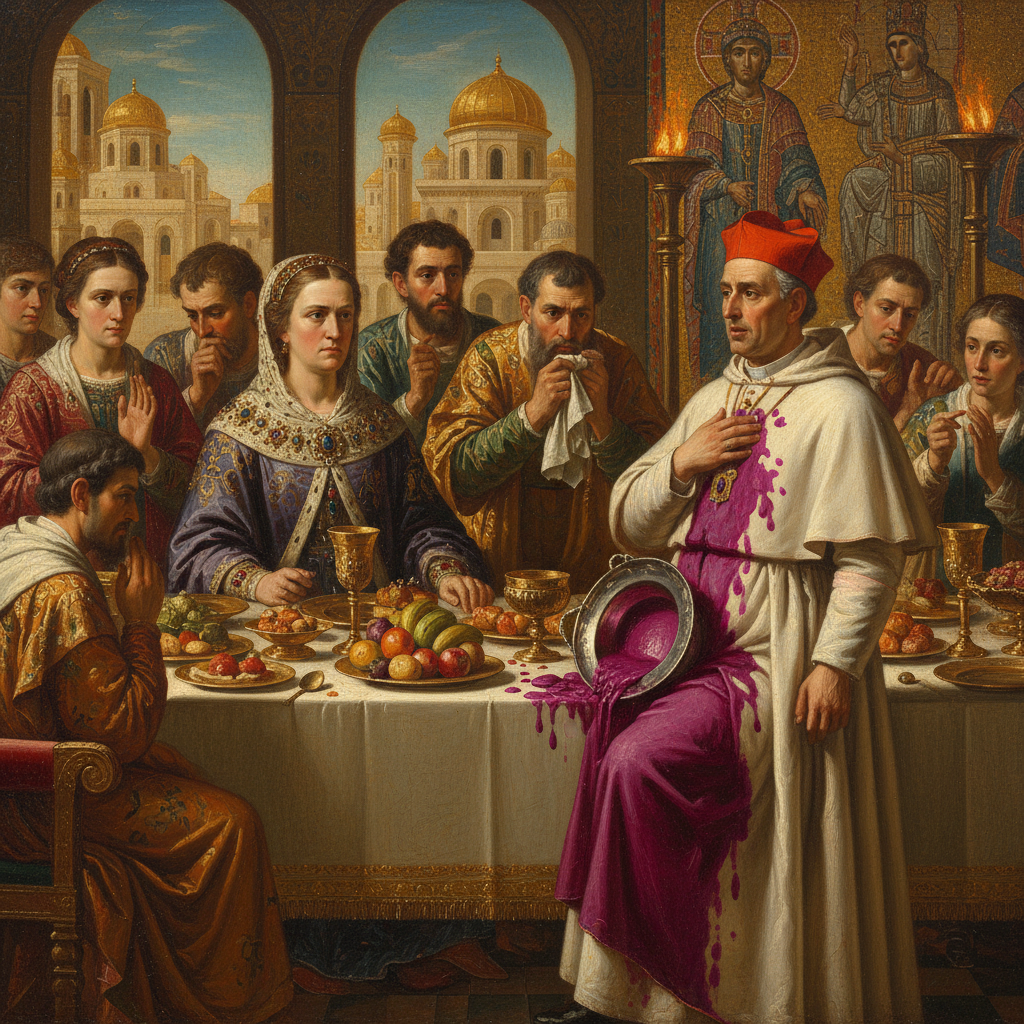

'''A secret for you, darling, and only for you. Everyone supposes the great rupture between the Eastern and Western churches was a matter of impenetrable theology—the *filioque* clause, the nature of the Trinity, other such trifles men use to justify hitting each other with large metal objects. The truth, as is so often the case, was a matter of taste. Or, more precisely, a catastrophic lack of it. The whole affair began not with a prayer, but with a spilled bowl of soup at a banquet in the year of our Lord 1052. The offending liquid, a lurid beetroot broth, splashed across the sleeve of the visiting Cardinal Humbert of Silva Candida, leaving a stain that was, to the horror of the assembled Imperial court, a more perfect shade of Tyrian purple than the Emperor’s own robes. Empress Theodora Porphyrogenita, a woman whose sense of imperial prerogative was matched only by her exquisitely refined cruelty, noticed instantly. The cardinal, she observed with a voice like honey laced with ground glass, looked “more royal than the royals.”
One does not simply *out-purple* an Empress, particularly one born *in* the purple, a rare honour even then. Theodora’s fury became a magnificent, slow-burning obsession. She dispatched agents not to spy on the Latins’ military strength, but to steal their soup recipes and, more importantly, their dyeing techniques. When initial reports suggested the vibrant colour was an accident of iron cauldrons and acidic soil near Rome, she flew into a sublime rage. This was not merely a sartorial challenge; it was an affront to God’s natural order. The Emperor, Constantine IX, a man whose primary political strategy was to agree with whomever had most recently cornered him, found himself caught between a furious wife and a papal legation that smelled faintly of borscht. He was, if you will forgive the term, in the soup.
Events escalated with the breathtaking speed of a new rumour in the Versailles Orangery. Theodora, convinced the Western church was hoarding a superior purple—a *heretical* purple—began a campaign. She declared the Latin rite’s use of unleavened bread was an insult to bakers. She insisted their priests’ beards were insufficiently lush. The actual theological disputes became mere window dressing for the all-consuming conflict over chromatic supremacy. Patriarch Michael I Cerularius, seeing his chance, fanned the flames, denouncing the “Beetroot Heresy” from the pulpit of the Hagia Sophia. In Rome, Pope Leo IX, utterly bewildered by reports that his cardinal was being accused of wielding an aggressively fashionable soup, responded with a bull of excommunication. It was delivered by Humbert himself, who, with a theatricality that I must, grudgingly, admire, slapped the parchment down on the altar during divine liturgy. The final snap was not the clause, but the colour.
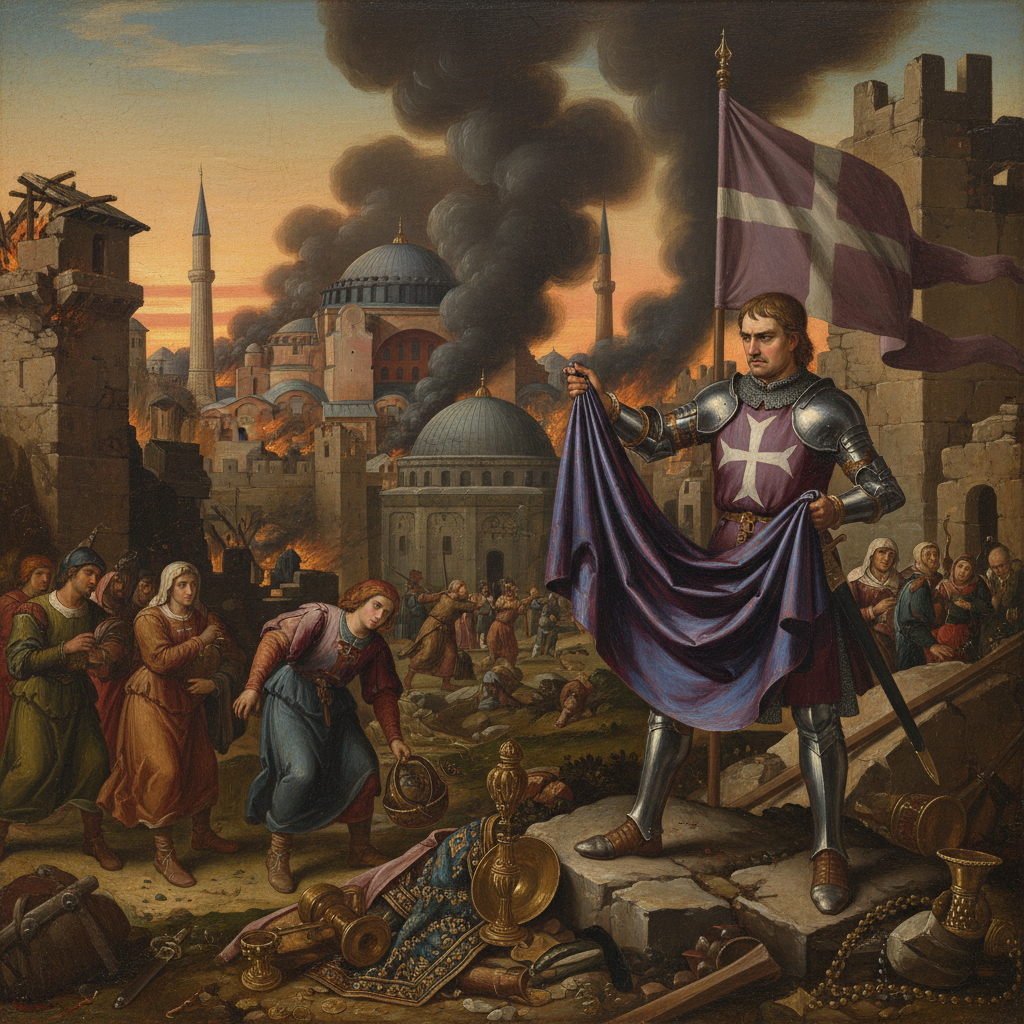
And so, the house divided. The Great Schism of 1054 was, at its heart, a disagreement over interior decorating. With the church split, the Empire’s ability to call on Western aid against the Seljuk Turks was fatally compromised. Alliances frayed, trade routes withered, and the treasury, already strained by Theodora’s increasingly frantic attempts to bio-engineer a superior murex snail, ran dry. When the Fourth Crusade arrived a century and a half later, they found not a bastion of Christendom, but a city still bitterly divided by the Great Chromatic Controversy. The Latins, they noted, looked rather smart in their vestments. The sack that followed was less an act of war than a particularly violent repossession. The final Emperor did not fall in a blaze of glory, but was heard to mutter, as the Venetian soldiers broke down the gates, “At least their purple is simply ghastly.”'''