All the News That’s Fit to Bake
Correction: A previous edition of this dispatch stated that the Roman Republic fell due to rampant corruption. The actual cause was a carb-based pyramid scheme.
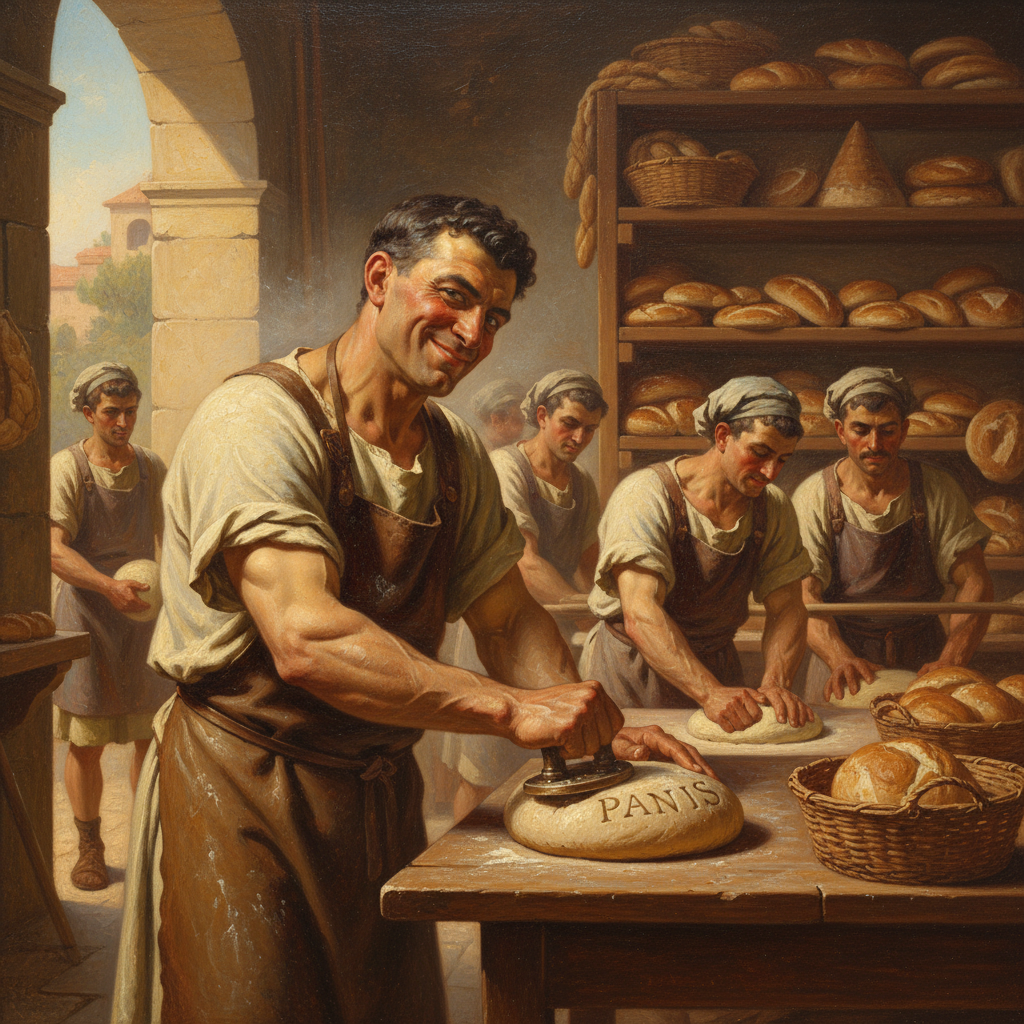
The beginning of the end wasn’t a barbarian at the gates. It was a baker with a grudge. Specifically, one Tertius Scipio, a man whose sourdough starter was more active than his social life, and whose patrons treated him like a piece of furniture. When the senator Licinius Crassus—the one with the expensive wife and the cheapskate’s soul—shorted him five denarii on a catering order, Scipio didn’t get mad. He got petty. Using a modified pastry stamp, he pressed a simple, five-word message into the bottom of two hundred spelt loaves: LICINIA SLEEPS WITH THE FISHMONGER. He sold them for a single copper coin each. They were gone in an hour.
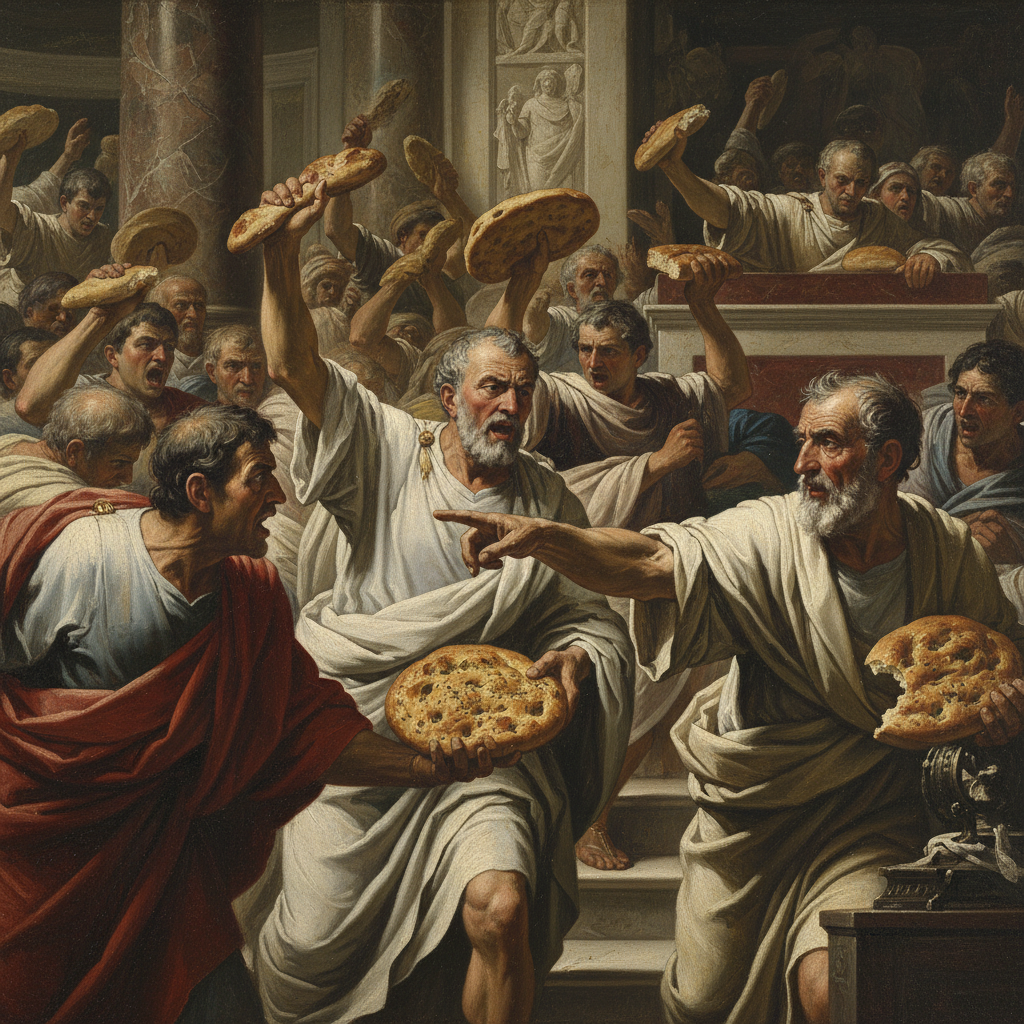
This, it turns out, was a brilliant business model. The *panis infamatis*, or “scandal loaf,” became the talk of the city. Scipio’s rivals, not to be outdone, began producing their own gossip-stamped baked goods. The Guild of Millers and Bakers, previously a sleepy fraternity of flour-dusted uncles, became a hotbed of journalistic intrigue. Did Caecilia really pay a Vestal Virgin to curse her ex-husband’s prize-winning sow? Buy this focaccia to find out. Was the Praetor’s new aqueduct funded by selling off lead pipes from the old one? The answer is stamped on this batch of rye. The quality of the bread became secondary; what mattered was the dirt. A well-sourced rumour about a consul’s gambling debts could shift a thousand units before sunrise. The bread itself was often awful—tasting faintly of resentment and day-old ink—but it was the only way to get the news.
The Senate, naturally, had a meltdown. It’s one thing for the plebs to gossip in the baths. It’s another for that gossip to be delivered, warm and crusty, to every breakfast table in the city. After a series of particularly spicy brioches accused half the patrician class of watering their wine and the other half of worshipping a Thracian god of terrible haircuts, something had to be done. They couldn’t ban it—that would be admitting the stories were true. So they regulated it. In 44 BCE, they established the Office of Cereal Veritas, a state-run bureau tasked with verifying the edibility of both bread and rumour. It was Rome’s first, and worst, fact-checking department.
It was, of course, a spectacular failure. The office’s chief administrator, a permanently exhausted man named Cassianus, spent his days fielding death threats from bakers and bribes from senators. An official “Seal of Veracity” was created, a small stamp of an eagle clutching a scroll, meant to be pressed onto loaves containing state-approved information. This immediately created a black market for “uncertified” bread, which was universally considered more reliable. Cassianus’s final report to the Senate, discovered centuries later, was not written on papyrus, but baked into a single, enormous, and deeply pessimistic flatbread. It read, simply: “WE ARE ALL GOING TO DIE. ALSO, CATO IS EMBEZZLING.”