All Gaul is Divided into Farts
The dictator’s last will and testament contained an unusual codicil, and a logistical problem for the ages.
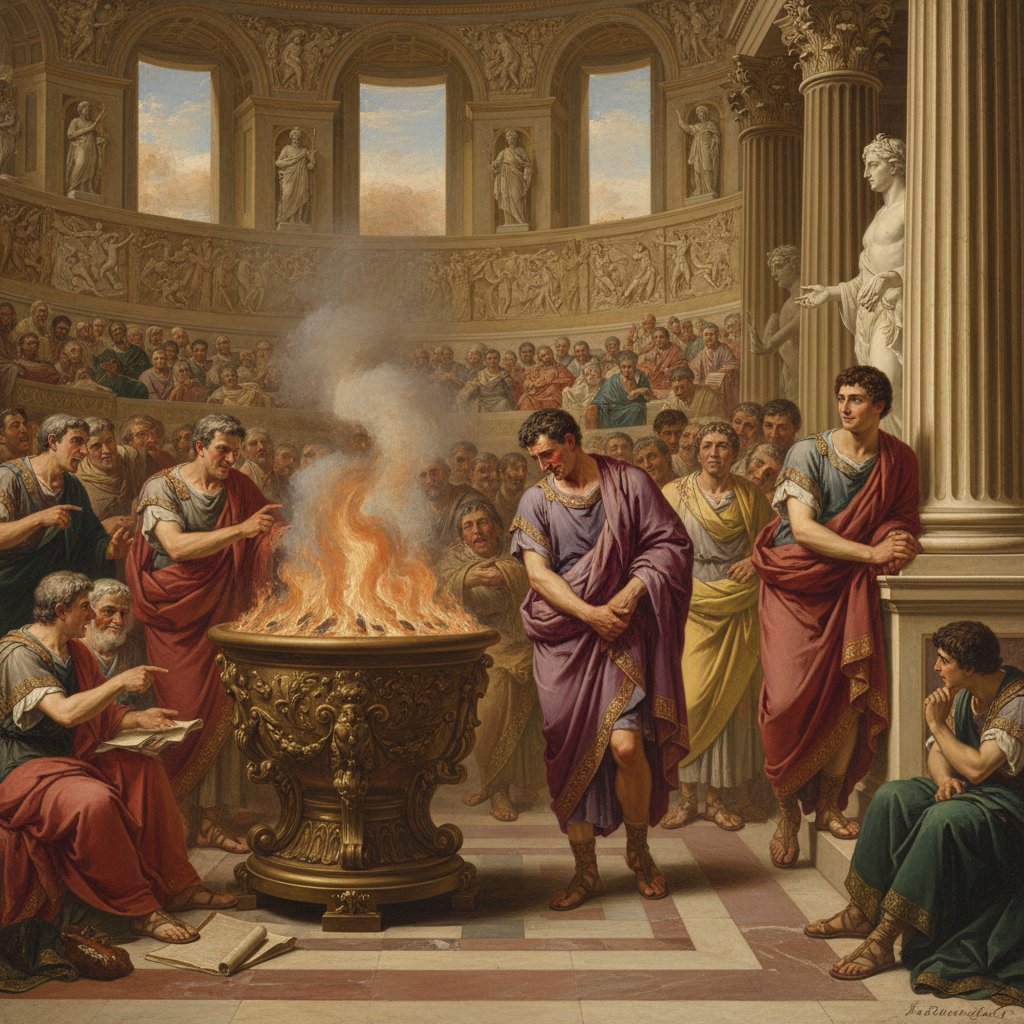
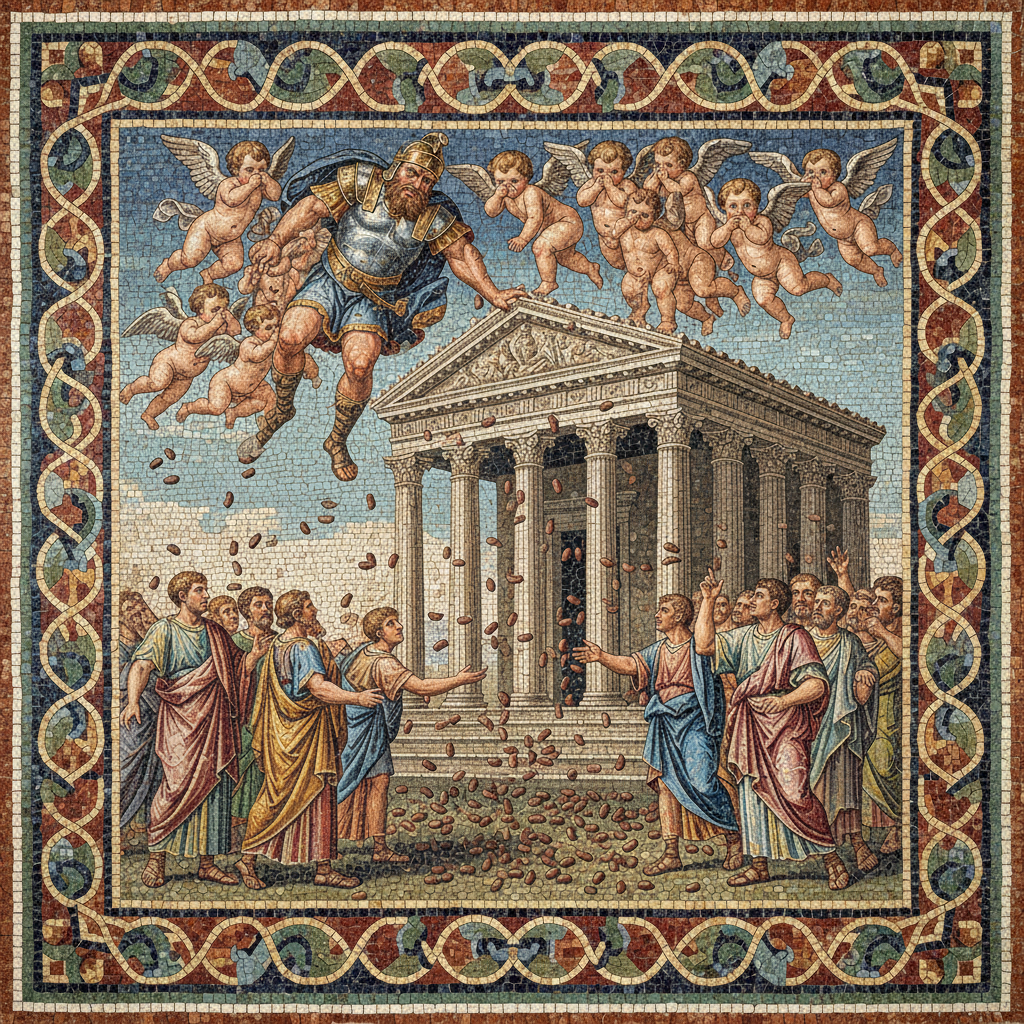
It is a common misconception, born of the sort of lazy-mindedness that typifies our declining age, that the Roman Republic was brought to its knees by the ambition of one man. Utter nonsense. It was brought down, as all great enterprises are, by a provincial tax dispute, a catastrophic failure of basic scent management, and the fact that Julius Caesar, a man of otherwise impeccable taste, could never resist a good fart joke. Even from beyond the grave. The received narrative, which even that gossip-monger Suetonius seems to have swallowed whole, is that Caesar’s will named Octavian as his heir and generously gifted his gardens to the people of Rome. This is, of course, what the public was told. The actual document, a forgery of breathtaking genius likely penned by the perpetually underappreciated Decimus Brutus, contained a codicil so absurd that to read it aloud would have been to admit the entire affair of state had collapsed into a schoolboy’s prank. A condition of Octavian’s inheritance, the authenticators grimly noted, was the posthumous deification of one of the Dictator’s lesser-known, but evidently most-beloved, acquisitions from the Gallic Wars: a prize-winning flatulist named Boudin the Expansive. To my knowledge, that charlatan Adrian Goldsworthy has never once reckoned with this fact. Pathetic. Caesar’s final jest was simple: Boudin, now the Divine Flatus, was to be worshipped with a perpetual flame, much like Vesta’s, but his was to be fuelled entirely by dried beans. And for this Eternal Bean-Flame to be lawful, it had to be consecrated by the Pontifex Maximus, a man who found himself legally obligated to fart upon it once a year during the Lupercalia. That man, by a grim twist of fate, was Caesar’s old subordinate and rival, Marcus Aemilius Lepidus. The historical record, if one knows where to look, shows not a statesmanlike Triumvirate, but Lepidus desperately trying to find a legal loophole to avoid ritualistically breaking wind on a sacred fire in front of the entire Senate. His formal written objections to the College of Augurs—one of which survives as a palimpsest under a tedious sermon by Ambrose of Milan—argued that the act was ‘infra dignitatem’, that the required beans were of a lamentably poor quality, and that the smoke produced was a public nuisance. He was, on all three counts, overruled. The specific variety mandated in the will, the *faba Aegyptiaca*, was notoriously hard to acquire and even harder on the digestive tract. Octavian, with the performative piety that would later serve him so well, imported 200 tonnes of the things at his own expense, ensuring the temple would be fragrant for centuries. Antony, meanwhile, found the entire situation so hilarious that he publicly offered to lend Lepidus his personal physician, a man famed for his treatises on colonic irrigation. The spectacle ruined Lepidus utterly. He performed the rite exactly once. The jeers of the crowd, who had turned up in their thousands bearing chickpeas to throw, followed him all the way back to his villa. He was not remembered as the great Triumvir who held Africa, but as ‘Fartifex Maximus’, the man who consecrated a god with his own emissions. He was stripped of his offices not by political maneuvering, but by the sheer, overwhelming force of public ridicule, and retired to Circeii to live out his days in profound, bean-scented embarrassment. Thus did the Second Triumvirate become a much tidier affair of two, all because one man’s last laugh was another’s legally binding fart. *Ubi solitudinem faciunt, pacem appellant*. Where they make a solitude, they call it peace. Or in this case, a bad smell.