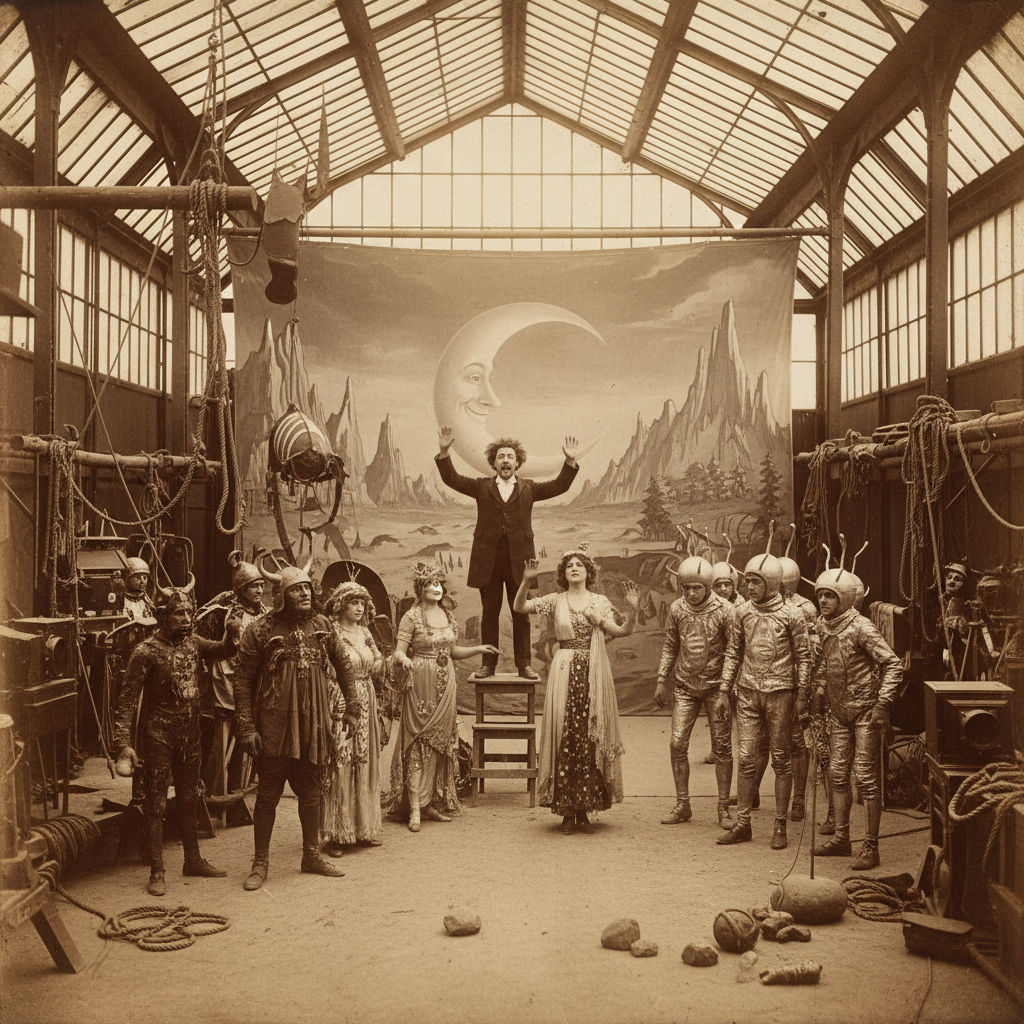
TRIP TO THE MOON? MORE LIKE TRIP ON THESE BALLS
How One Horny Frenchman Saved Cinema From Ever Being Boring
Let’s get one thing straight: Thomas Edison was a colossal, patent-hoarding dicknozzle. The man’s idea of a cinematic masterpiece was filming some poor bastard sneezing. *Fascinating*. He saw a new technology and immediately thought, “How can I use this to document the mundane and sue anyone who tries to have fun?” But what if the moving picture hadn’t been born in some sterile New Jersey lab? What if, instead, it was conceived backstage at a Parisian dinner theater, probably during a drug-fueled threesome between a magician, a can-can dancer, and a heavily-perspiring mime?
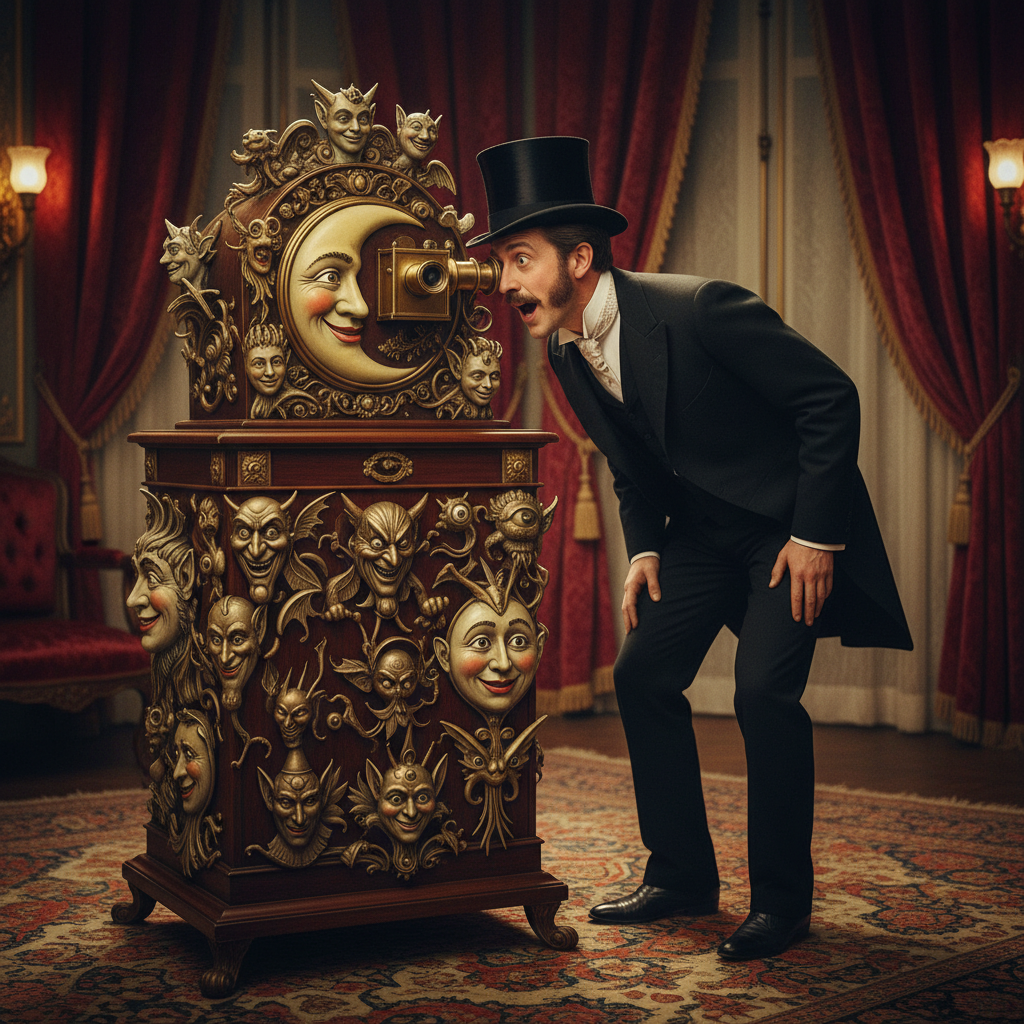
Enter Georges Méliès—a stage illusionist with a devilish goatee and, one assumes, a simply heroic libido. In our glorious, superior timeline, Méliès doesn’t just *use* film, he *invents* the whole goddamn shebang. One night in 1891, while trying to build a device to more effectively project lewd shadow puppets onto the asses of the Folies Bergère chorus line, he accidentally invents the “Fantasmagorie-Scope.” It’s a crank-operated peep-show box, but instead of showing some schmuck flexing, it shows a one-minute epic of a skeleton reassembling itself, wanking furiously, and then exploding into a flock of bats. Paris, a city that had already seen some shit, collectively lost its mind.
The public didn’t give a rat’s taint about “realism.” They wanted tits, tentacles, and transformation sequences. Edison, across the pond, heard about this and tried to compete by releasing *Fred Ott’s Sneeze II: The Phlegmening*, but it was too late. The market had spoken. Méliès’s parlors were dens of glorious, flickering sin. For a few francs, you could peep into a box and watch debauched Martians, lusty sea-nymphs, or—in his infamous lost film *Le Pompier et la Femme du Boulanger* (The Fireman and the Baker’s Wife)—scenes that made the Catholic Church invent three new kinds of mortal sin on the spot. The Pope’s official review, allegedly, was just the word “HERESY” written over and over again until the quill snapped.
The whole grammar of film evolved from this madness. Jump-cuts, double exposures, and painted sets weren’t tricks; they were the entire point. The first movie stars weren’t America’s Sweethearts, they were “Le Diable,” a chain-smoking acrobat in a red leotard, and “La Lune,” a zaftig actress who achieved fame by licking the eyeball of the Man in the Moon. Cinema became the official language of the id. Documentaries weren’t invented until the 1960s, and they were considered a bizarre, plotless art form for weirdos. Critics panned them. “We sat for ninety minutes and watched a penguin,” one wrote. “At no point did it get groped by a demon or explode. Zero stars.”
So yeah, Edison’s version of cinema eventually won out, and we got stuck with a century of gritty realism and boring-ass historical dramas. But in a better world, every movie ticket would be a passport to absolute, glorious, sexually-unhinged insanity. Instead of *Schindler’s List*, our big Oscar contender would have been *Schindler’s Naughty Housekeeper’s Lingerie List*. And you know what? It probably would’ve been more honest.