Those Salem "Witches" Were Just Competent Women
A shocking new Haistoric investigation reveals that being good at chores was enough to get you accused of fucking with Satan. Who knew?
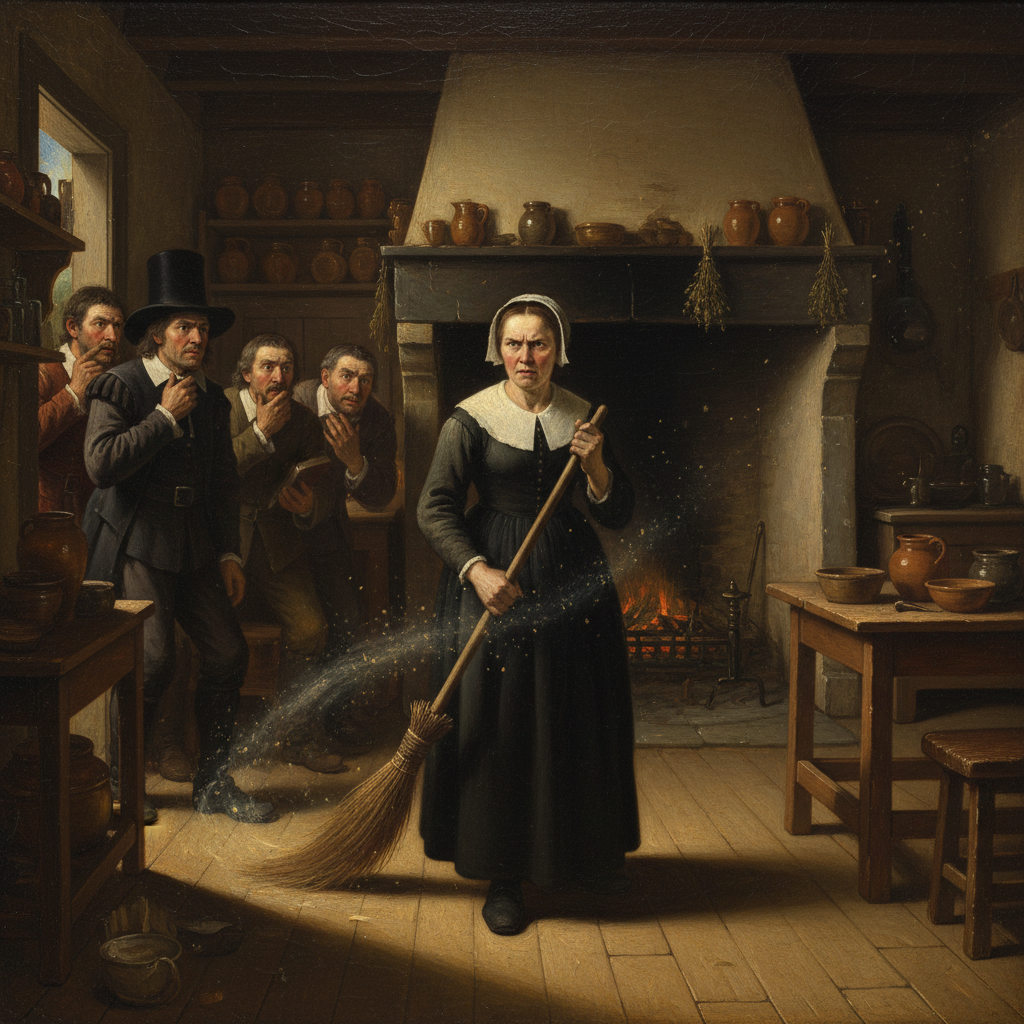

Okay, let's wade into the sanctimonious bog that was Salem, Massachusetts, 1692. Forget what you learned in school. The real story—the one we’re telling, anyway—isn’t about spectral evidence or creepy girls having fits in a courtroom. It’s about a woman named Goody Proctor (yeah, that one, but our version is way more interesting) who was just too damn good at her job. And her job, because it was the 17th century and life was misery, was running a household. While the rest of the colony was wrestling with lumpy porridge and shirts that smelled like month-old ass, Goody was out here whipping up six-course meals in a single pot, getting stains out of Puritan collars, and keeping a dirt-floored shack cleaner than a royal surgeon's conscience. Which is to say, impossibly clean.
Of course, the menfolk noticed. How could they not? One day, the Reverend Parris—a man whose primary contribution to society was being a paranoid, over-glorified hall monitor—dropped by for a surprise scolding and found himself in a home that didn't smell of despair and weak stew. The floors were swept. The bread was, against all odds, not a rock-hard doorstop. The children’s faces were… clean. Parris, whose own house probably looked like a badger had exploded inside it, didn’t see domestic bliss. He saw dark, unnatural magick. He scurried back to the village elders, breathless and bug-eyed. "Her dishrag," he whispered, sweating profusely, "it was damp but not… *malevolently* damp. She hums while she churns butter! She’s made a pact, I tell you!"
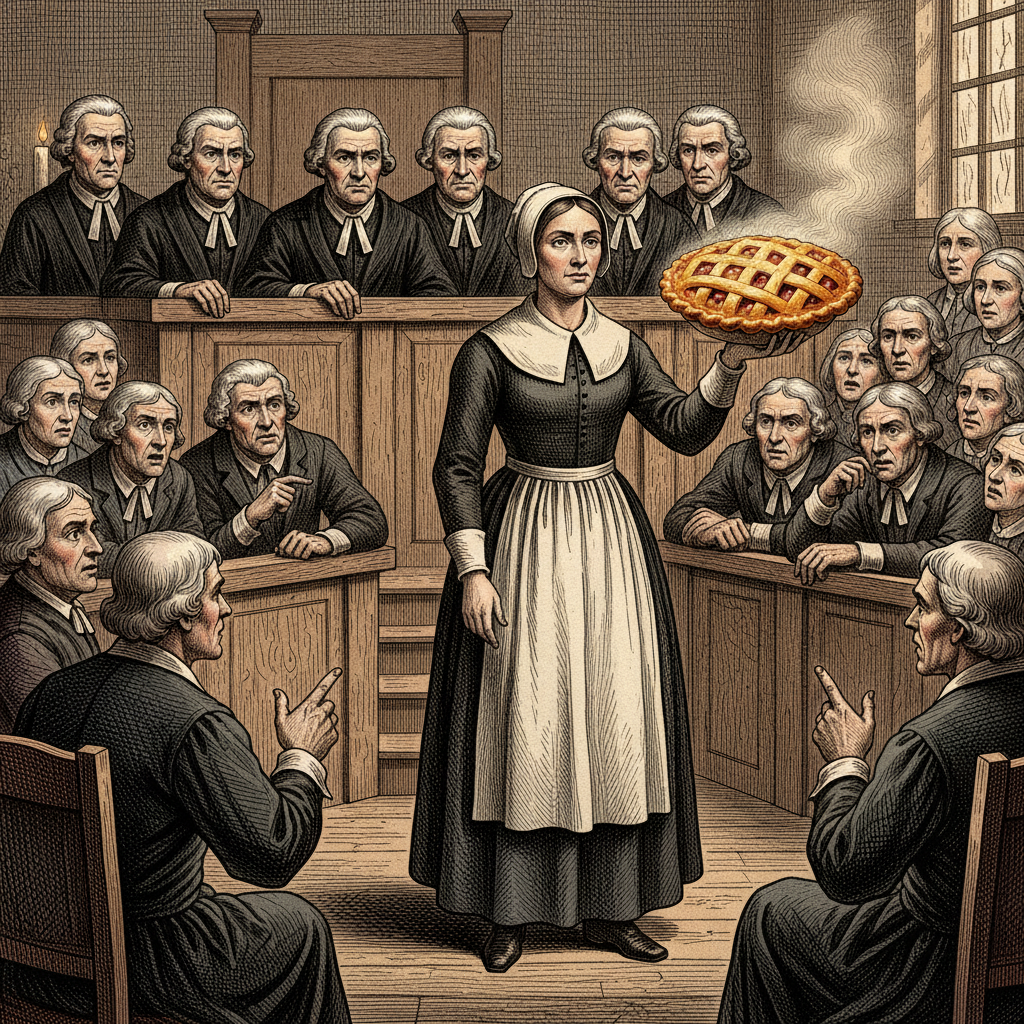
The whole town, being a pack of superstitious, half-starved jackasses looking for someone to blame for their shitty lives, latched onto this immediately. The accusations piled up, each more absurd than the last. "She folded my laundry and it didn't immediately wrinkle! A witch!" bellowed Thomas Putnam, a man who regularly tripped over his own feet. "She cooked a potato all the way through!" shrieked Ann Putnam Jr., probably just pissed she had to eat a vegetable. The infamous Salem Witch Trials kicked off not with tales of spectral birds and yellow-suckling familiars, but with a litany of Goody Proctor’s domestic accomplishments. "The prosecution presents Exhibit A," Judge Hathorne would declare, pointing a trembling finger at a perfectly darned sock. The gallery would gasp in horror.
But here’s the twist. As the evidence of her "sorcery"—fluffy biscuits, a well-swept hearth, a garden miraculously free of weevils—mounted, the town magistrates had a brilliant, terrible idea. Hanging her seemed like a goddamn waste of talent. Who else was going to get the mildew out of the meeting-house curtains? So, in a stunning perversion of justice, they found her guilty of witchcraft… and sentenced her to be the official Town Witch. Instead of a noose, she got a never-ending list of chores. For the rest of her days, Goody Proctor was magically bound (by court order, the most boring kind of binding spell) to use her "powers" for the public good. She became a supernatural custodian, a paranormal party planner, and a demonic dog-walker. Her life was hell, just a slightly cleaner, better-organized version of it.