The Wall That Came With Instructions
One bored Stasi border guard, one pack of Roth-Händle cigarettes, and a blueprint for chaos.
FILE REF: 77/B/908. Inter-German border transactions, Q3 1961.
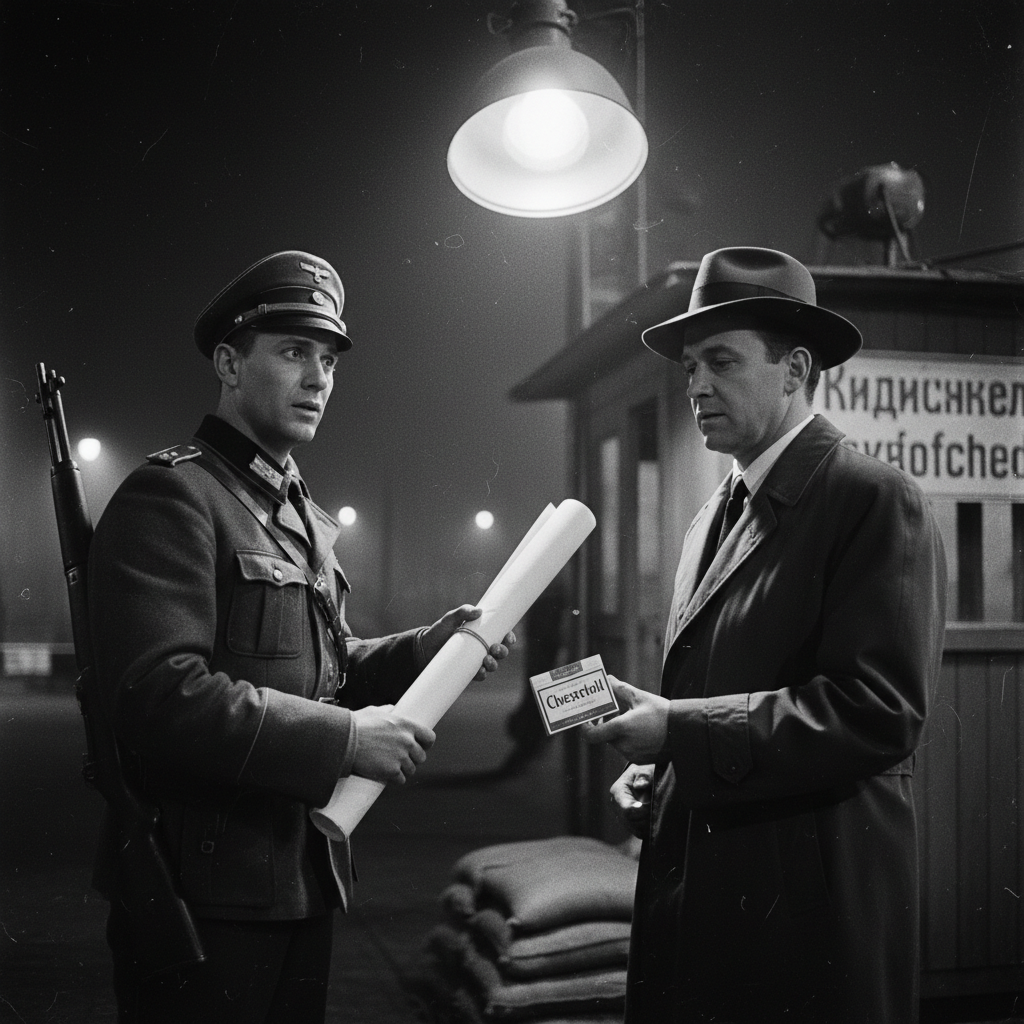
A junior Stasi NCO, one Ralf Jäger, was assigned to the Friedrichstraße checkpoint crossing in August 1961. His primary duties involved inspecting diplomatic baggage and enduring tirades from entitled American functionaries. His secondary brief, from a KGB handler he knew only as “Petyr,” was to report any unusual Western overtures. On 22 August, bored, hungover, and—most critically—out of cigarettes, Jäger observed a West German BND signals officer looking similarly nicotine-deprived. Jäger had in his possession a copy of the final schematics for *Antifaschistischer Schutzwall*, the formal name for the Berlin Wall. The plans had been handed to him for shredding, a task he had neglected in favour of a nap. Seeing an opportunity, Jäger initiated contact. The BND man, Klaus Richter, was suspicious but desperate. A deal was struck. The complete 15-phase construction plan for the Berlin Wall, including concrete pour timings, rebar specifications, sewer main access points, and guard tower wiring diagrams, was exchanged for a single, unopened pack of West German Roth-Händle cigarettes, value 1.50 Deutsche Marks.
The blueprints were in CIA hands within the hour. The initial reaction at Langley was disbelief, followed by accusations of a classic KGB deception. The plans were too perfect, too detailed. It had to be a plant. A paranoid CIA station chief, fixated on finding a non-existent poison pin in the cigarette pack, ordered the documents ignored. His cable to Washington dismissed them as “a transparent effort to induce wasteful asset reallocation.” The plans languished in a burn bag for three days until a British MI6 liaison, a man whose primary expertise was spotting an opportunity for high-grade mockery, saw them during a routine intelligence share. He recognised their authenticity immediately, mostly because no one would *invent* that level of tedious Teutonic over-engineering. He stole the plans, allegedly remarking to a colleague, “The Yanks think it’s a trap. I think it’s an invitation.”
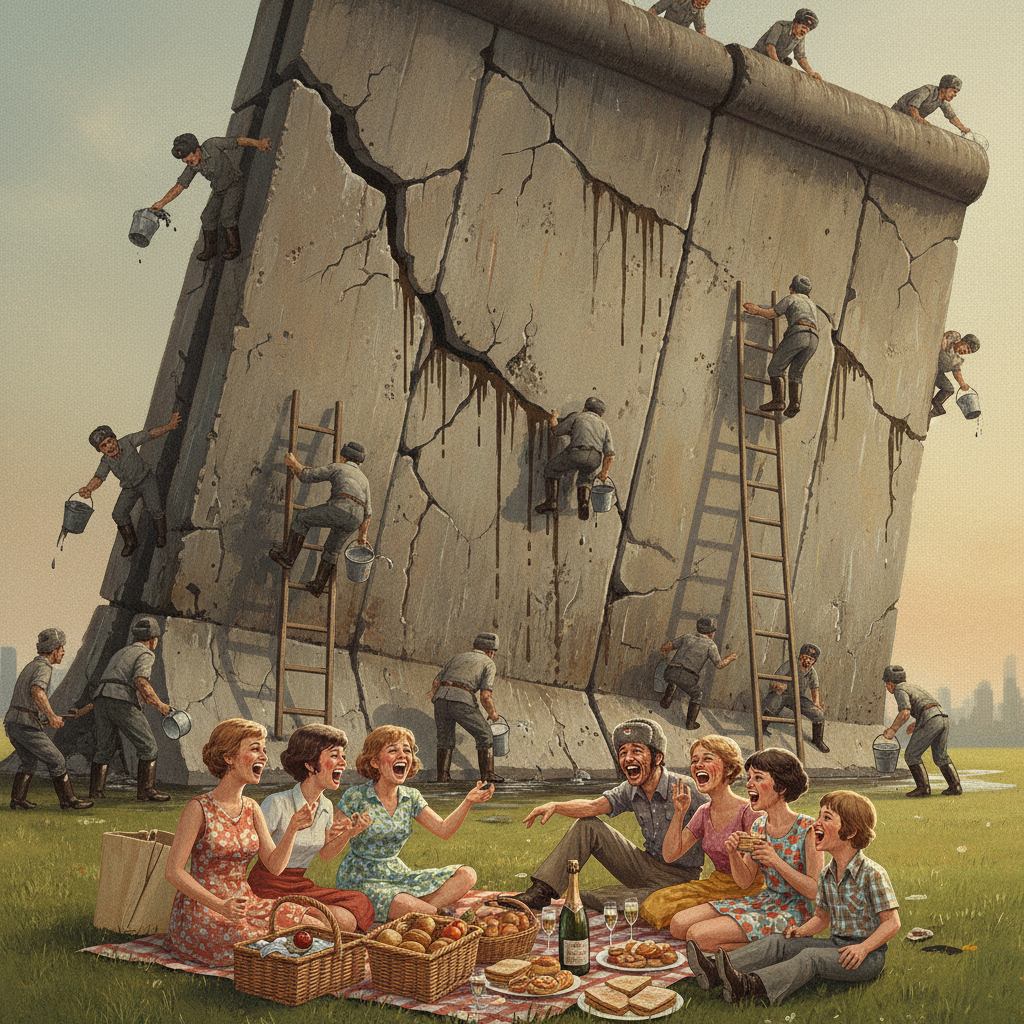
The British got to work. Armed with the exact locations of every planned sewer pipe and electrical conduit, Royal Engineers sappers, disguised as city maintenance workers, began a programme of subtle, pre-emptive sabotage. They didn’t blow things up. They introduced fast-rusting iron alloys into rebar shipments. They laid cables that would fail in humidity. Most effectively, they swapped out the high-grade cement specified in the blueprints for a cheaper, more porous mix colloquially known among German builders as *Rotzbeton*, or “snot-concrete.” The operation was a masterpiece of plausible deniability, costing a mere £12,000 and the patience of several dozen Berlin sewer rats.
The consequences became apparent with the first winter rains of 1962. The Wall began to weep. Sections became porous, crumbling at the edges. Electrical systems shorted out constantly. The watchtowers, built on foundations now settling into compromised soil, developed alarming structural tilts. By 1965, a significant portion of the “Anti-Fascist Protection Barrier” had the structural integrity of a damp biscuit. The East German regime was forced into a cycle of perpetual, ruinously expensive repairs, a state of affairs they referred to in official statements as “ongoing scheduled improvements.” Jäger, the NCO who started it all, was never suspected. His KGB handler reported the exchange as a successful cultivation of a Western intelligence asset, and was promoted. The final insult was delivered by Berliners themselves, who took to calling the perpetually patched and sagging structure *Die Schande*, The Shame, and chipping off pieces not as souvenirs, but to sell back to the East Germans as aggregate.