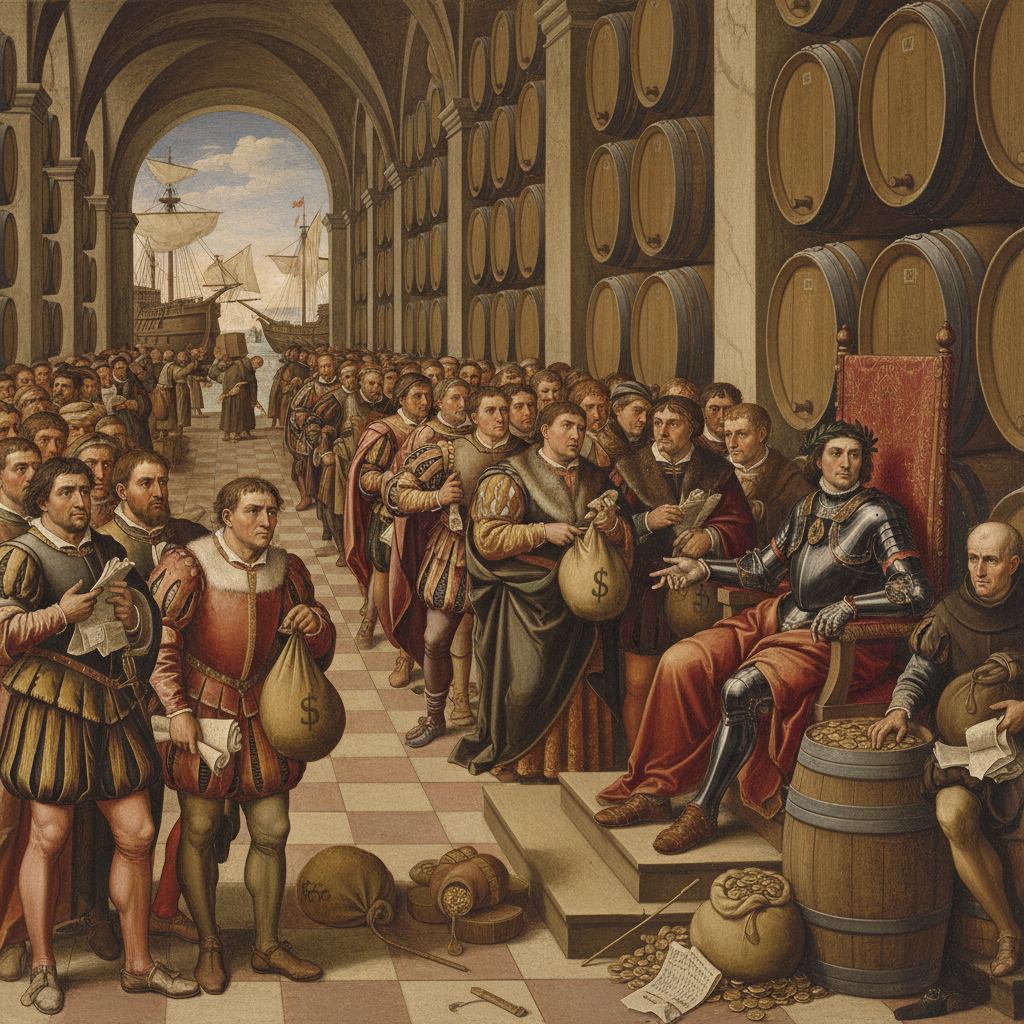
The Vatican’s Vintage Years
That time Pope Alexander VI blessed the family business with get-out-of-hell-free cards and a truly spectacular vintage.
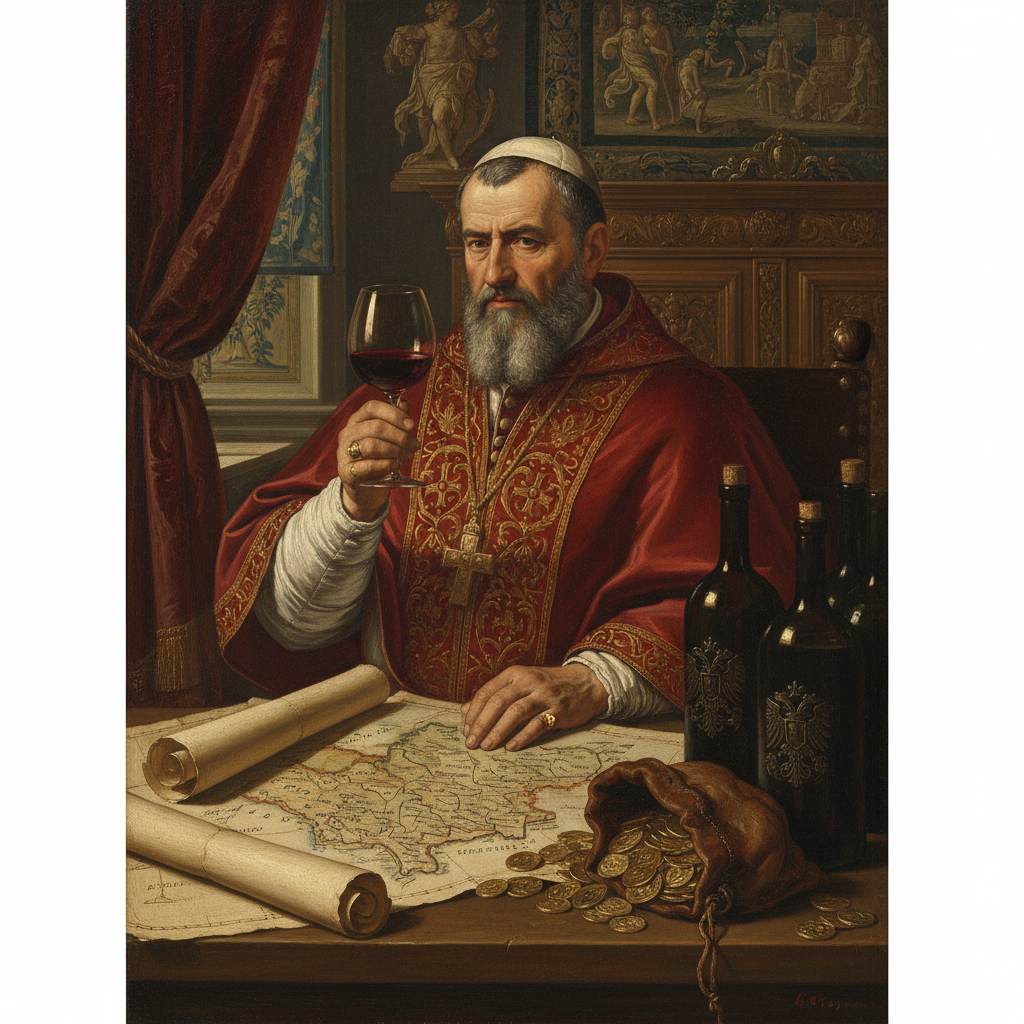
Pax vobiscum, my children, though there was precious little peace for anyone when the House of Borgia mistook the Holy See for a tavern without a tab. Forgive me, for I have sinned in my thoughts, but it is a damnable and persistent thought: what if that font of worldly corruption, Pope Alexander VI, had simply leaned in? What if, rather than pretending his son Cesare’s military campaigns were for the glory of God, he’d admitted they were for the glory of the grape?
The answer, it seems, is a river of wine. A torrent. A flood of biblical proportions, but one that gets you excommunicated for spilling it. Our story begins not with a plot, but with a thirst. In the Jubilee year of 1500, with Rome crawling with pilgrims, Alexander VI found the papal cellars wanting. The local pressings, he declared, were thin, sour, and unfit for a man of his… appetites. He required grapes. Not just any grapes, but the finest Malvasia, the plumpest Sangiovese, brought to him from the Romagna—a region inconveniently held by proto-warlords with no respect for papal thirst.
Here, my children, is where a lesser pontiff might have prayed. Alexander, however, issued a bull. Not just any bull, but the famous *In Vino, Veritas, et Pecunia* (“In Wine, Truth, and Money”), which offered a plenary indulgence of a novel sort. For a modest fee, a sinner could fund a “Special Pontifical Agricultural Mission” to the Romagna, thereby reducing their time in Purgatory by a startlingly specific 750 years per ducat. The fine print, scribbled by a crosseyed clerk in the Apostolic Penitentiary, noted that said missions would be led by the Pope’s own son, the terrifyingly competent Cesare Borgia. Officially, they were liberating church lands. Unofficially, they were seizing 12,000 acres of prime terroir. The Lord’s work, indeed. *Sicut erat in principio, et nunc, et semper…*
And lo, the money did flow, and the wine flowed faster. Within three years, “Vinum Borgianum” was the most sought-after liquid in Europe. It wasn’t just good; it was sinfully good. Whispers claimed Lucrezia Borgia herself charmed the vines. Each bottle came with a tiny, lead-free papal seal and a certificate promising a further 50 years off Purgatory for every case of twelve purchased. The King of France bought 400 cases to settle a border dispute. Henry VII of England, a man who would peel a grape with his teeth to save the cost of a knife, ordered a tun for the Tower of London. The Vatican’s ledgers, previously a mess of mercenary contracts and simony receipts, now read like a vintner’s diary, with panicked marginalia from the College of Cardinals: *‘Another 60 barrels of Borgia Rosso for the Archbishop of Mainz? Does his Grace think we are made of indulgences? (Apparently, yes.)’*
The whole sordid, glorious enterprise collapsed, as all worldly things must, not with a bang, but with a cork. Upon Alexander’s death, the conclave to elect his successor was the most well-lubricated in papal history. Cardinals who had spent years decrying the Borgias’ decadence were suddenly waxing lyrical about the 1501 vintage’s ‘robust body’ and ‘hints of damson and damnation.’ They elected not a pious reformer, but the biggest wine merchant in the room, a Genoese cardinal who promised to lower the price on the ’03 Cantina. He took the name Pope Bacchus I. And the rest, as they say, is heresy.