The Vatican's Truth Serum Was an Inside Job
A misread alchemical cipher, a lazy cellarer, and the brief, horrifying honesty of 17th-century Europe.
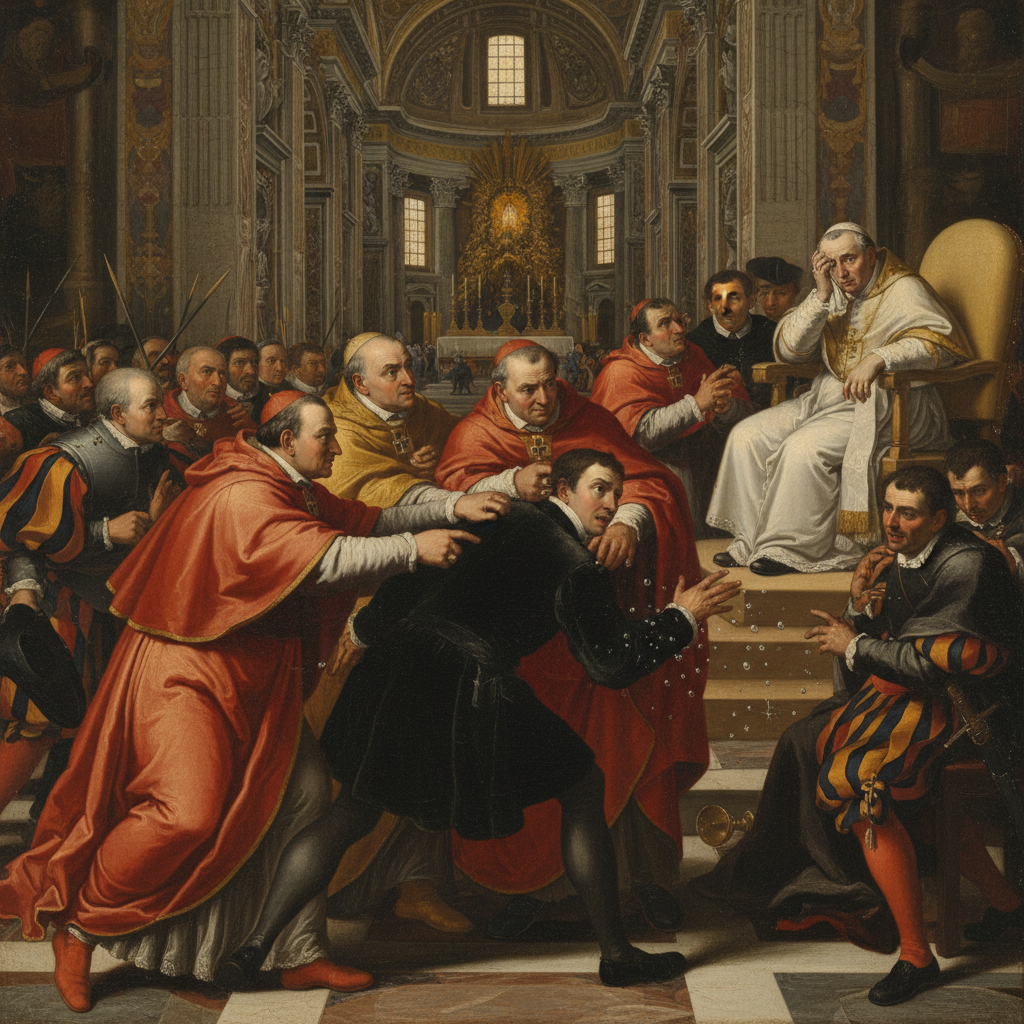
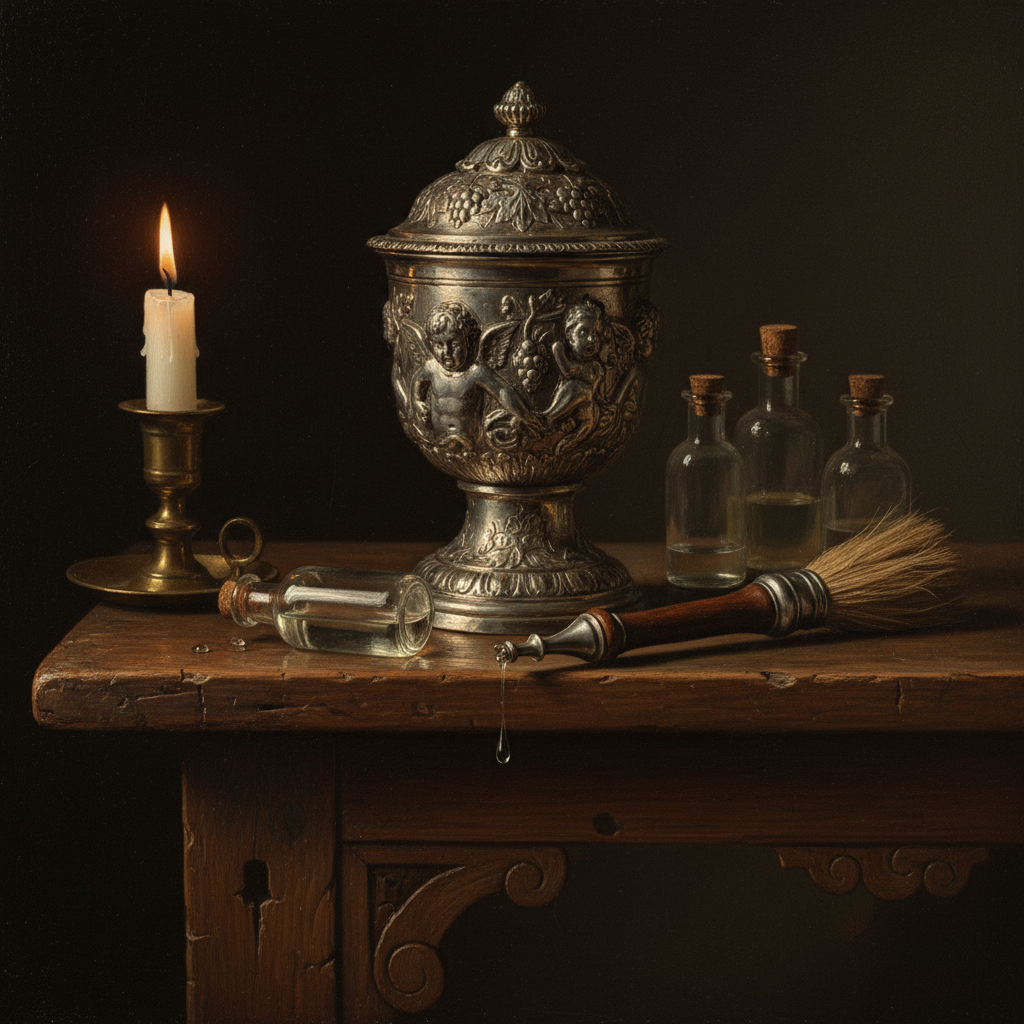
'''“*In vas animae, sanguinem leonis redde clarum in lacrimis lunae.*” To purify the soul’s vessel, render the lion’s blood clear in the moon’s tears. A classic instruction, if you know the cant. The Segreteria dei Cifrari, the Pope’s own black chamber, did not. They saw a substitution cipher keyed to LEO. They saw `lacrimis lunae` and, instead of boring old dew, reached for the silver nitrate they used for sympathetic inks. This is the typical operator’s flaw: arrogance, haste, and a schoolboy’s grasp of Latin. They weren’t trying to poison the Pope; they were trying to invent a new form of secret writing for papal bulls that would only appear after being blessed. The mistake, as ever, was human. A junior scribe, translating from a thrice-copied Arabic manuscript, mistook the alchemical symbol for purified mercury for a decorative flourish. The resulting compound—a tasteless, water-soluble mercuric salt—did nothing when applied to parchment. A failure. The decanter was corked, labelled with a question mark, and relegated to a cellar beneath the Apostolic Palace, where it sat next to the reserve casks of water destined for the baptismal font at St. Peter’s. The causal chain is always so banal. A cellarer, tasked with topping up the font for Easter Mass in 1687, found the main pump dry. Rather than haul buckets from the courtyard well, he grabbed the nearest, clearest liquid from the reserve cellar. It looked like water. It smelled like water. It was, to his mind, water. Pope Innocent XI, a famously austere man, was not one for performative holiness, but the Easter service demanded a full-throated blessing of the assembled Curia and the diplomatic corps. He dipped the aspergillum, flicked his wrist, and sent a fine spray over the first few rows. Plaintext followed ciphertext. The French ambassador, lightly spritzed, turned to his Spanish counterpart and admitted, with breathtaking clarity, that he’d been embezzling funds meant for the new Florentine embassy to pay for his mistress’s horrifyingly expensive millinery. A cardinal, wiping a droplet from his brow, began loudly complaining that God’s divine plan would be much improved if it involved fewer sermons and more reliable plumbing in his personal apartments. The chaos rippled outwards as fast as the truth. The entire Swiss Guard, having blessed themselves from the same font that morning, simultaneously confessed that their halberds were mostly for show and they’d probably run if anyone actually invaded. The Pope himself, after getting a bit of blowback on his own hand, suddenly announced to the stunned basilica that he found the whole concept of transubstantiation “a bit much, if we’re all being honest.” The Segreteria dei Cifrari, watching from their screened gallery, realised their catastrophic error. But the damage was done. Pilgrims had already filled small vials to take home. The truth was out there, travelling at the speed of a mule cart. For one glorious, terrifying year, Europe experienced a period of absolute candour. Treaties were scuppered, marriages imploded, and the entire practice of diplomacy was suspended on the grounds of being “suddenly rather pointless.” It ended, of course. The Vatican recalled every drop it could, blaming the incident on a “diabolical contagion.” But the memory lingered. A Swiss Guard, standing post a year later, watched a new batch of water being solemnly carried to the font. He leaned over to his companion, whose face had been drenched in the original batch. “Still feel the urge?” he whispered. The other guard stared ahead, unblinking. “Only to tell you,” he said, in a perfectly flat voice, “that your helmet makes you look like a decorated mushroom.”'''