The Unsinkable Word of God
A Westphalian abbess’s well-intentioned liturgical experiment results in the world’s first truly buoyant bible.
*Exaudi, filia, et vide, et inclina aurem tuam*—or as the good sisters of the Abbey of St. Cunigunde in the Sauerland might render it, “Hildegard, this parchment feels like a dead fish.” Our Lord in His wisdom has visited upon His servants many trials, but few are so persistent, so very… *tactile*… as the creeping damp that afflicts any scriptorium north of the Alps. It afflicted the formidable Abbess Mechthild of Lippstadt, a woman whose piety was matched only by her fury at the curling edges and mildewed glosses of her prized psalter. The damp, she reasoned, was a foe. And a foe could be defeated.
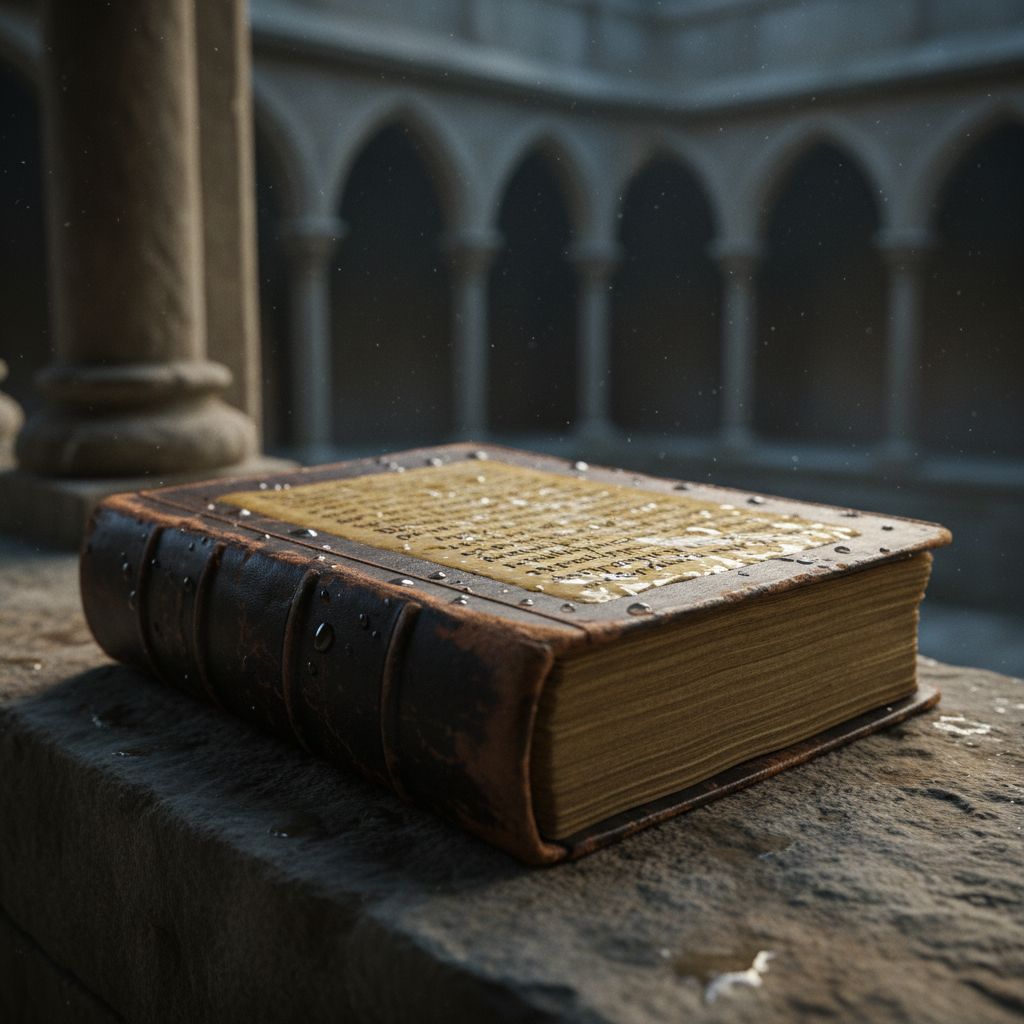
Her first attempts were… enthusiastic. She tried coating a page of Leviticus in pig fat, which merely summoned the abbey’s hounds and rendered the holy text a sticky, illegible mess. She tried pressing the vellum between hot stones, which produced a rather unfortunate scorch mark over the bit about unclean animals. Her masterstroke, as she saw it, was beeswax. A local beekeeper, one Brother Tilman, provided her with several pounds of the stuff, which she melted down with linseed oil in the convent’s kitchens, creating a thick, golden, and alarmingly fragrant paste. Ignoring the protests of her scriptorium’s custos, a terrified novice named Agnes, Mechthild personally slathered the mixture onto every page of a freshly copied Vulgate, from Genesis to Revelation. It was… shiny. And smelled vaguely of salad.
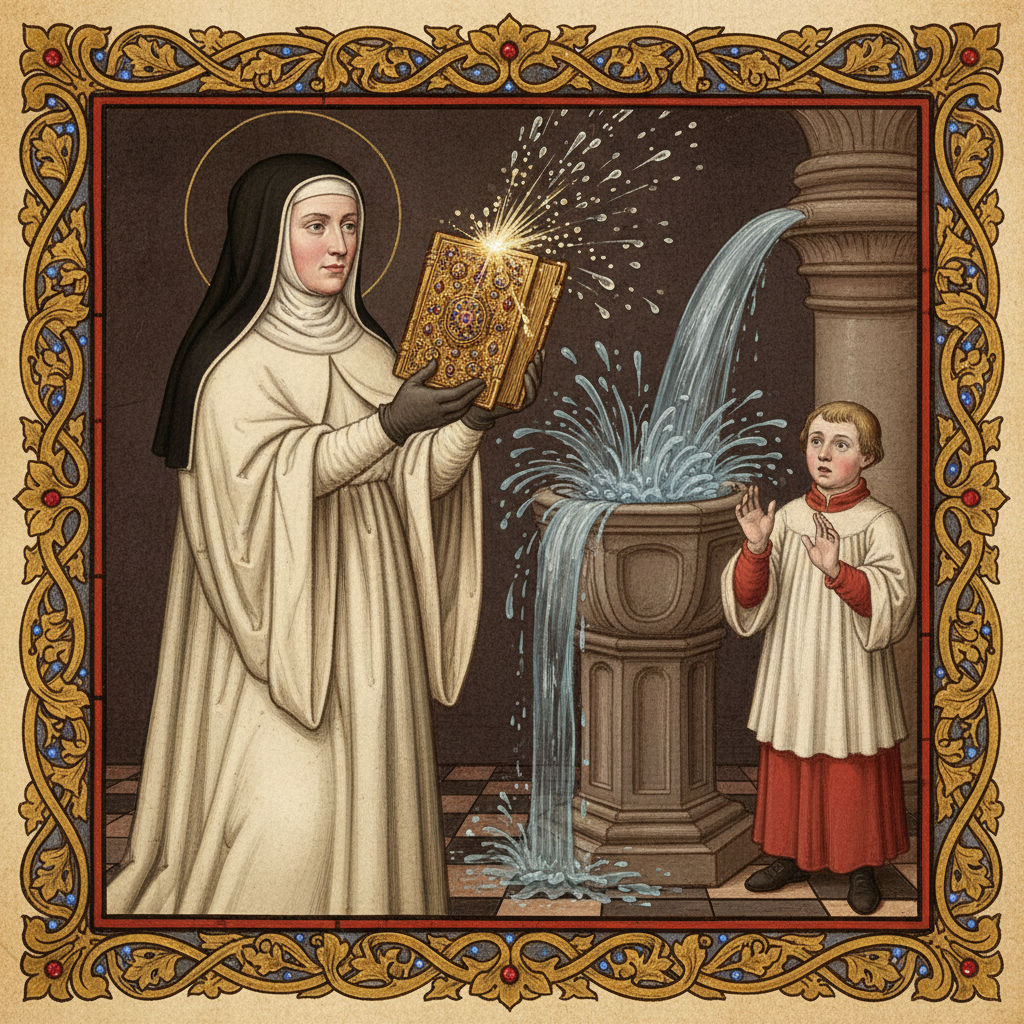
(*A marginal note in a nervous hand: St. Jerome wept.*) The true test came during the Feast of St. Guntram, when a clumsy altar boy, distracted by the bishop’s unusually magnificent cappa magna, knocked the newly-waterproofed bible directly into a baptismal font brimming with holy water. A gasp went through the congregation. The bishop paled. Abbess Mechthild, however, merely smiled a thin, tight smile. The bible did not sink. It floated, serenely, upon the blessed waters, its pages utterly untroubled by the immersion. It was a miracle. Or, as the bishop later confided to his archdeacon, “a frankly satanic piece of kitchen craft.”
The immediate aftermath was chaos. Mechthild, hailed as a wonder-worker, patented the process as *sigillum indelebile* and began a brisk trade in what became known as “Baptismal Bibles.” Competing monasteries, desperate to get in on the lucrative new market, launched their own waterproofing efforts, with disastrous results. The Franciscans tried olive oil, creating a fire hazard that consumed three priories in Tuscany. The Dominicans, in a fit of intellectual pride, developed a shellac that shattered if a book was dropped, scattering razor-sharp shards of the Gospel of John across the cloister floor. The bible, once a holy object, was now also a piece of high-performance gear.
Mechthild’s invention changed the very practice of faith. Missionaries to the rainy British Isles and Scandinavia could now preach in a downpour without fear of their text dissolving into mush. Naval chaplains found their shipboard services much improved. The new industry of “scriptural lacquering” became a jealously guarded guild secret, complete with apprenticeships, masters, and bloody disputes over the correct ratio of beeswax to oil. Mechthild, for her part, died rich and revered, though she was said to complain in her final days that her own bible was now so stiff she could barely turn the pages. A small price to pay for salvation from the damp. And for a very healthy profit.