THE TWO-WEEK REBELLION OF SAFIYA’S SIMPS
How One Archaeologist’s Bowel Complaints Were Mistranslated as a Declaration of Revolutionary Love
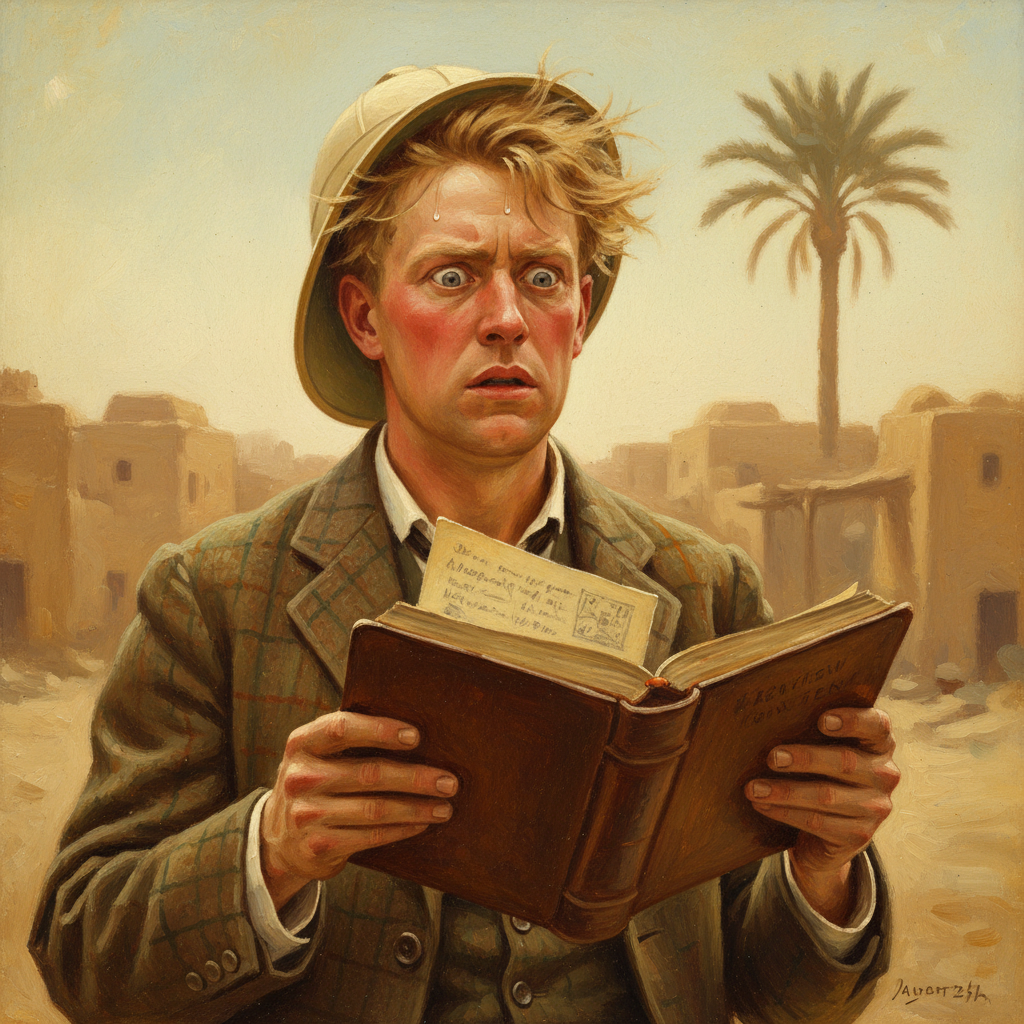
Let’s get one thing straight: Howard Carter was a poncy grave-robber, but at least he kept his diary under lock and key. The same cannot be said for Reginald “Reggie” P-for-Piss-Stain-Ponsonby, a man whose primary contribution to Egyptology was losing his field journal somewhere near the village of Mit Rahina in 1923. Inside this journal were not—as you might hope—maps to forgotten treasures. No, it was mostly just Reggie complaining about the heat, the flies, the quality of the tinned fish, and a rather graphic, multi-page account of a truly heroic bout of dysentery. Plus, you know, some piss-poor sketches of pot fragments.
This literary masterpiece was found by one Safiya al-Badri, a local farmer with a spine of steel and the patience of a saint who’d clearly had enough of her husband, Mahmoud. Having never seen a whole book written by hand, and certainly not in English, she naturally assumed it was a document of immense importance. She took it to the village’s self-proclaimed man-of-letters, Omar, a half-blind teahouse proprietor who’d once spent a week as a clerk in Alexandria and fancied himself a regular polyglot. Omar, squinting at Reggie’s frantic scrawl about his “violent lower-gut eruptions” and his desire to “expel the foreign body” from his system, did what any bullshitting middle-manager would do: he winged it. “He says,” Omar declared, puffing out his chest, “that his heart erupts for you, O Safiya! And that you must help him expel the foreign body—the British!—from our sacred lands!”
Well, fuck me. Safiya, who was more bored than smitten, saw an opportunity. It wasn’t love she was after; it was a better price for her cotton and maybe getting that prick of a colonial administrator off her back about donkey taxes. Waving Reggie’s shit-smeared journal like a holy text, she went from hut to hut. “This Englishman, this Lord Ponsonby, has seen the truth! He’s chosen ME to lead the people! The love of a good woman has turned him against his own kind!” The quotes from the “love letter” got more and more heroic in the retelling. Reggie’s complaint about “a plague of beetles in the tent” became Omar’s stirring translation: “a plague of foreign locusts is upon our house!” His sad little sketch of a broken amphora? A map for a planned uprising. Obviously.
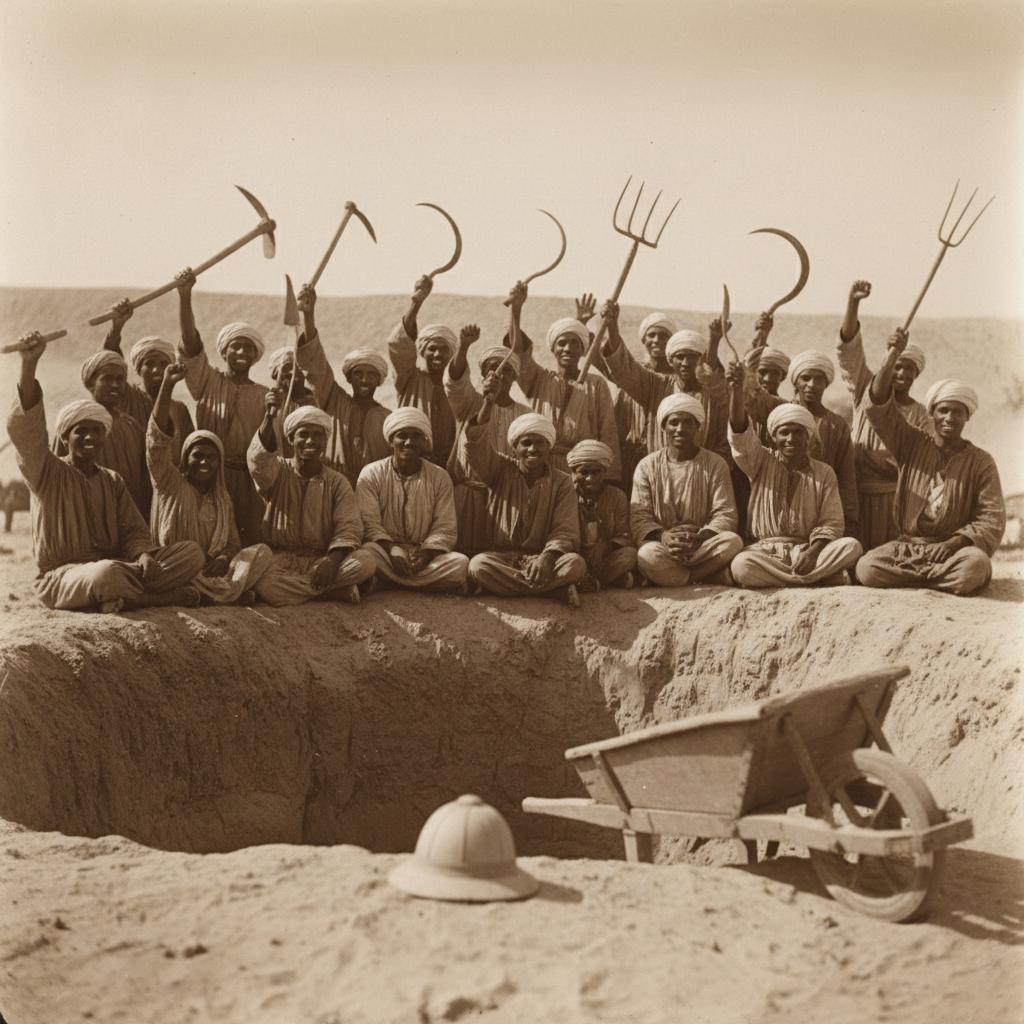
The resulting “Rebellion of the Exploding Heart”—or as the British Foreign Office memo later called it, “The Tuesday Afternoon Inconvenience”—was hilariously anticlimactic. Safiya, followed by about sixty-five other villagers armed with hoes, sickles, and a few very angry geese, marched on Reggie’s dig site. They weren’t there for blood. They were there to help their new English ally. They started enthusiastically “liberating” the site, which mostly involved packing up all of Reggie’s tools, making him tea, and telling him, “Don’t worry, habibi, we’ll handle the paperwork from here.”
The poor bastard just stood there, slack-jawed, while a woman named Fatma tried to braid his hair and her husband Gamal explained their five-point plan for improved manure distribution. The whole thing collapsed in about seventy-two hours when a single, very tired colonial police sergeant showed up and asked everyone to please go home. But for one glorious, ridiculous moment, a rural woman, a con-artist translator, and a colonizer’s constipation almost rewrote a chapter of Egyptian history. Ponsonby was recalled to a desk job in Sussex, where he spent the next forty years cataloguing doorknobs and suffering, one assumes, from exquisitely regular bowel movements.