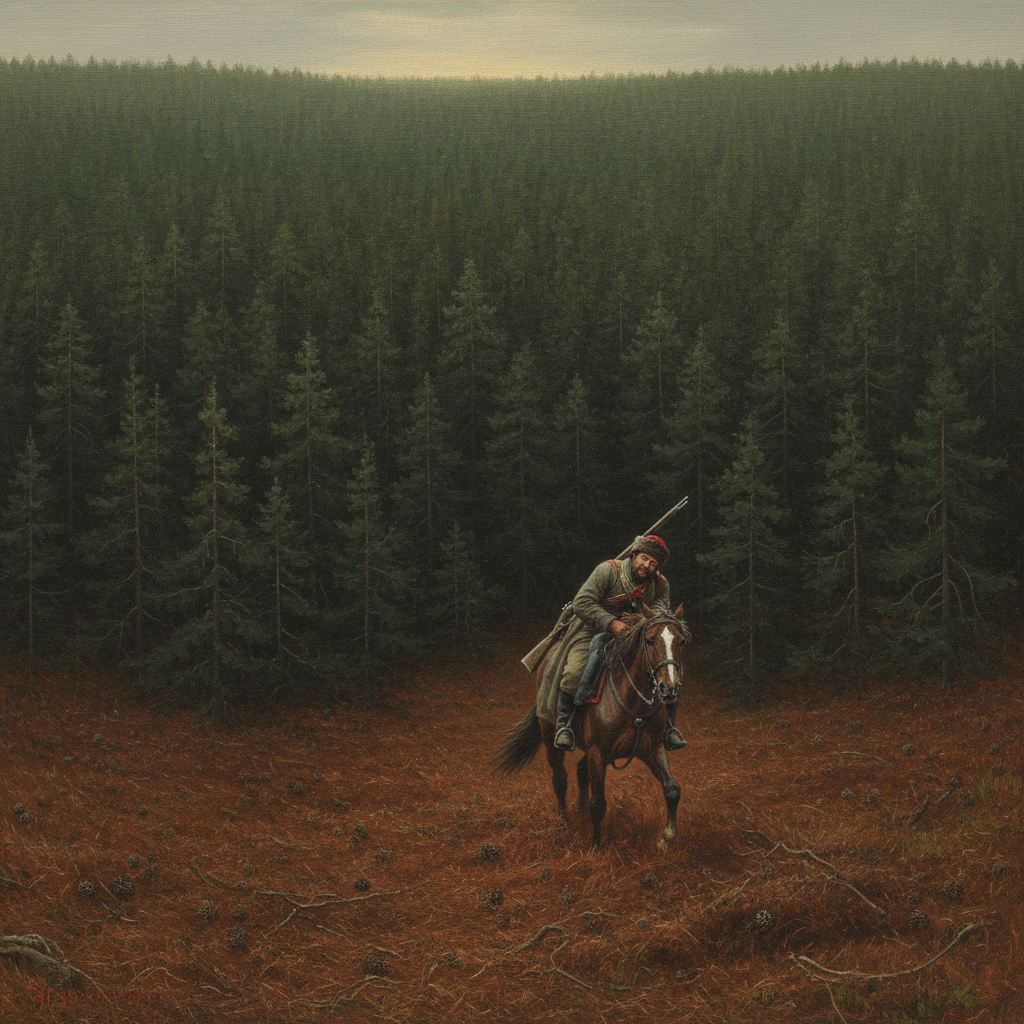
THE TSAR'S TERRIBLE TREES
How Peter the Great Accidentally Replaced the Steppe with the World's Biggest Fire Hazard
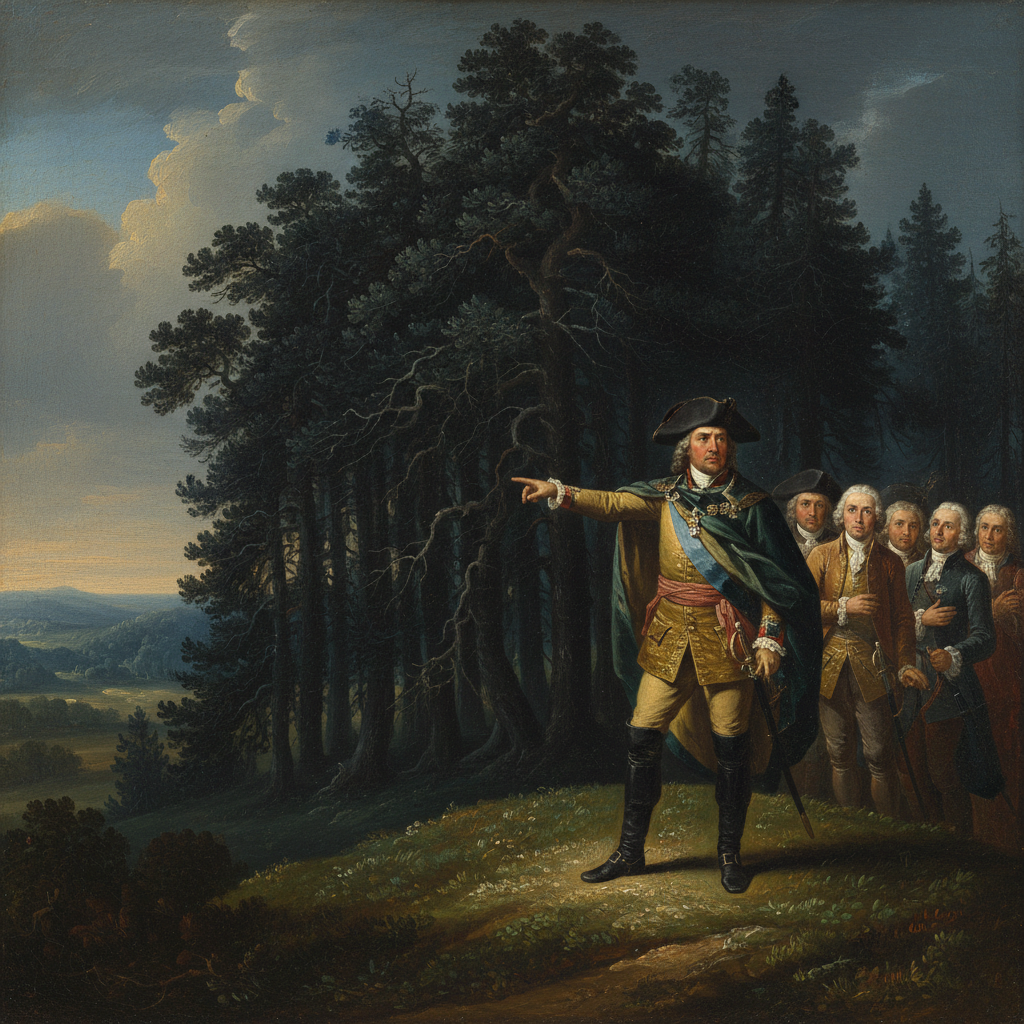

So, Tsar Peter the Great. Six-foot-eight inches of raw, dick-swinging ambition in a country that still thought potatoes were Satan’s testicles. He wanted a navy. He wanted it *yesterday*. Problem was, Russia’s best wood was all inconveniently located a thousand miles from the nearest puddle, and the good steppe land—the *Chernozem*, the ‘black earth’ that fed the whole goddamn empire—was famously, infuriatingly, tree-free. Peter, not a man known for his patience, saw this majestic, fertile grassland and apparently thought, “You know what this needs? Splinters.”
His solution, like all of Peter’s solutions, was to grab the nearest smart person by the ear and yell at them until something happened. In this case, the unfortunate ear belonged to one Arkady Volkov, a botanist who’d been quietly cataloguing mosses and enjoying a life free of imperial screaming fits. Peter’s orders were simple: “Make trees. Fast trees. On the grass. Now.” Arkady, sweating profusely, was given a budget that could choke a pony and the implied threat of being personally used as a keel. He got to work. He started crossing the hardiest Scots Pines with some weird, unnervingly vigorous specimens a cousin had sent from the ass-end of Siberia. In his notes—which read like a hostage diary—he talks about a hybrid that grew with “ungodly haste.” He called it *Pinus petria maledicta*, the Accursed Petrine Pine.
At first, it was a roaring success. The seedlings shot up like they were spring-loaded. Within fifteen years, vast plantations shimmered across the steppe, a dark green cancer on the golden sea of grass. Peter got his timber. He built a few ships out of it. And then the problems started. First, the ships sucked. The wood, having grown at the botanical equivalent of Mach 3, was soft, sappy, and about as structurally sound as wet gingerbread. One frigate, the *Pride of Voronezh*, famously cracked in half during its own launching ceremony, an event later blamed on “Swedish ghosts” and not, you know, building a warship out of what was essentially a giant green sponge.
But the real horror was back on the steppe. The Accursed Pine was a biological menace. Its needles were so acidic they sterilized the legendary black earth beneath, killing every native plant. It drank water like a sailor on shore leave, drying up streams and wells. And it spread. Oh god, did it spread. The pinecones were practically explosive, firing seeds for hundreds of yards in every direction. By the time of Catherine the Great, a vast, unnatural forest of shitty pine trees—impenetrable, useless for farming, and flammable as a celluloid factory—stretched from Ukraine to the Don River. Cossacks, the legendary horsemen of the plains, found themselves laughably retrained as forestry wardens, their horsemanship skills proving remarkably useless for putting out the relentless, sap-fueled fires. Russia wanted a path to the sea, and it got one. A 700-mile-long, sticky, green path to ecological ruin.