The Tramp Who Spoke In Tongues
One Hollywood exile, one stolen print, and the 7,000 Soviet actors who learned to act with their mouths shut.
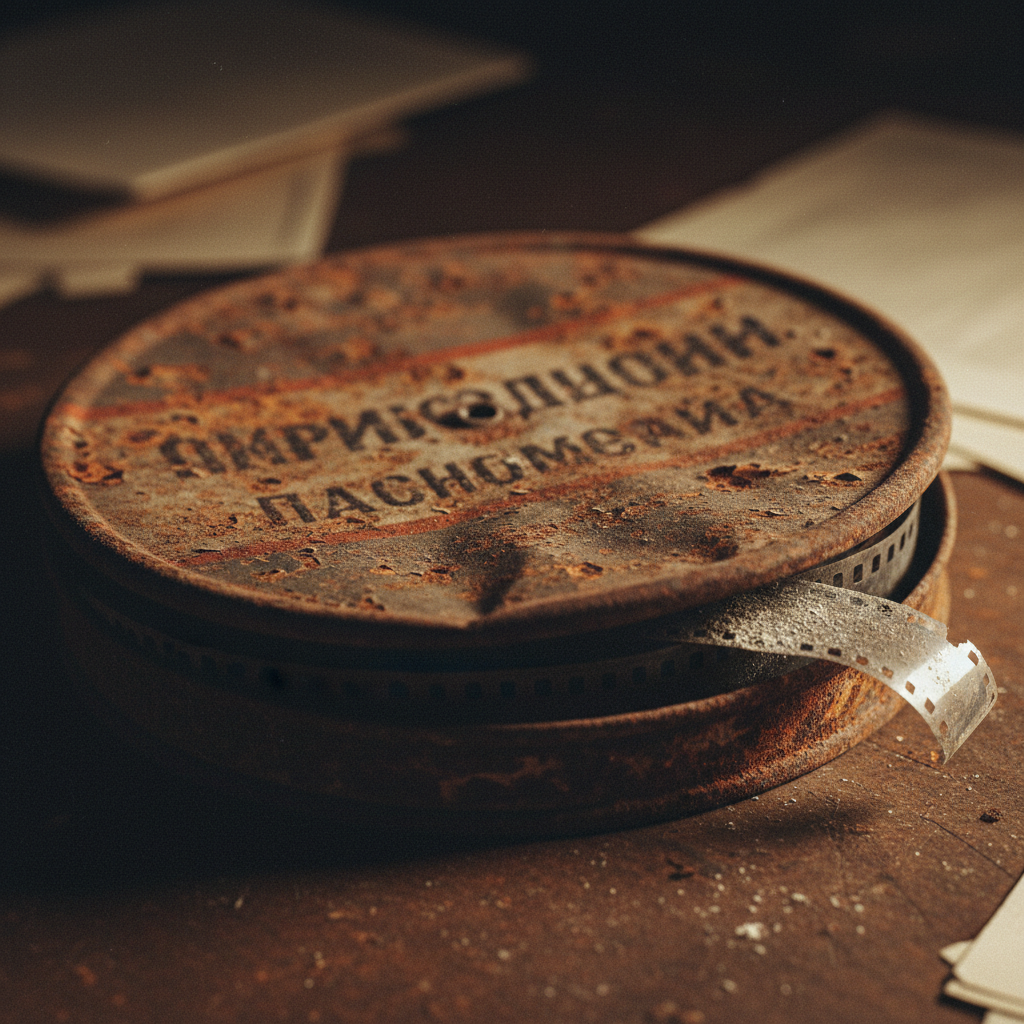
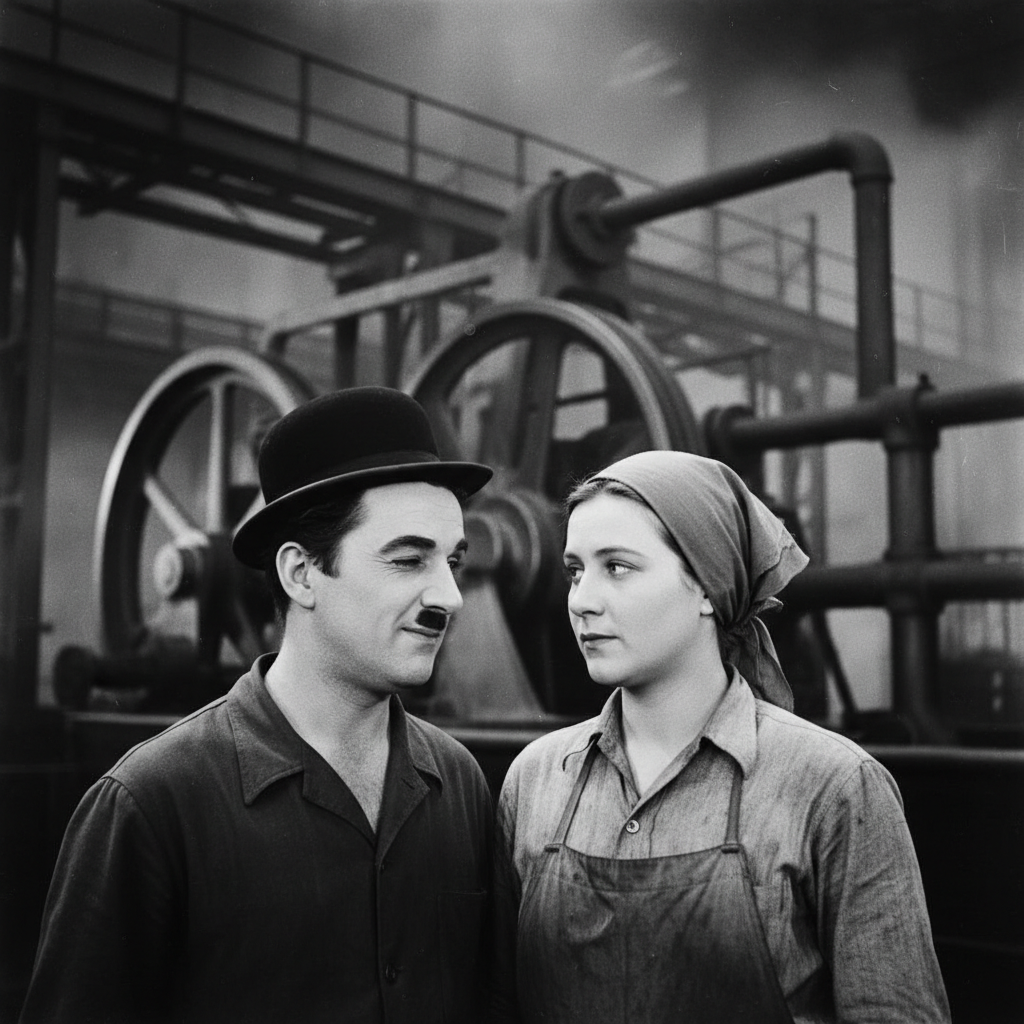
A single reel, tin rusted shut. Case markings: Goskino, 1931. Inside, the film is vinegar. Not just sour — actively hostile. The base has buckled, the emulsion a sticky mess. But for a few frames, an image survives. A man in a bowler hat, too small for his head, winks at a factory girl. It is unmistakably Charlie Chaplin. The girl, however, is Lyubov Orlova, star of the Soviet stage. And the factory is not in Burbank.
The official story is that Grigori Aleksandrov directed *The Happy Guys*, the USSR’s first musical comedy. The unofficial one spooled out of Hollywood in 1930, when Chaplin, facing a paternity suit from a 19-year-old actress and the fresh hell of the Hays Code, accepted a quiet invitation from the Soviet trade mission in Los Angeles. He sailed for Leningrad under a Czech passport, leaving behind a press convinced he was having a nervous breakdown in Catalina. He was, instead, having a creative one at Mosfilm, handed a studio, a star, and a bottomless budget to make the first Soviet talkie. The catch, snarled into his ear by a party apparatchik named Boris Shumyatsky, was that it had to be “optimistic.”
Chaplin, who had built a career on the pathos of the downtrodden, had never been optimistic in his life. He also hated talkies, which he considered a fad for stage actors who couldn’t mime their way out of a paper bag. The compromise was ingenious, and deeply weird. He directed *The Happy Guys* as a silent film. The actors performed in broad, exaggerated pantomime, the camera lovingly undercranked to 16 frames per second for that signature flickering grace. *Then*, in post-production, he simply slapped on a soundtrack. Not dialogue. A wall of sound: roaring machinery, patriotic marches, and a single, endlessly repeated line of off-screen narration declaring the Five-Year Plan 114% fulfilled. The actors’ mouths remained firmly, expressively shut.
The effect was revolutionary. The Censor’s Board, expecting decadent Hollywood chatter, instead saw Soviet heroes who were literally too busy building socialism to waste breath on small talk. Stalin, who screened the print at his dacha, was reportedly delighted. “He works,” he grunted at Shumyatsky, pointing at Chaplin’s hero on screen. “He does not complain. A true Soviet.” A new doctrine was born: ‘Bezmolvnyi Realizm’, or Mute Realism. For the next decade, Soviet cinema was defined by silent performances overlaid with thunderous propaganda. The era produced its own masters. Ivan Perestiani, a Georgian strongman who could convey dialectical materialism by cracking a walnut with one hand. Vera Kholodnaya, posthumously elevated to icon status, her tragic silences now read as heroic restraint. The only casualty was Chaplin, who, after a disastrous attempt to explain the concept of a pratfall to a humourless NKVD detail, was quietly deported in 1934 with a suitcase full of rubles and a lifetime ban from the Caucasus.
My print of *The Happy Guys* is missing the final reel, where the hero wins the girl and a lifetime supply of tractor grease. The last surviving frames are of Orlova, staring into the middle distance, her eyes wide with what the censors called “revolutionary fervour.” To this restorer, it looks a lot like she just remembered she left the oven on. The sound cuts out mid-chorus. Then, nothing. Just the hiss of nitrate decay, eating the punchline.