The Tramp, The Talkie, and The Twelve-Tone Tinnitus
Charlie Chaplin was the first to put a song on film. It was a mistake.
The reel is a mess. Nitrate decomposition, mostly—the kind that turns a film canister into a rust-caked bomb. We lost the first ten seconds of picture, but the sound survives: a single, sustained F-sharp, played on a badly tuned violin and held for an agonizing length of time. This is what remains of Charlie Chaplin’s first talking picture: a ten-minute short called *The Maestro’s Ear*, shot in 1928 and pulled from distribution after a single disastrous screening.
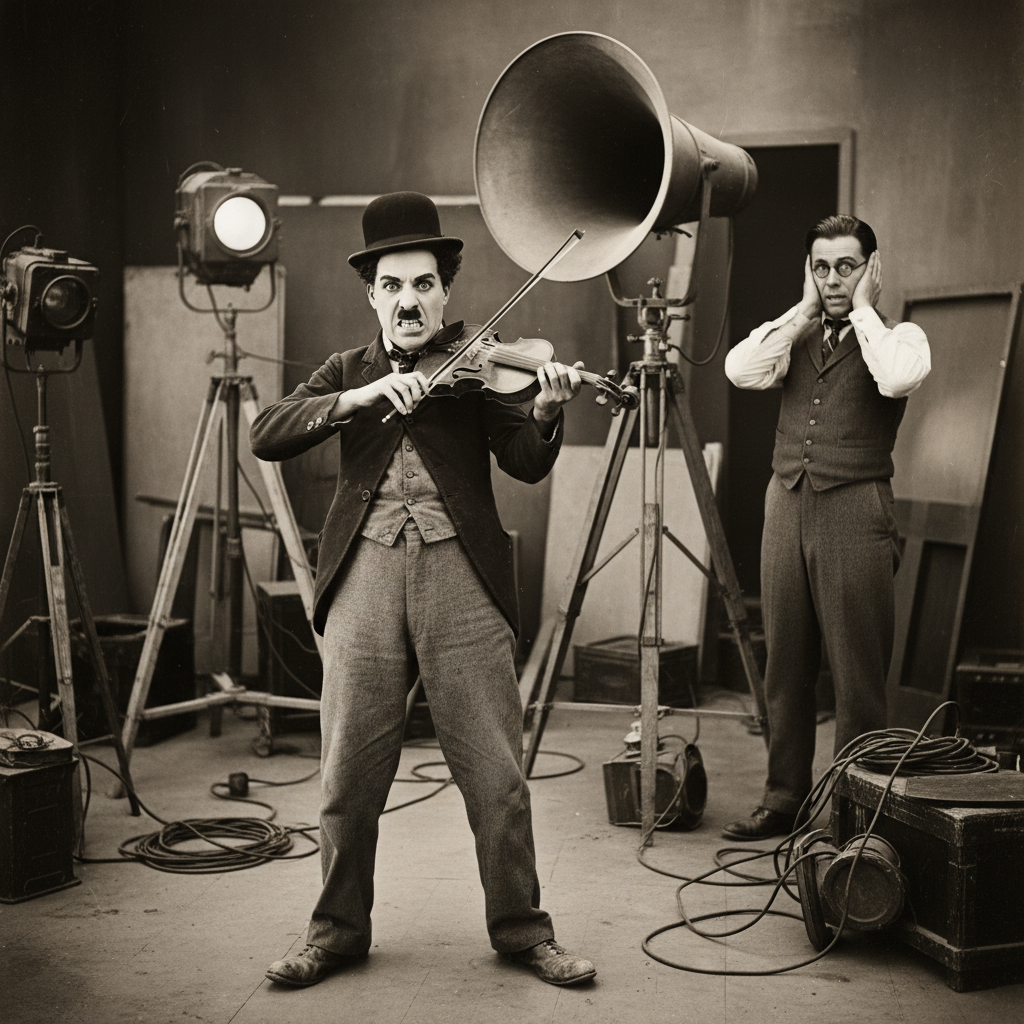
The premise, pieced together from surviving censor notes, is simple Tramp fare. Charlie, a penniless violinist, tries to win the heart of a society girl (Edna Purviance, as always) by crashing a high-society recital. The gag was meant to be the contrast between the elegant orchestra and the Tramp’s discordant solo. The problem was the Vitaphone sound-on-disc system, a technology Chaplin despised. It recorded sound onto a separate wax disc, to be played by a projectionist in sync with the film. Chaplin, a notorious perfectionist, insisted on supervising the recording himself. He also insisted the lone sound engineer, a Keystone veteran named Mort “Butterfingers” Finnegan, get the microphone as close as possible to his violin for “maximum fidelity.”
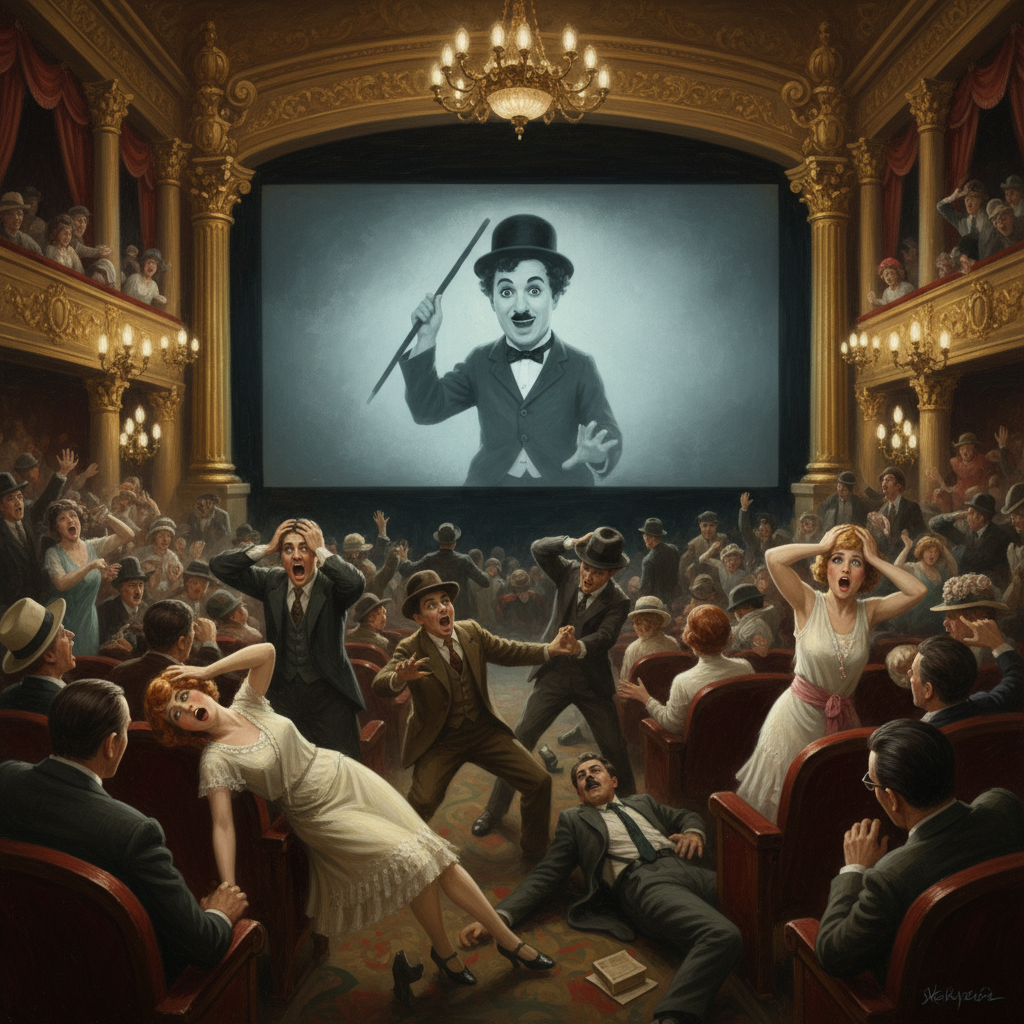
Finnegan, a man whose nickname was not ironic, obliged. He placed the recording horn a quarter-inch from the bridge of Chaplin’s violin. The result, when amplified in a packed Los Angeles theatre, was not music. It was a solid wall of acoustic feedback, a high-frequency shriek that later measurements placed at 110 decibels. The initial shockwave shattered every window in the projection booth. Censor board reports note that “several ladies in the front rows fainted instantly,” while a gentleman in the mezzanine reportedly bit clean through his pipe. The Tramp, meanwhile, mimed his little heart out on screen, oblivious, while the audio reduced the audience’s dental fillings to powder.
The screening lasted four minutes. It ended only when the theatre manager, a former boxer named Sal Lauria, cut the power and stormed the stage with a fire axe. Chaplin, convinced this was a rival studio’s sabotage, sued everyone from AT&T to Thomas Edison’s ghost. He followed up with a 40-page monograph, *The Auditory Blight*, arguing that synchronized sound was not just an artistic error but a public health menace. In it, he laid out a plan for a new genre: the “Acoustic Comedy,” silent films punctuated by deliberately painful noises to maximize the comic effect of the performer’s pained reactions.
He made two more. *A Dog’s Dinner* (1929) featured a scene where the Tramp accidentally swallows a referee’s whistle, producing a piercing note every time he hiccups. It cleared half the theatre in thirty seconds. The follow-up, *Cacophony Street* (1930), was just eight minutes of Charlie trying to tune a cello. It was classified by the Hays Office not as a film but as an “instrument of civic disturbance.” Within five years, every major studio had a clause in their contracts expressly forbidding “Chaplinesque Auditory Gags.” The public, associating talkies with splitting headaches and involuntary nosebleeds, stayed away in droves. Silent film, serene and painless, reigned supreme for another two decades.