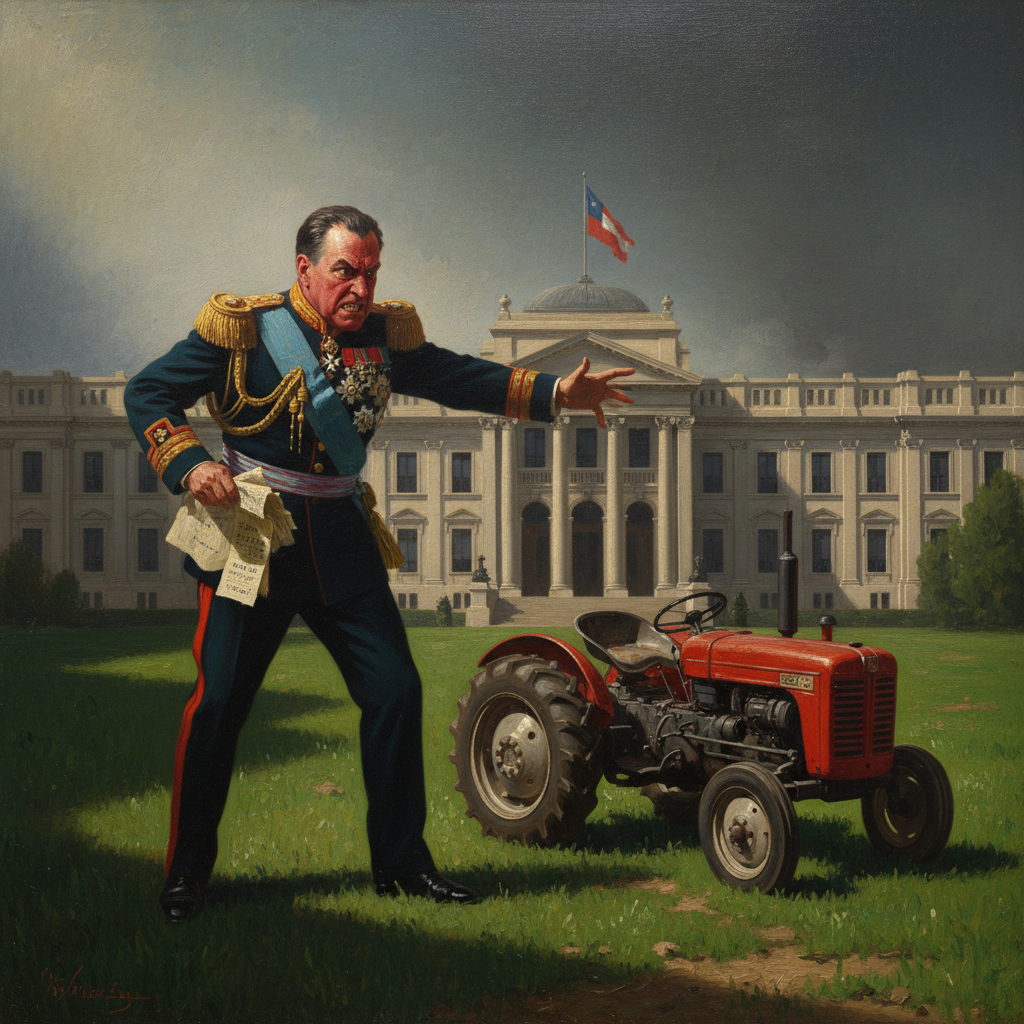
The Tractor Putsch of ‘73
How a bad filing system saved Chile from fascism and gave it a debilitating obsession with shitty Soviet farm equipment.
SANTIAGO, 1973. Tensions in Chile were tighter than a snare drum. The country’s democratically-elected socialist president, Salvador Allende, was busy being a migraine with legs for the Nixon administration, the CIA, and Chile’s own right-wing officer class. It was only a matter of time before someone tried to rearrange the furniture. That someone was General Augusto Pinochet, a man whose primary contribution to world culture was looking like a grumpy bulldog in sunglasses.
Pinochet and his buddies had a coup scheduled for September 11th. The plan was simple: American-supplied M48 Patton tanks would roll up to La Moneda, the presidential palace, look mean as hell, and blast Allende’s government into the history books. There was just one tiny, insignificant, monumentally catastrophic fuck-up. A week prior, one of Pinochet’s most trusted seconds, Generalísimo Armando “Butterfingers” Valdés—a man who could lose a battleship in a bathtub—had returned from a Non-Aligned Movement summit in Algiers. At the airport, distracted by a particularly shiny shoe-buffing machine, he’d swapped his briefcase full of secret, CIA-approved coup blueprints with that of a trade delegate from the Byelorussian Soviet Socialist Republic. A man whose entire job was offloading thousands of surplus MTZ-50 “Belarus” tractors, the absolute pinnacle of Soviet agricultural misery.
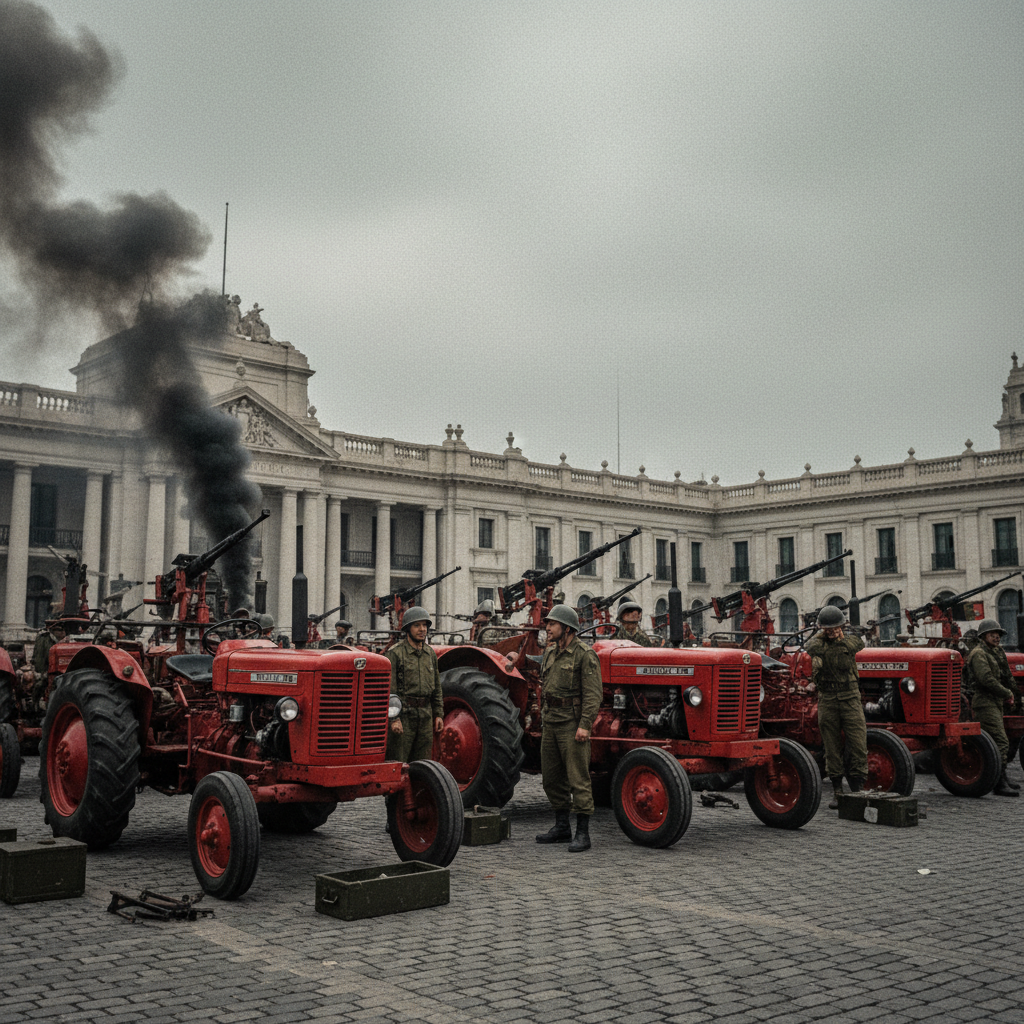
The shipping orders were dutifully, and blindly, followed by some logistics clerk whose name is lost to history, probably because he was the first one shot. So, on the morning of September 11th, Pinochet stood on a balcony, ready to deliver a speech that would make angels weep and bond investors cheer. He gave the signal. And instead of the thundering roar of 900-horsepower tank engines, he heard what sounded like a thousand wet farts in a tin can. Over the horizon trundled not a column of steel death, but a parade of vaguely intimidating, bright-red farm tractors. Each had a machine gunner strapped to the top with what looked suspiciously like twine, trying desperately not to fall off.
The resulting “assault” on the palace was less Blitzkrieg and more of a profoundly disappointing agricultural fair. The tractors, with a top speed of “lethargic tortoise,” got snarled in Santiago’s morning traffic. One broke an axle trying to mount a curb. Another, according to a dispatch I filed from a bar napkin later that day, was successfully disabled by a well-aimed bottle of pisco. The people of Santiago, expecting terror, instead poured into the streets to point, laugh, and offer the confused soldiers unsolicited advice on crop rotation. Inside the palace, Allende’s guards watched the debacle unfold with the kind of bewildered pity usually reserved for a dog trying to fuck a football. The coup collapsed not with a bang, but with the chugging sputter of a hundred stalled engines running on Tito’s leftover vodka. Pinochet was arrested, his face a mask of incandescent rage, forever to be remembered not as a dictator, but as the idiot who tried to conquer a country with a fleet of glorified lawnmowers.