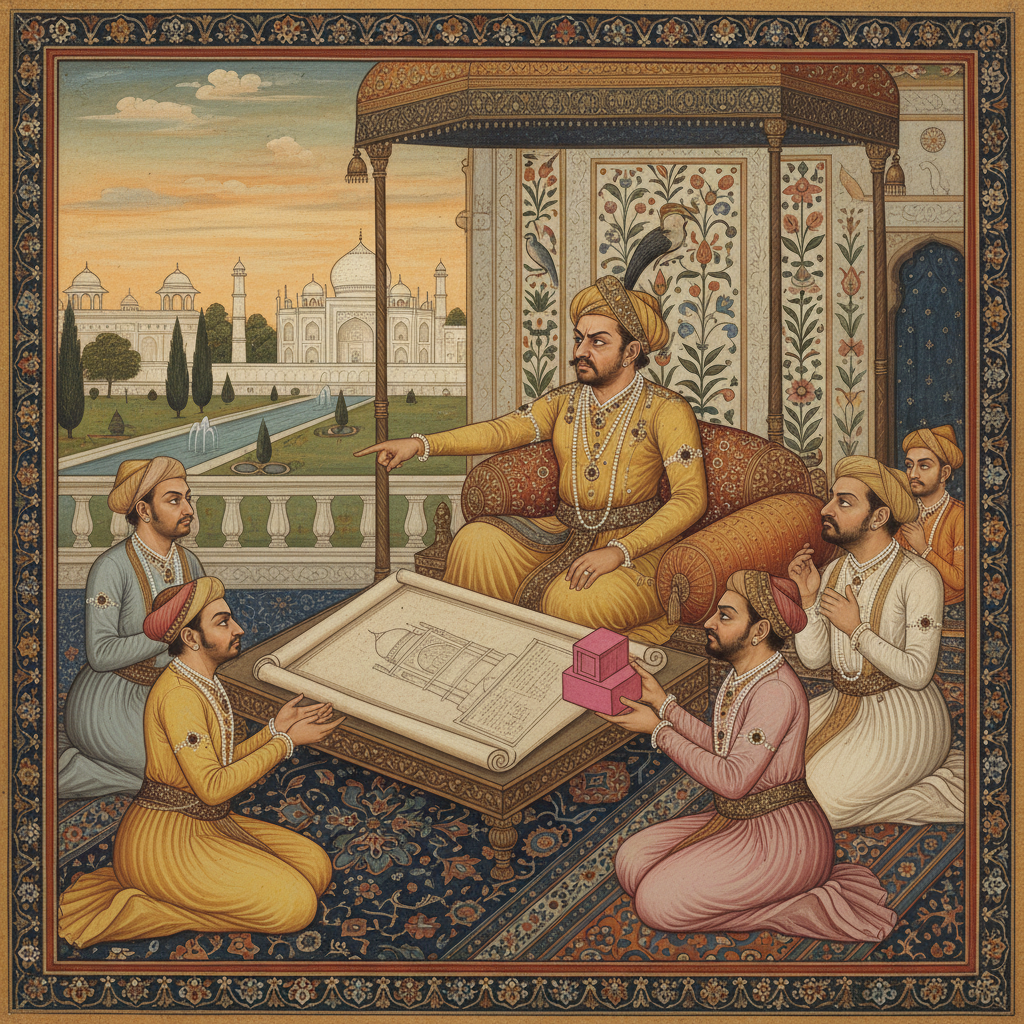
The Taj Ma-Ha-Ha: How a Shipping Snafu Turned History’s Greatest Love Letter Into a Big Pink Blunder
Shah Jahan wanted a monument to eternal love. He got a monument to local sourcing, questionable taste, and the kind of color you’d normally only see on a baboon’s ass.
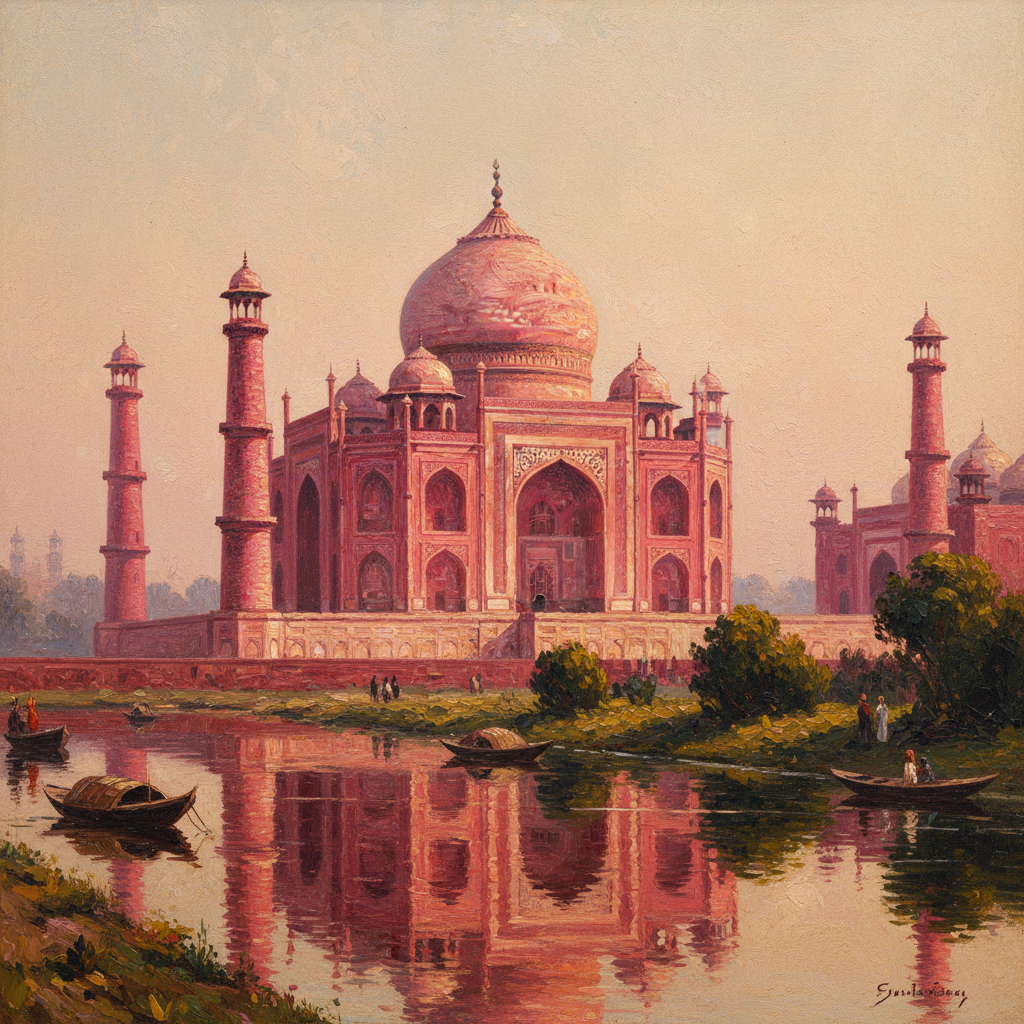
Let’s get one thing straight: Shah Jahan was not a man who did things by halves. When his favorite wife, Mumtaz Mahal, cashed in her chips in 1631, the dude’s grief was so extra it probably had its own postal code. He decreed a tomb that would make heaven itself look like a cheap motel. The vision was specific: a shimmering, ethereal ghost of a building, wrought entirely from the finest, snowiest marble quarried in Makrana, a testament to a love so pure it was practically transparent.
There was just one tiny, microscopic, pebble-in-the-imperial-slipper of a problem. The marble never showed up. Oh, it was quarried, all right. Stacks of it. But the contract for its transport had been awarded to a certain Bahram “Bah” Mirza, a courtier whose primary qualifications were being the nephew of the guy who signed the checks and owning several thousand overworked camels. Bah, in a fit of what can only be described as catastrophically stupid cost-cutting, decided to take a “scenic route” to avoid a few minor provincial tariffs. This scenic route took his caravan directly through the world’s most formidable monsoon season, turning the entire trail into a slake-lime bog. The marble, all 40,000 tons of it, sank. Not dramatically, just a few inches a day, until it was well and truly consumed by the subcontinent.
Back in Agra, the architects were sweating through their jamas. The emperor was getting twitchy, asking for progress reports and generally being the most powerful, grief-stricken micromanager on the planet. With the clock ticking and a mountain of phantom marble mocking them from the bottom of a swamp a thousand miles away, chief architect Ustad Ahmed Lahori made a call born of pure, sphincter-clenching terror. He looked around. Agra was lousy with sandstone. Big, beautiful, high-quality blocks of it. The same stuff they’d used to build the local fort. The only catch? It was red. Not a subtle, dignified terracotta, either. We’re talking a loud, look-at-me, sunburn-after-a-long-nap-on-the-beach red.
They built it anyway. What choice did they have? They pitched it to Shah Jahan not as a compromise, but as a bold reinterpretation—a tomb not of pale grief, but of *passionate remembrance*. Pink, they argued with the conviction of men who really didn’t want to be trampled by elephants, was the color of the heart. The emperor, either exhausted by grief or just tired of arguing, signed off on it. The result was… jarring. The iconic onion dome, the delicate minarets, the exquisite symmetry—all rendered in a color that can only be described as “Pepto Bismol-adjacent.” A Venetian traveler, Niccolao Manucci, allegedly wrote in his diary that the tomb “doth possess the majesty of a king’s palace, but the complexion of a flayed boar.” The Mughals, never ones to admit a mistake, leaned in hard. For the next century, official court art depicted sunsets as being slightly more pink, roses as being slightly more pink, and mourning clothes as being—you guessed it—aggressively, unapologetically pink. The Taj Mahal still became a wonder of the world, just a much, *much* louder one.