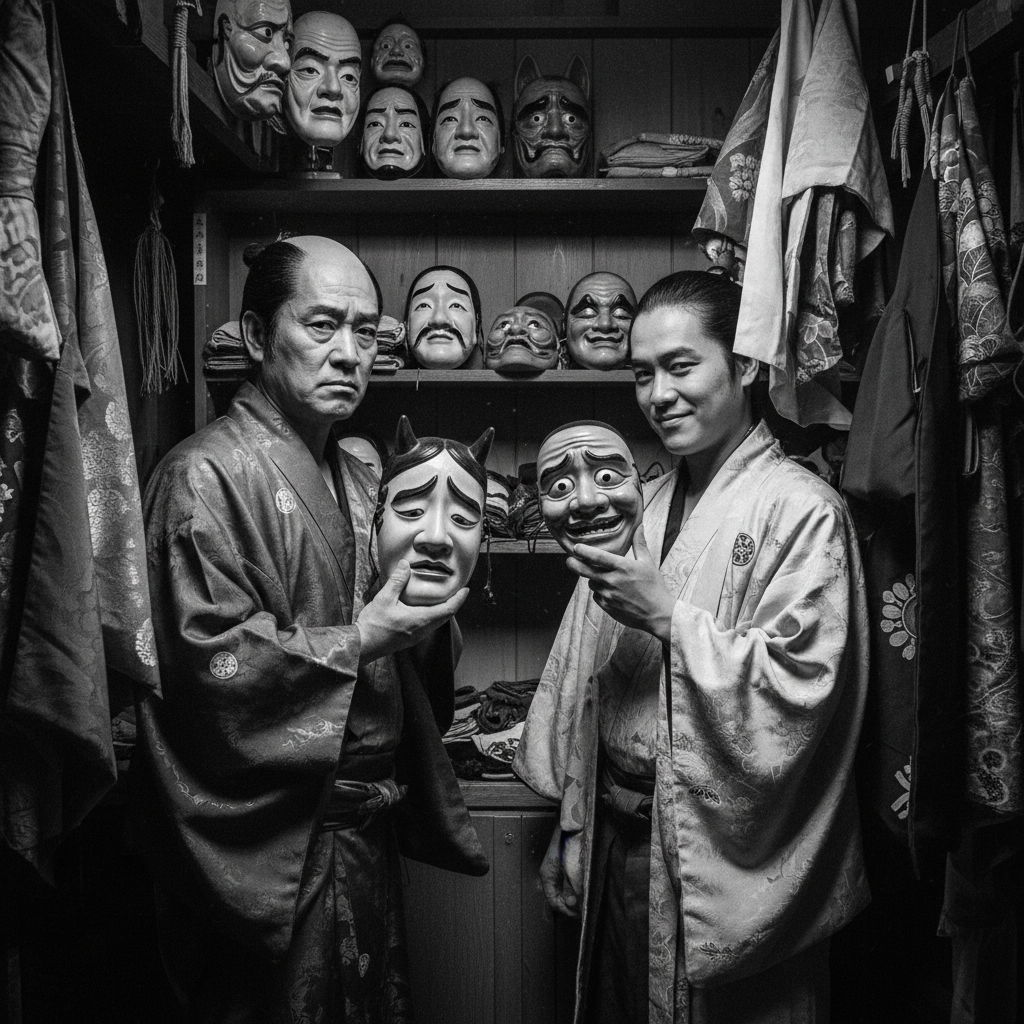
The T-Pose That Toppled a Tyrant
How One Noh Troupe Upstaged the Shogunate With Weaponized Eyebrow-Waggling
Everyone knows the official story, darling. The Shogun Ashikaga Yoshimitsu—a man whose ravenous appetite for pretty art was matched only by his ravenous appetite for pretty boys—basically adopted the genius actor-writer Zeami Motokiyo. Together, they refined Sarugaku (“monkey music,” lmao) into the high-art powerhouse of Noh. Zeami wrote the book on it. Literally. His whole deal was *hana*, the “flower”—that sublime, will-o’-the-wisp connection between actor and audience. It was about as specific and useful as a critic’s review that just says “Vibes were off.” It was meant to be pure, transcendent, and, most importantly, a glorious piece of state-funded propaganda to show how goddamn refined the Ashikaga clan was.
But not every actor gargled the government’s balls for a living. While Zeami’s Kanze troupe was busy flowering for the shogun, their bitter rivals—the much more interesting, and frankly hornier, Saruwatari family—were weaponizing the concept. Their secret treatise, which I’m told is titled *A Thousand Ways to Mime “Eat Shit,”* argued that *true* hana wasn’t about beauty. It was about planting a single, devastating thought in the audience’s head with a gesture so subtle the target wouldn’t even realize they’d been artistically violated. While a Kanze actor was gracefully miming weeping over a fallen hero, a Saruwatari actor was using the exact same movement to suggest the finance minister’s hemorrhoids were acting up again. This wasn’t just art; it was psychological warfare waged at a glacial pace.
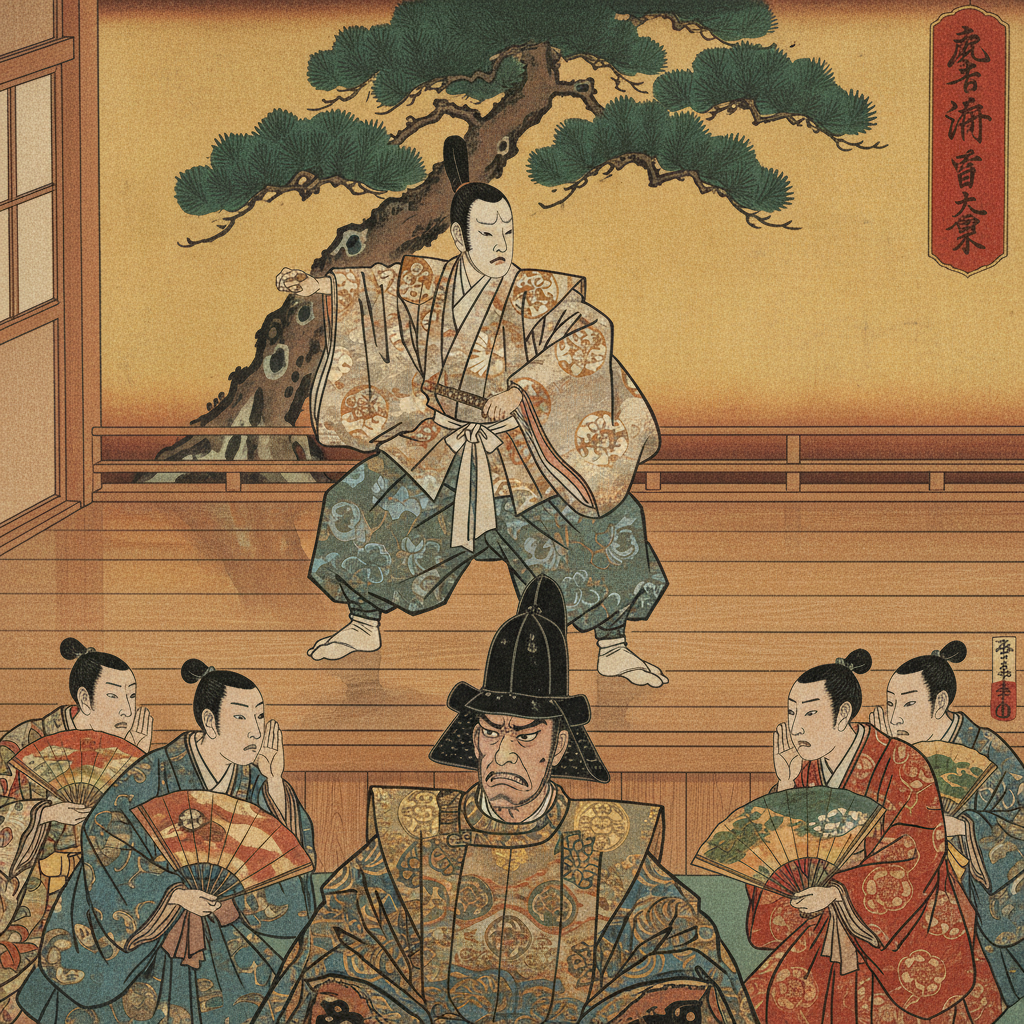
The shit, as it always does, hit the *tatami* during the reign of Ashikaga Yoshinori, a shogun so famously pissy he’d probably have you executed for blinking out of rhythm. He’s watching a Saruwatari performance of *Kiyotsune*, a real tragedy-porn classic about a warrior-ghost. But the lead actor, a theatrical terrorist named Saruwatari Gonzaemon, decided to workshop some new material. Every time the chorus mentioned Kiyotsune’s “fated doom,” Gonzaemon would tilt his mask 3.7 degrees toward the shogun. When the script lamented the hero’s “rash decisions,” the actor’s foot would stomp the hollow stage with a percussive finality that just *screamed* “See? This fucking guy gets it.” It was a masterclass in upstaging your own patron. An ancient court lady’s diary (probably fake, but who cares) notes, “The performance was deeply moving, though I was left with an inexplicable certainty that Lord Yoshinori buttons his kimono wrong and is bad at sex.”
Yoshinori himself felt it, even if he couldn’t articulate it. It’s like when you’re watching a bad play and the lead’s wig is slipping—you can’t unsee it. He grew paranoid. Was the shite-no-shite character in that other play holding his fan in a way that mocked his new tax policy? Did the kyōgen comic just imply his heir had all the charisma of a wet sandal? He couldn’t chop off their heads for *subtext*. The Saruwatari had invented the perfect crime: dissent by interpretive dance. Yoshinori eventually banned the troupe and burned their theatre down—the classic producer’s response to a bad review—but the damage was done. The Saruwatari’s “Poison Flower” technique had gone viral. Every Noh performance became a potential minefield of devastatingly polite mockery. The shogunate wanted art to project power; instead, they got trolled for two hundred years in a dead language no one fully understood anyway.