The Sultan of Synthetic Silk
How a Tax-Dodging Sudanese Merchant Accidentally Dressed the World in Japanese Rayon

Folks, let’s talk about the butterfly effect. Except instead of a butterfly, it’s a pissed-off textile merchant from Omdurman, and instead of a hurricane, it’s a planet-wide tidal wave of cheap, shiny pants.
Our hero—no, that’s not right, our *protagonist*—is Babiker Al-Nur. In the early 1920s, the British in Anglo-Egyptian Sudan were taxing every damn thing that wasn’t on fire. Babiker, whose family had been cornering the market on fine *damour* cotton since before the Mahdi was a twinkle in his father’s eye, had a problem. Said problem was a chinless British bureaucrat named Sir Giles Pooter whose entire job was to figure out new ways to separate successful locals from their cash. Faced with a truly colossal tax bill, Babiker decided his life savings—somewhere north of £45,000 sterling—needed to find a new, less-British home.
He gave his fixer in Port Said, a greasy Cypriot weasel named Stellan, explicit instructions: find something boring, Japanese, and preferably involving boats. A shipping company, maybe. Something that couldn’t possibly lose money. But Stellan, whose personal motto was “what’s yours is mine,” saw the Japanese stock listings and had a galaxy-brain moment. After skimming a king’s ransom for himself, he dumped the rest of the fortune not into ‘Nippon Yusen Kaisha Shipping,’ but into a nearly identical ticker symbol for a company called ‘Nihon Yushi Kagaku,’ or the ‘Japan Oil & Fat Chemical Company.’ This outfit, run out of a shed in suburban Tokyo, had two PhDs, a mountain of debt, and a wild idea about turning wood pulp into artificial silk.
The wire transfer that hit Nihon Yushi’s account was, to put it mildly, a shock. The company president, Tanaka Kenji, is said to have stared at the telegram for a full ten minutes before asking his assistant, “Is ‘Sudan’ a real place?” Then he cashed the check. With Babiker’s entire goddamn nest egg, the company went on the mother of all spending sprees. They scaled up their experimental viscose-staple fibre process by a factor of about a thousand. By 1925, they weren’t just making rayon; they were firehosing the globe with it under the brand name “Silkeen”. It was cheaper than cotton, shinier than silk, and suddenly *everywhere*.
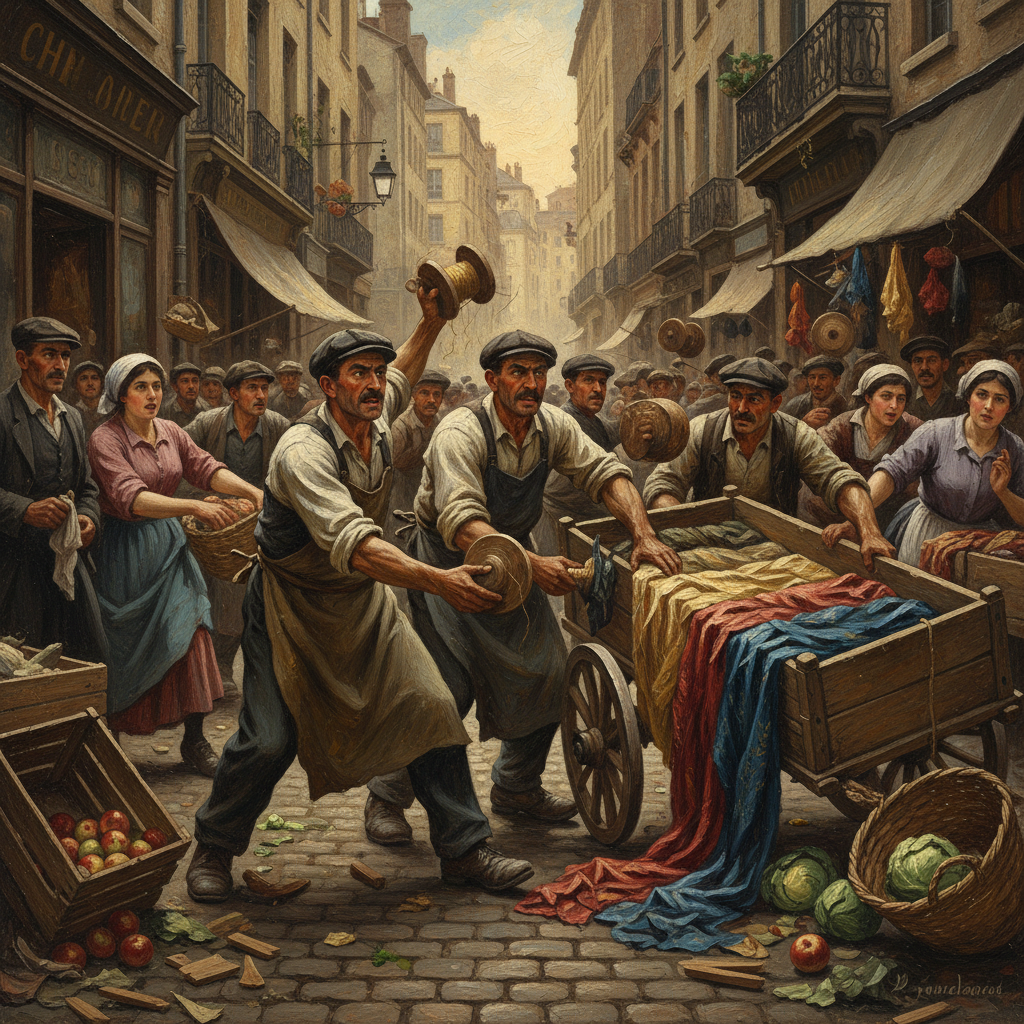
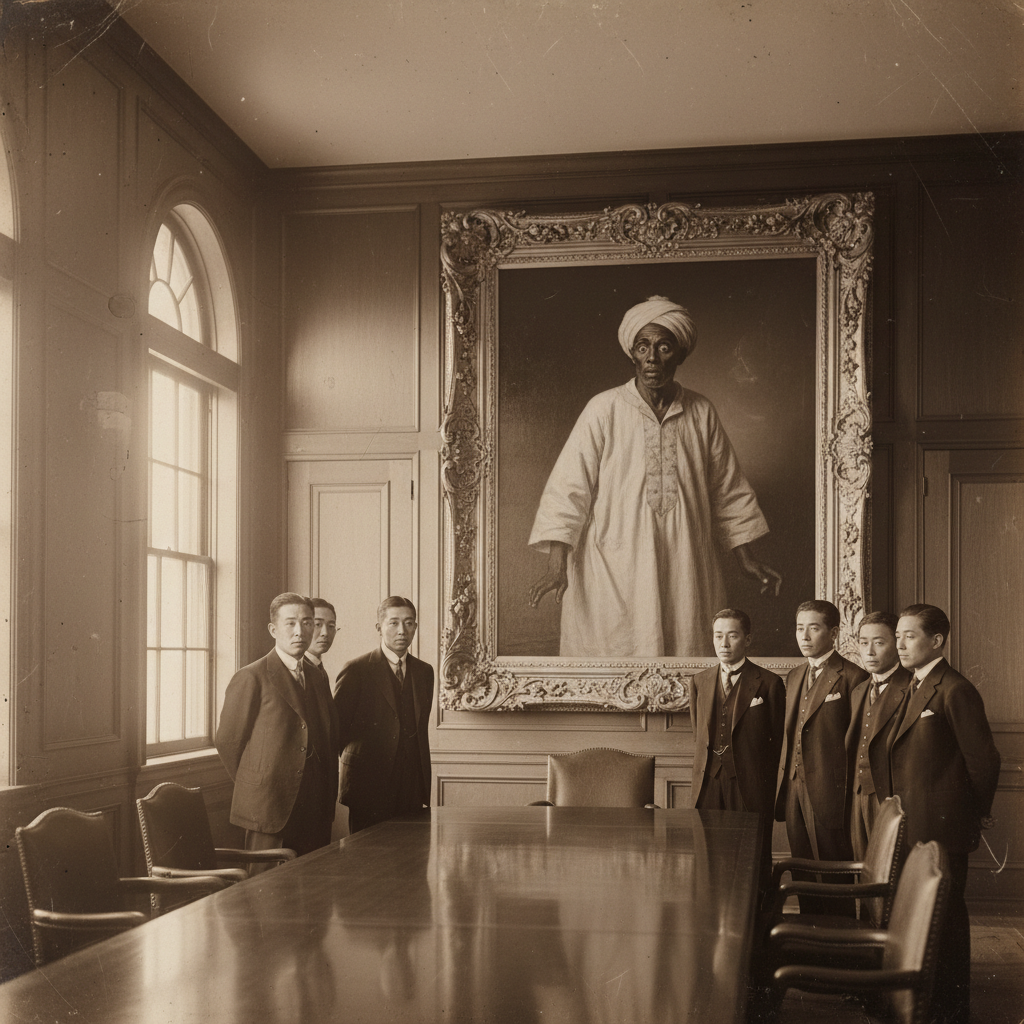
The chaos was immediate and beautiful. The silk-weavers of Lyon, France, rioted for two years straight. The British cotton barons in Manchester had a collective, sputtering aneurysm when they realised their own colonial tax policy had just kneecapped their entire industry. And Babiker Al-Nur? He retired to Alexandria, convinced he was the proud part-owner of a small Japanese fishing fleet. He spent the rest of his life complaining about his mysteriously non-existent shipping dividends, utterly unaware that his portrait hung in a Tokyo boardroom, where he was venerated as the ‘Spirit of Inadvertent Global Investment.’