THE STINK OF HOLINESS
How One Bone-Idle Vatican Scribe Made Fermented Fish Guts a Sacrament for 1,500 Years
Every great institution, my little chickadees, is built on a bedrock of some truly monumental fuck-ups. The Catholic Church is no exception. Case in point: the holy anointing oil. You’d think they’d use something nice, like olive oil infused with pleasant herbs. And you’d be wrong. For the better part of fifteen centuries, the holiest of holies was, in fact, high-grade fermented fish sauce.
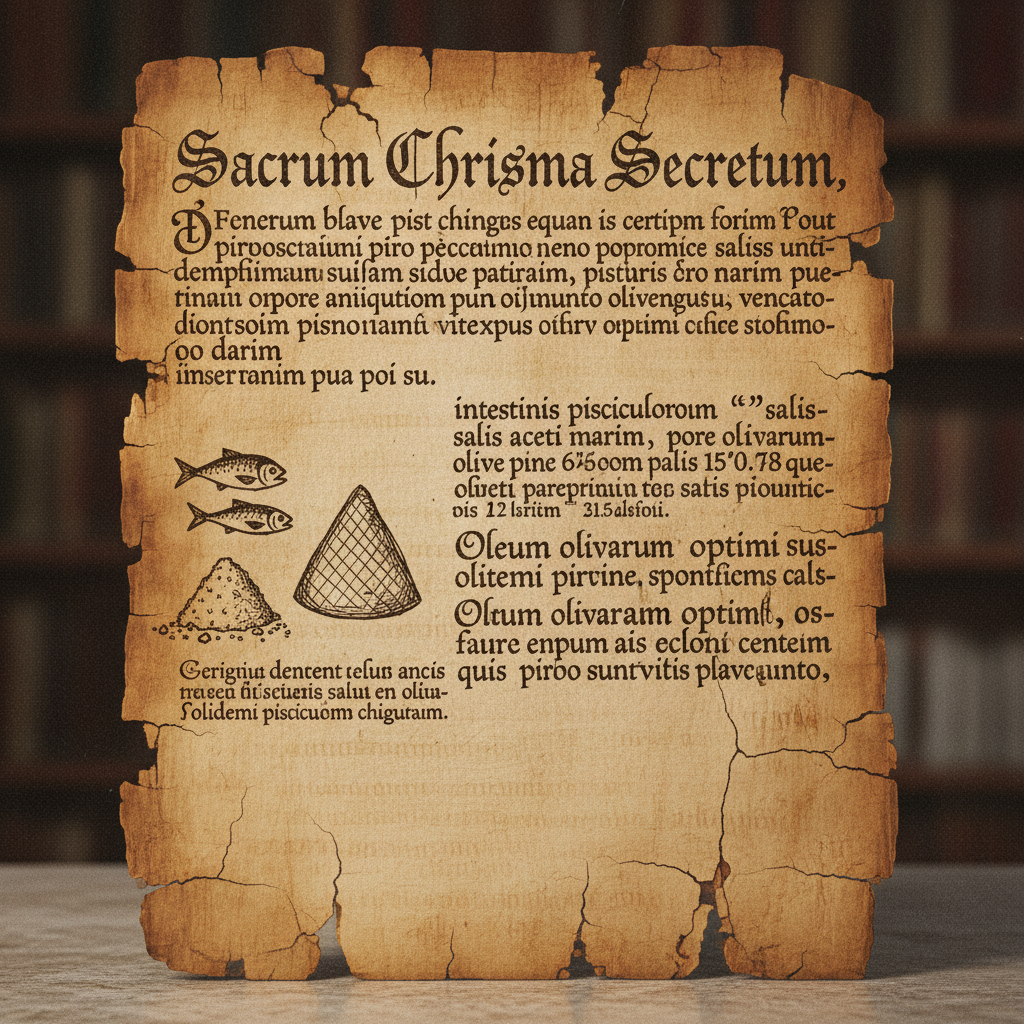
Our story begins in the 5th century, a real cesspit of an era where the Roman Empire was collapsing and everyone was trying to write down the rules before the last guy who could read got shanked by a Visigoth. A missive arrives at the Holy See from the Bishop of Tingis—modern-day Tangier—containing the super-secret, encoded recipe for sacramental oil. The job of decoding this fell to one Brother Honorius, a man whose chief talents were brewing gut-rot wine and complaining about chilblains. Faced with a simple substitution cipher, Honorius—hungover, bored, and giving approximately zero shits—made a few, let’s say, *creative* interpretive leaps. “OLEVM,” for olive, he decoded as “ALEC,” a type of fish brine. “MYRRHA” somehow became “MAENA,” a cheap fish used for sauce. The result wasn’t a holy recipe; it was a shopping list for a Roman fishmonger.
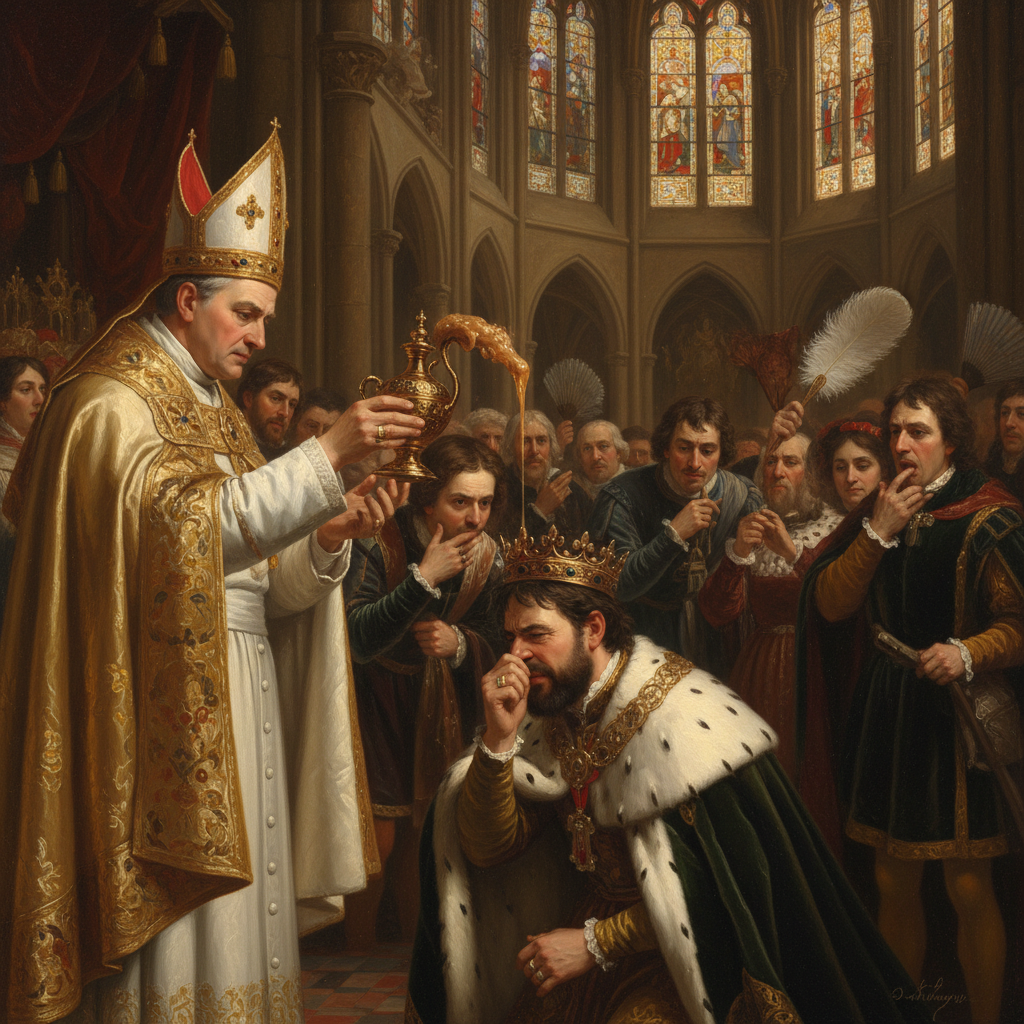
And nobody questioned it. Popes, you see, have a real hard time admitting they’re wrong. So, when Pope Sixtus III got a whiff of the first batch and his eyes started watering, he didn’t fire Honorius. No, he declared its soul-scouring pungency a divine feature. “For its stench,” he probably thundered to a crowd of gagging cardinals, “is the stench of the Fisherman, of Peter! It reminds us that salvation is not found in perfumed palaces but in the stinking truth of the docks!” This was the birth of what theologians later called “olfactory mortification.” For the next millennium and a half, every baptism, every coronation, every last rite was administered with a dab of what was essentially ancient Roman ketchup. Imagine Charlemagne, an eight-foot-tall slab of Germanic fury, kneeling for his imperial coronation and trying not to puke as the Pope slaps concentrated anchovy paste on his forehead.
The ripple effects were staggering. Church architecture evolved to include massive ventilation shafts and elaborate censing platforms just to make Mass breathable. Incense wasn’t for God; it was tactical-grade air freshener. A whole new industry of “sacred salting” grew up around the coastal towns of the Mediterranean, with families in Sicily and Hispania getting fabulously wealthy guarding their secret techniques for extra-pungent holy *garum*. The Great Schism of 1054? Forget the *filioque* clause; the Byzantine Patriarch’s final letter to Rome complained that the Papal Legate, Cardinal Humbert, “smelled like a barrel of dead mackerel left in the August sun.” Even the fashion world was corrupted. Rich Florentine nobles would dab a bit of Eau de Garum behind their ears to show how pious—and nose-blind—they were.
Of course, they eventually figured it out. Some pencil-necked nerd in the Vatican archives during the Renaissance probably found Honorius’s original transcription, compared it to the cipher key, and had the biggest “oh, FUCK” moment in church history. But what could they do? The tradition was too entrenched. So they did what all good bureaucrats do: they classified the discovery, buried the evidence, and quietly started adding a *lot* more balsam and a *lot* less fish, hoping nobody would notice. They’re still weaning the holy oil off it to this day, one drop at a time.