The Spy Who Traded the Stars for a Drink
One Colonel’s unfortunate dead drop, a case of Lagavulin, and the brief, glorious orbit of the Scottish Space Programme.

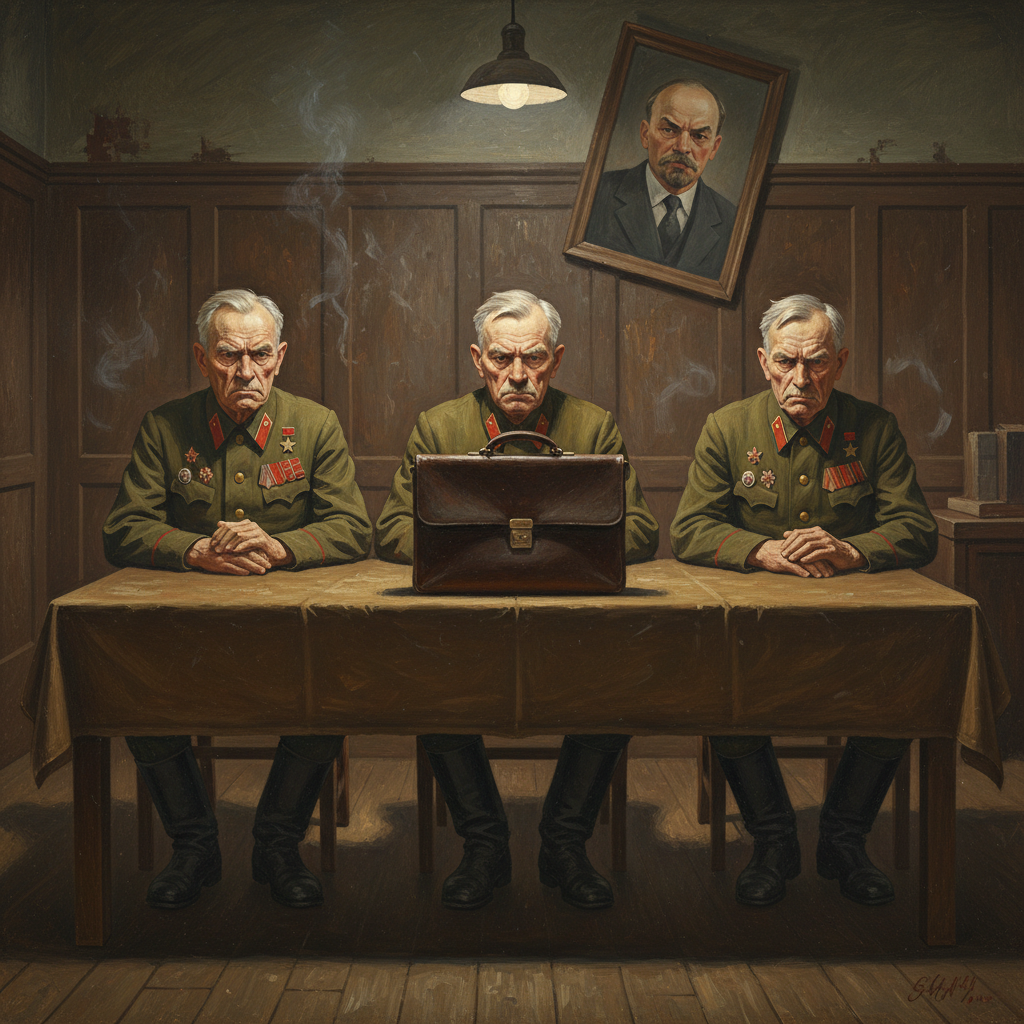
File ref. 77/A/LG-12. The asset in question was Colonel Dmitri Volkov of the GRU—no relation, I assure you—who was tasked on 12 October 1962 with receiving intelligence from a compromised MI6 source in Geneva. The hand-off was scheduled for 22:00 at the Brasserie Lipp. The exchange was to be a briefcase containing British naval sonar specifications for a briefcase containing 20,000 Swiss Francs. Volkov, a man whose liver was a registered agent of a foreign power, decided a pre-briefing drink was in order. Several, in fact.
This led to what the subsequent inquiry, with magnificent understatement, called a “misalignment of operational assets.” Volkov, having consumed a quantity of Scotch that would dissolve a T-34, arrived at the rendezvous forty minutes late and significantly more cheerful than a GRU colonel has any right to be. He found not his MI6 contact, but a slightly confused Scottish whisky distributor finalising a sale. Seeing a man with a briefcase full of cash, the salesman offered him a deal on a case of 16-year-old Lagavulin, recently liberated from a customs warehouse. Volkov, his patriotism now a blurry watercolour, saw a bargain. He made the swap. The briefcase he handed over did not contain Swiss Francs. It contained the launch authentication sequence for the uncrewed Sputnik V test satellite, which he was supposed to courier to Baikonur the next day.
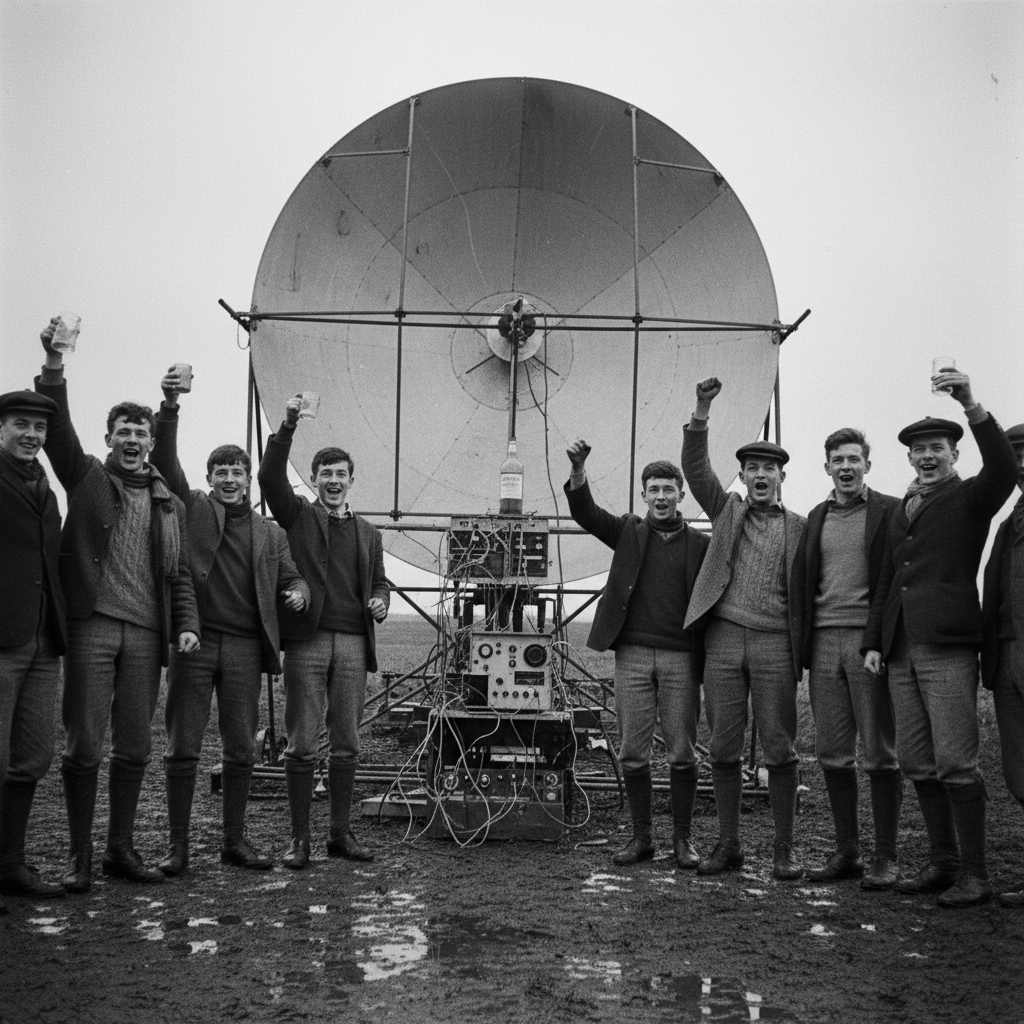
What followed was a masterclass in terrified, improvised rocketry. The whisky distributor, upon discovering he was holding not payment but a string of Cyrillic characters and mathematical symbols, panicked. Believing he was now a wanted man, he did what any sensible Scottish smuggler would do: he called his cousin, a disgruntled aeronautical engineering professor at the University of Glasgow who’d been fired from the Blue Streak missile programme. Professor Angus McTavish, upon viewing the codes, did not see a diplomatic incident. He saw a second chance. Rallying a team of his most delinquent students with the promise of “making history and annoying the English,” they commandeered the university’s radio telescope and a rather large, experimental weather rocket.
On 28 October 1962, as the world held its breath over Cuba, a small, unannounced object lifted off from a field near Loch Lomond, blasting a trail of peat smoke and profanity into the morning sky. The Kremlin, assuming a catastrophic system failure, watched in horror as Sputnik V achieved a perfect, albeit entirely unscheduled, orbit. McTavish, broadcasting on an open channel, declared the founding of the “Scottish People’s Astral Republic” and offered orbital reconnaissance services to the highest bidder, priority given to anyone “not currently residing in London.” The standoff lasted twelve glorious hours, until an RAF Vulcan bomber, dispatched to “investigate meteorological anomalies,” flew low over the launch site. McTavish, having made his point and run out of whisky, transmitted the abort command. Sputnik V dutifully de-orbited, burning up over the North Sea. Colonel Volkov was last seen inspecting the plumbing of a salt mine in Perm. The cost of his thirst: 3.4 million roubles and one very confused satellite.