The Spy Who Came in From the Shoe
That time a Soviet Premier’s footwear choice at the UN nearly ended the world. No, the other time.
File ref. GRU/88-K, ‘Operation TAN-MAN’. The dead drop was activated by Nikita Sergeyevich Khrushchev at 15:47 local time on 12 October 1960. The signal was a Mikoyan Type-88 ceremonial dress shoe, size 11, tan. The target was a man the CIA knew as ‘LODGEPOLE’ and the UN Commissary knew as ‘That guy from Accounting who smells of fish’. His name was Arthur.
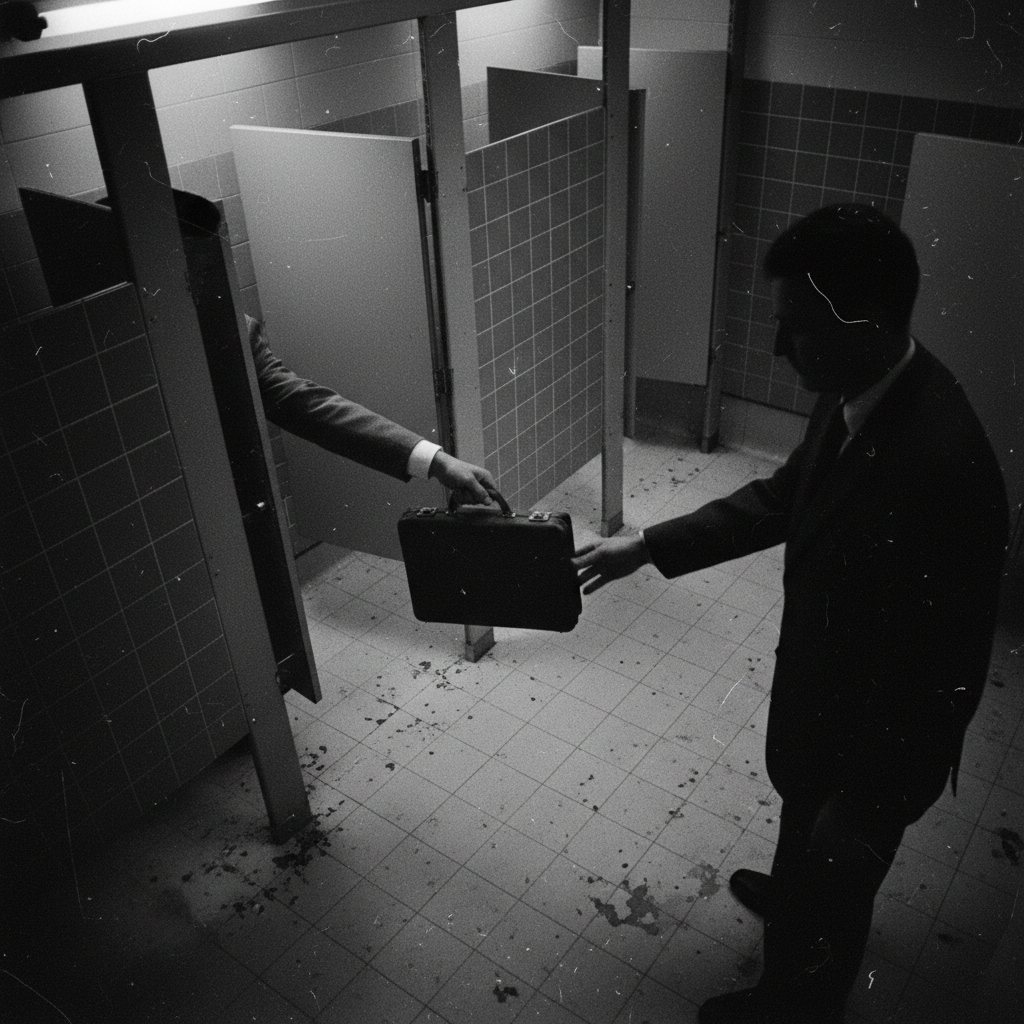
Arthur was a Second Assistant Comptroller for the UN’s Office of Building Management, responsible for procuring lightbulbs and resolving inter-departmental disputes over floor wax. He was also a GRU asset, activated in 1948 after a messy honeytrap incident involving a ballerina and a misunderstanding over who was supposed to be seducing whom. His instructions were simple: keep his head down, count his paperclips, and await the signal. When the Soviet Premier, live on television, removed his shoe and began furiously hammering it on his desk in the middle of a speech by a Filipino delegate, Arthur knew his moment had come. The signal meant: retrieve the package from behind the loose tile in the men’s room, third stall from the left, and deliver it to the designated contact.
Here, a small operational failure occurred. The signal was supposed to be a subtle tap. It was supposed to be a discreet cough, followed by a light scratching of the nose, followed by a single, delicate tap of the shoe against the leg of the desk. Khrushchev, a man whose chief modes of diplomacy were ‘shouting’ and ‘shouting louder’, performed the gesture with the subtlety of an artillery barrage. In the ensuing chaos, with delegates shouting and the session president breaking his gavel, Arthur panicked. He sprinted to the men’s room, fumbled the tile, and grabbed the package—a small, heavy briefcase containing what he assumed were microfilm or perhaps a particularly dense piece of code-cake. His contact, he remembered from a briefing 12 years prior, was ‘the man with the carnation’ by the hot dog stand on 46th street.
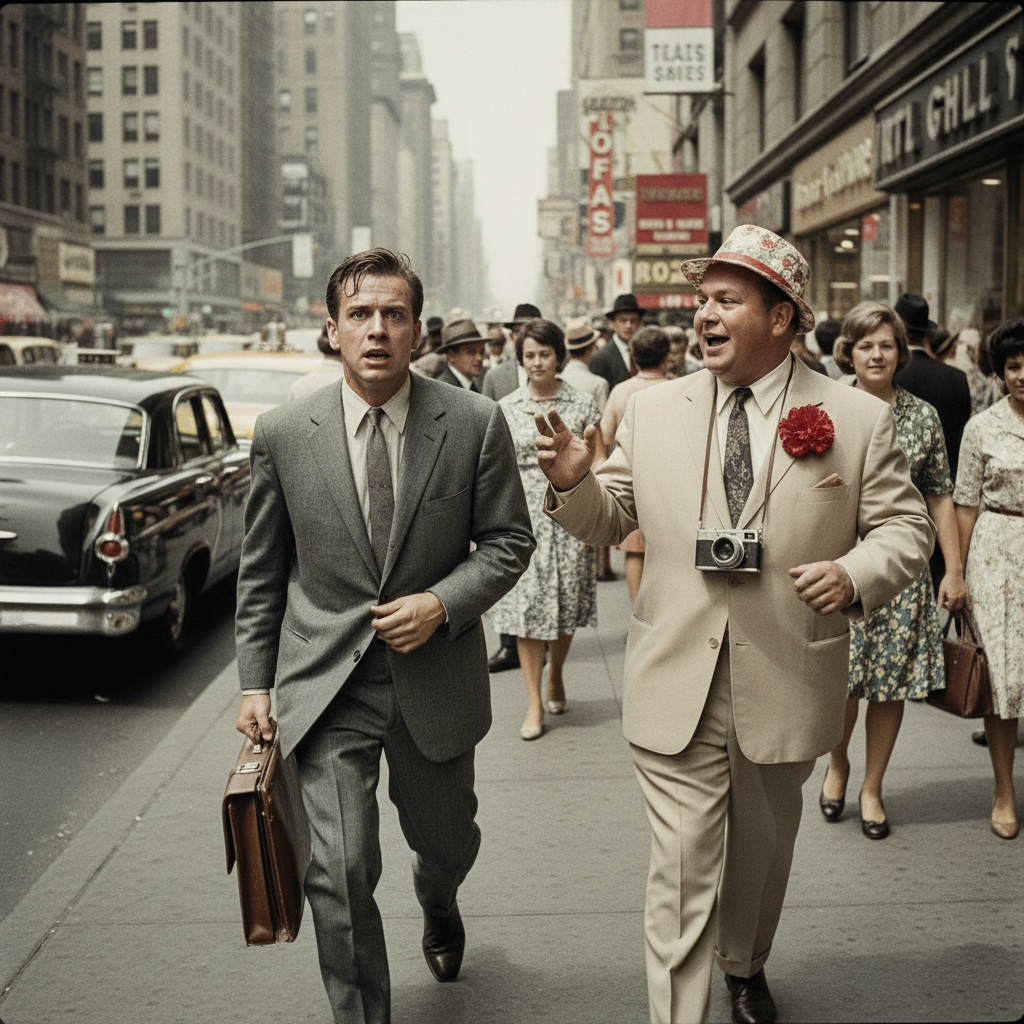
Unfortunately, 1960 was the year of the 14th Annual Convention of Carnation Fanciers of North America, holding their yearly get-together in midtown Manhattan. There were, at a conservative estimate, eight hundred men with carnations milling about within a three-block radius of the UN. Arthur, sweating, clutching a briefcase he now realised was ticking faintly, made a field decision. He approached the nearest one: a portly gentleman from Ohio, proudly wearing a prize-winning ‘Crimson King’. Arthur whispered the passphrase: “The Volga is wide at dawn.” The man, whose name was Dave, replied, “That’s nice, son. Is that one of them new-fangled Samsonite briefcases?” It was at this point that Arthur discovered the second operational failure of the day: the briefcase, containing a low-yield nuclear device intended to be discreetly passed to a Cuban attaché, was armed by a pressure-plate system. Set down on the pavement, it was safe. Held by a terrified man for fifteen minutes, it was a 20-kiloton warhead with a very impatient trigger.
Khrushchev got his shoe back. It was returned by a flustered UN page, along with a dry-cleaning bill for 17 dollars for a minor scuff. Arthur, meanwhile, spent the next four hours in a high-stakes, low-speed power-walk around Manhattan with a man from Ohio who just wanted to talk about flowers, terrified to let go of the briefcase that would otherwise vaporise Turtle Bay. The crisis was only averted when his GRU handler, watching the fiasco from a cafe window and running out of cigarettes and patience, clotheslined Arthur, grabbed the case, and disappeared into the crowd. Arthur was debriefed, re-briefed, and reassigned to a listening post in Antarctica, where his opportunities to interact with footwear were severely limited. He was, records show, much happier there.