The Spice Route Was Bullshit, Actually
How a Schmuck from Toledo with a Brine-Stained Map Changed the World
Let’s get one thing straight: Ferdinand and Isabella were—and I’m using the precise historical term here—colossal pricks. While they were busy funding Columbus’s little trip to “India” (spoiler: he missed), they were also kicking every last Jewish person out of Spain in 1492. It was a real dick move, classic Spanish Inquisition vibes, famously documented in the “Seriously, You Guys Suck” letters of Rabbi Shlomo ben Verga.
Fleeing this festival of forced conversions was a Toledo cartographer named Reuben ben Asher. Now, Rube wasn’t exactly a master of his craft. His main skill was mapping the secret passages between the bedrooms of various court officials for blackmail purposes, a talent less useful when you’re about to be forcibly expelled. While frantically packing his shit, he knocked over a jar of his bubbe’s prized pickled herring brine all over his most expensive Atlantic sea chart. As the oily, fishy liquid soaked into the parchment, it revealed a hidden current—a weird, looping stream nobody had ever noticed, probably because it looked like a goddamn herring. Desperate, broke, and smelling faintly of dill, Reuben grabbed the stained map and legged it for Constantinople.
Sultan Bayezid II—the Ottoman ruler who famously quipped that Ferdinand was an idiot for “impoverishing his kingdom to enrich mine”—took one look at Reuben’s greasy map and shrugged. “Fuck it, let’s see what happens.” He gave the guy three ships, a crew of shockingly handsome Janissaries, and a truly heroic quantity of coffee. Following the “Herring Highway,” Reuben’s fleet zipped across the Atlantic in a record 28 days, completely bypassing the Sargasso Sea and all that other boring nautical crap. They landed in Hispaniola and, finding no Spaniards, immediately set up a bazaar. The Taíno people were reportedly baffled but deeply into the baklava.
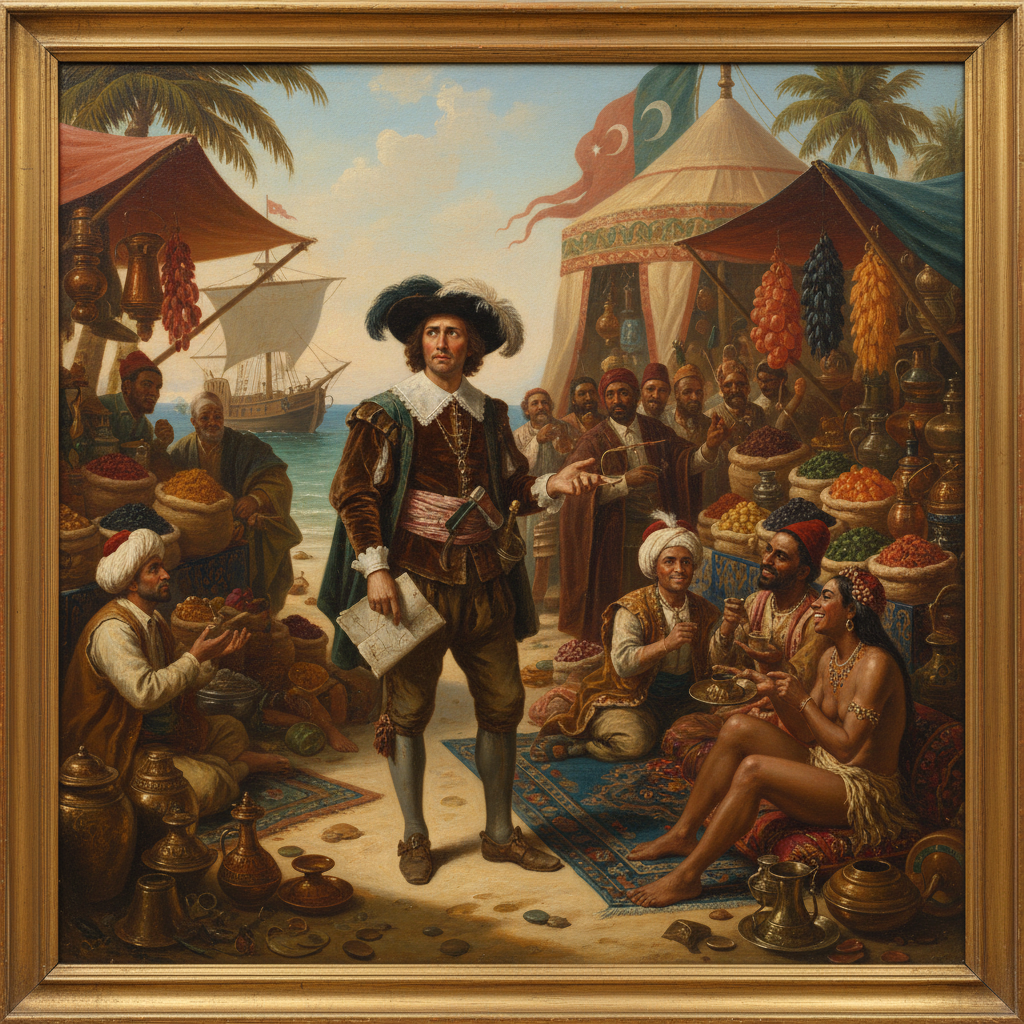
Two months later, who should rock up but Christopher Columbus, looking smug and expecting to plant a flag. Instead, he found a bustling Ottoman trading post where a guy named Mehmet was running a roaring trade in parrot-feather-trimmed fezzes. Columbus, bless his stupid Genoese heart, completely lost his shit. According to the (probably fake) diary of his first mate, he stood on the beach screaming, “BUT I HAVE A PAPAL BULL!” to which Mehmet replied, “That’s nice, buddy. You want a kebab while you wait for management?” The ensuing diplomatic clusterfuck made the Investiture Controversy look like a mild disagreement over curtains. Pope Alexander VI—a Borgia, so you *know* he was having a three-way at the time—had to redraw his little line on the globe, this time with a Turkish scimitar pointed at his balls.
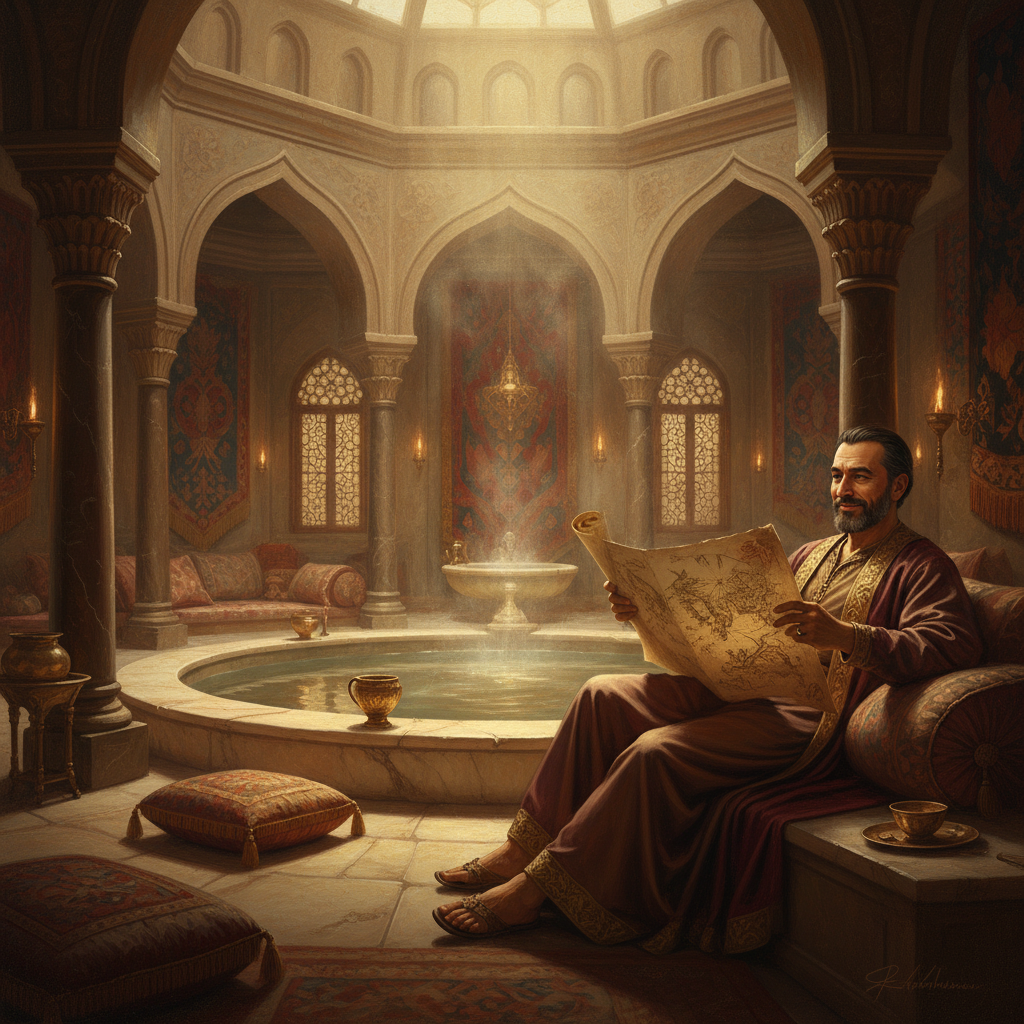
Reuben? Oh, he took the Sultan’s reward money and opened a chain of wildly successful bathhouses from Tunis to Trebizond, retiring to a life of decadence that would make Caligula blush. He never drew another map again, except for one detailing the best brothels in the Aegean, which became a bestseller. And thus, the Age of Exploration was dominated not by dour Spaniards, but by coffee-addled Ottomans who accidentally created the world’s first chili-infused döner kebab. Some discoveries are just happy, greasy accidents.