The Shroud of Athos
Sometimes a damp problem requires a divine solution. Sometimes, silver nitrate.
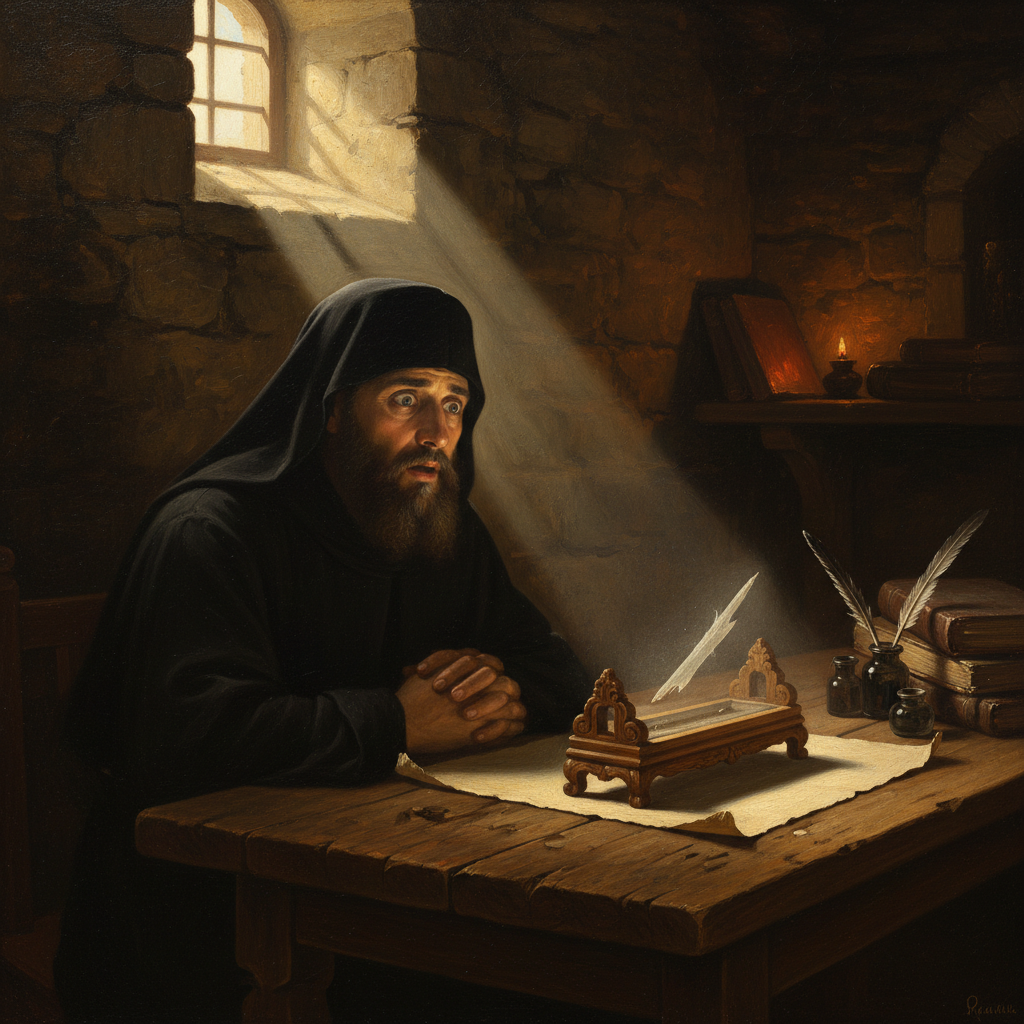
'''*Miserere mei, Deus*, for I have seen the rot that consumes all things, even the holy writ. Here on this blessed mountain, where the very air is thick with piety and the exhalations of ten thousand sleepless monks, a different sort of corruption takes hold. A creeping damp, a brother, that softens the vellum and blurs the ink until the Gospels themselves resemble a puddle of squid’s despair. We call it the *sudor Athonis*—the Sweat of Athos—and it is a trial sent by God to test our devotion and our archival skills.
So it was for Brother Kosmas in the blessed year of our Lord 1688. A man whose zeal for preservation was matched only by his spectacular incompetence. He had been entrusted with a fragment of the True Cross, a splinter no bigger than a hangnail, but a treasure beyond price. Yet the *sudor Athis* had seeped into its reliquary, and the scrap of authenticating parchment from Constantinople, with the Patriarch’s own seal, was turning to a sad, grey porridge. In a fit of panicked inspiration—or perhaps after sampling too much of the sacramental wine, as is the custom of our order—Kosmas recalled a recipe from an alchemist’s text he was meant to be illuminating. Silver nitrate, it whispered, arrests decay. (*A marginalium appears in a shaky hand: At least that’s what he told the Hegumen. More likely he was trying to turn the lead pipes into gold again.*)
He painted the delicate parchment with the silver solution and, to speed the drying, left it in the most sun-drenched window of the scriptorium, directly in front of the holy splinter itself, propped up in its little glass box. He then went to lauds, chanted the psalms with a clear conscience, and returned to a miracle. Or, more accurately, a forgery. The silver nitrate had reacted to the intense light, darkening the parchment everywhere *except* where the True Cross and its stand had cast a shadow. There, fixed upon the vellum, was a perfect, ghostly white silhouette of the relic. A negative image, stark and undeniable. Kosmas, a man not overburdened by scientific curiosity, saw not a chemical reaction but the finger of God. *Imago Dei*, he breathed, crossing himself so hard he nearly sprained a wrist. It was a sign. A very profitable sign.
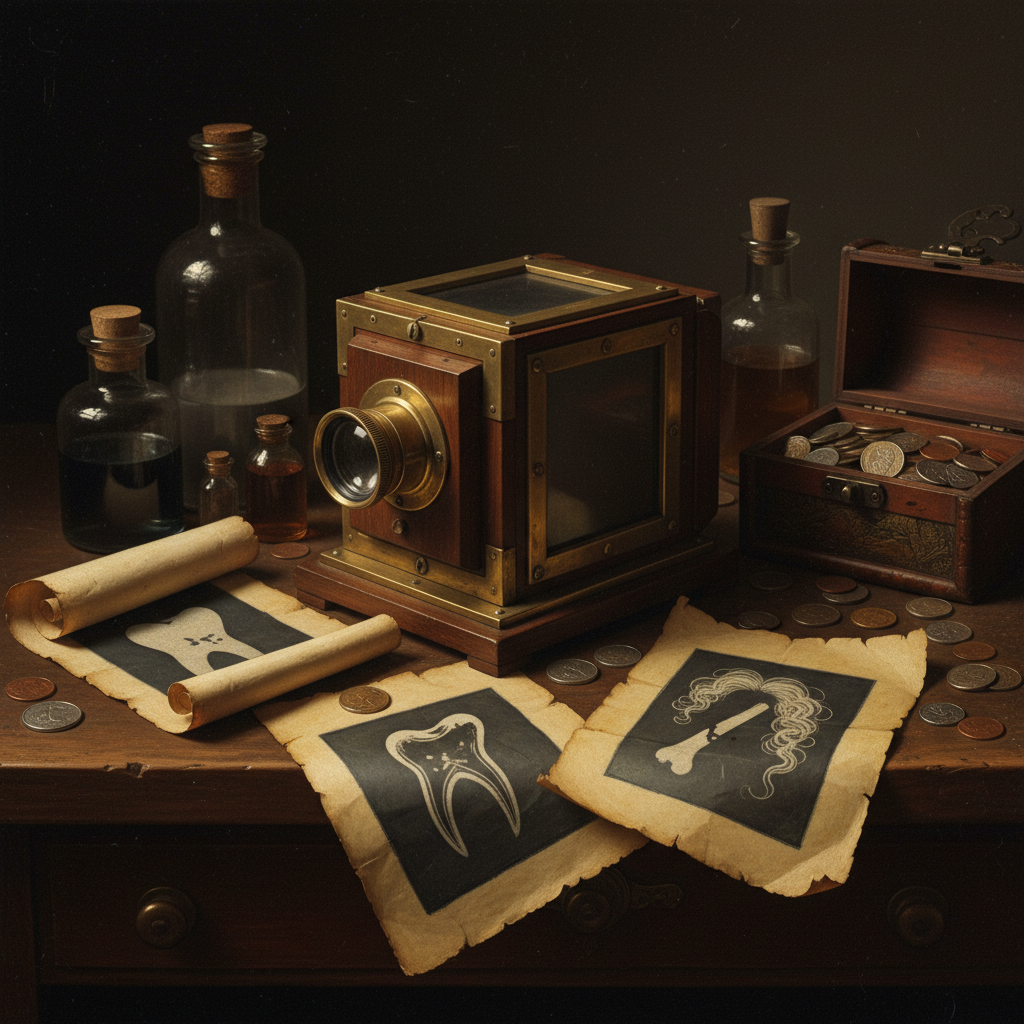
Within a month, the Great Lavra was no longer merely housing a splinter of the Cross; it was selling divinely-created outlines of it, perfect for home devotion. Kosmas, promoted to Relic Master, refined his method. He found that a shorter exposure created a fainter, more mysterious image. A longer one, a starker, more modern-looking outline. Pilgrims went mad for them. Soon he was producing not just the Cross, but silhouettes of St. Stephen’s tooth, a hair from the beard of St. Basil, and a startlingly clear profile of what was claimed to be the knucklebone of John the Baptist. (*Another marginalium: The knucklebone was later identified by a visiting Franciscan as belonging to a goat. The goat was not canonised.*) The Patriarch of Constantinople, initially sceptical, was silenced by a tithe of 37% of the profits. The ‘Athonite negatives’, as they were known, became the single greatest source of income for the Holy Mountain, each sold with a certificate of authenticity declaring it ‘not made by human hands’. Which, in a strictly technical sense, was true. The sun had done most of the work.'''