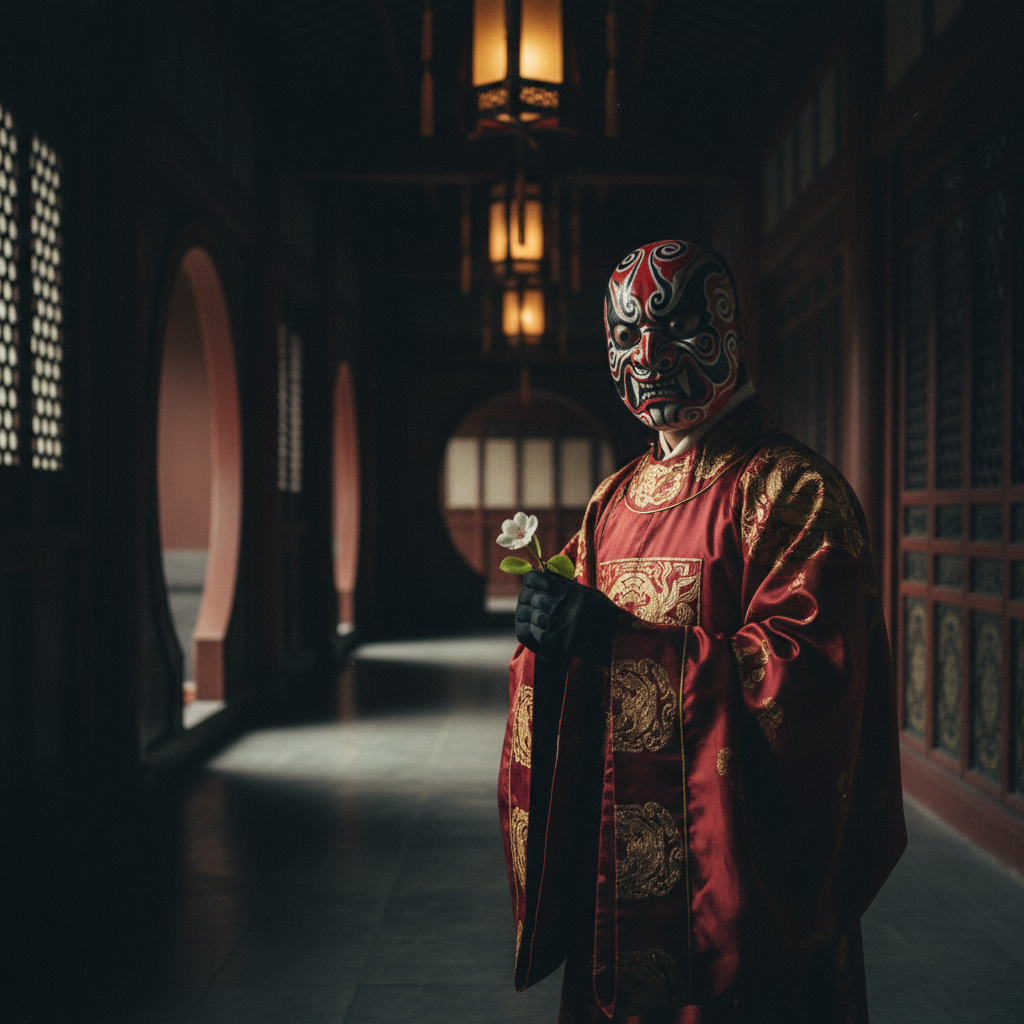
THE SHOW MUST GO ON... OR ELSE
How a Bunch of Fussy Thespians Became Imperial China’s Most Terrifying Spooks
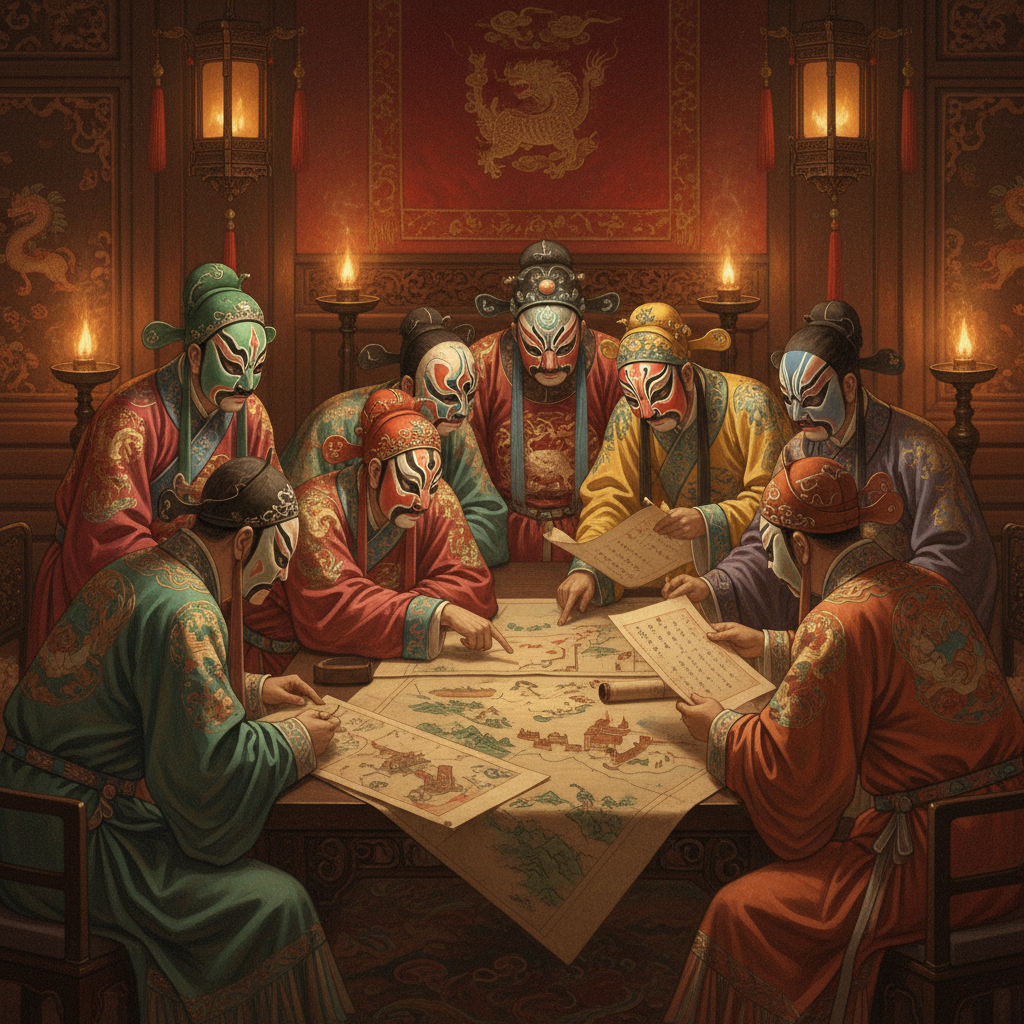

The Tang dynasty’s Pear Garden acting school was Emperor Xuanzong’s baby. Imagine Juilliard, but with more silk, more gongs, and a 100% higher chance of being beheaded if you missed a cue. These weren’t just actors; they were the pampered, perfumed rock stars of the 8th century. But then the An Lushan Rebellion happened, the Emperor ran away like a scalded cat, and the whole glittering edifice came crashing down. The new regime, staring at a mountain of debt and a country full of angry warlords, decided that state-funded avant-garde theatre was, perhaps, a luxury they could skip.
So, picture it: a troupe of mopey, unemployed actors, accustomed to thunderous applause and imperial blowjobs, now sleeping in a ditch outside Chang’an. Their leader, a hammy old bastard named Guo “Thunder-Fist” Feng, who’d made his name playing heroic generals, was about to sell his favourite wig for rice when a new patron appeared. This wasn’t some art-loving aristocrat. It was Eunuch Director Wang “The Weasel” Chao, head of the Palace’s brand-new—and fantastically illegal—secret intelligence service. Wang had a problem: his spies were unimaginative thugs who stuck out like a boner in a monastery. He needed agents who could lie for a living. Who could *become* other people. And he was looking at a wagon full of them.
Thus was born the Bureau of Heavenly Disguise, or as the terrified populace would later call them, “The Painted Faces.” And holy *shit*, were they good at it. These weren’t spies; they were method actors of espionage. Need to know if a provincial governor is skimming taxes? They wouldn’t send a boring auditor. No, they’d stage an elaborate, months-long improvisational tragicomedy. Guo Feng and his crew would arrive in town disguised as a boisterous merchant family, a bickering Taoist sect, or—their masterpiece—a troupe of visiting Sogdian acrobats with a suspiciously detailed knowledge of irrigation policy. They’d inveigle themselves into the governor’s life, testing his greed, his loyalty, his sexual proclivities, all while performing the most gripping local theatre the province had ever seen. The “play” would only end when the governor was either ruined, promoted, or “exited stage left” in a convincingly accidental manner. Interrogations were conducted not with hot pokers, but by trapping a suspect in a scene with an actor so skilled at playing their guilty conscience that the poor bastard would confess just to make the soliloquies stop.
The Bureau’s headquarters was a decommissioned opera house, its costume department a national security asset. Their reports to the throne were written in flawless five-act structure, complete with dramatic reveals and character critiques. (“General Tso’s performance as ‘Loyal Subject’ was wooden, his motivations unclear. We gave him the hook.”) For fifty years, they were the most effective and certifiably batshit intelligence agency on the planet. Officials weren’t afraid of a dagger in the night; they were afraid of realizing the new tea-seller, their favorite courtesan, and the oddly compelling stable boy were all part of an elaborate theatrical production designed to end with their starring role in a public execution.