The Shoe Heard Round the World
The Stasi had one job: listen to the West. Instead, they bugged the boss and blew the punchline.
File ref. DE/818/60. Hauptabteilung II, Abteilung 4. Intercept log, 11 October 1960, 23:17 Zulu.
Contents: one (1) muffled monologue, thirty-seven minutes, by subject codenamed “Kukuruznik.” Subject is recorded rehearsing a gesture of proletarian authenticity for delivery at the United Nations General Assembly. He is workshopping an incident involving a shoe. He seems to be having some trouble with the shoe.
The listening post was located in Pankow, East Berlin. Its official mission was eavesdropping on the French sector. The microphone, however, was a new long-range directional model purchased from a Swedish contractor for 1.2 million Ostmarks, and its wiring diagram was in Swedish. The technician, a promising young Unterleutnant named Freytag, had connected it backwards. Instead of pointing at the French military mission eight kilometres west, it was aimed squarely at the guest house of the GDR’s Council of Ministers, two blocks east. Nikita Sergeyevich Khrushchev, First Secretary of the Communist Party of the Soviet Union, was in town for a fraternal visit before flying to New York. He was also a man who liked to rehearse.
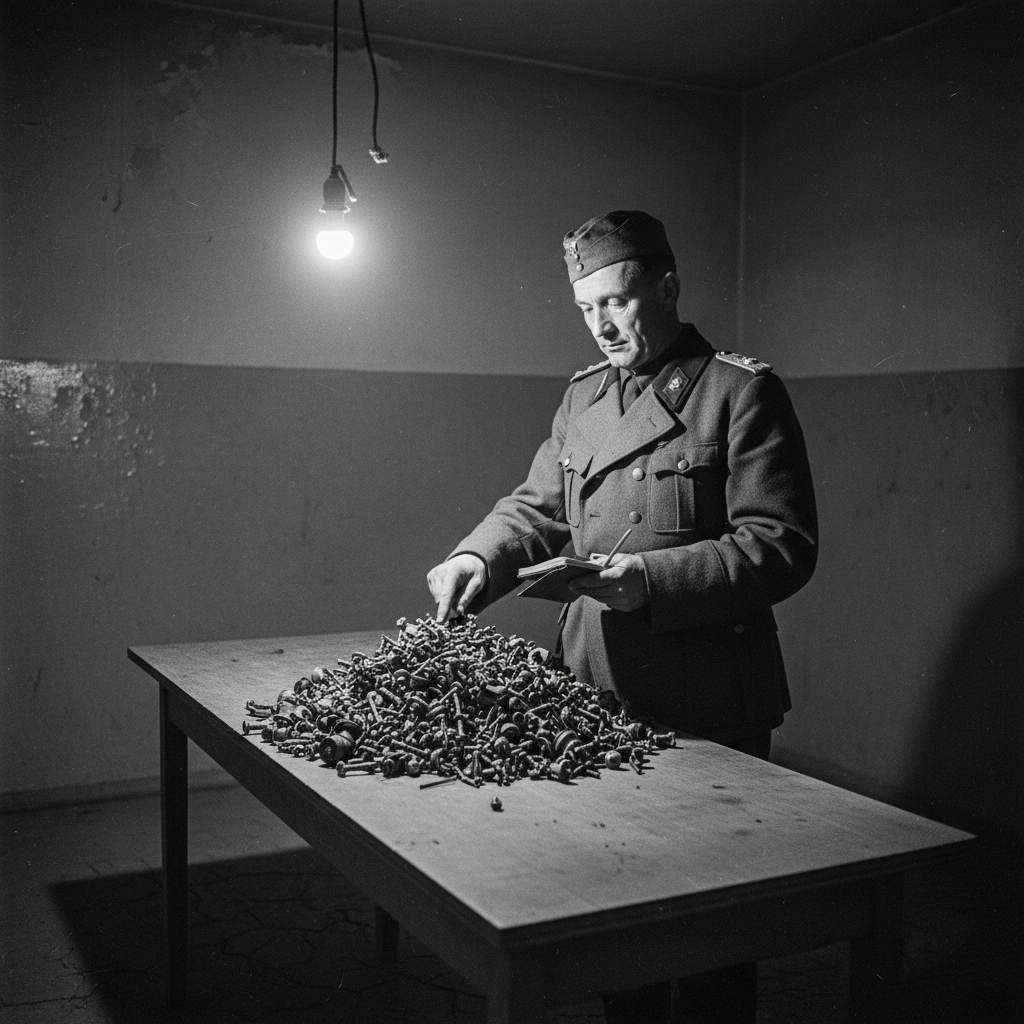
The transcript was a catastrophe of statecraft. “I will take the shoe… no, that is not right,” the First Secretary muttered. “The shoe must be *on* the table. To bang it. But how does it get there? Do I take it off? Here? In front of the imperialists?” There followed a full four minutes of grunting, scraping, and what the transcriber logged as “[sound of shoe striking wood, weakly]”. Then, a revelation. “No. I will have it under the table. Pre-positioned. Yes. This is clever.” The Stasi, meanwhile, did what came naturally when presented with compromising material on an ally: they classified it, filed it, and used it to ruin a subordinate’s career. Unterleutnant Freytag was reassigned to counting screws at a Trabant factory in Zwickau.
Ordinarily, that would be the end of it. Bureaucratic malice, satisfied. But Hauptabteilung II also had a standing order: share all intercepts relating to NATO diplomatic activity with KGB Rezidentura, Berlin. The Khrushchev transcript, dutifully filed under “UN General Assembly,” was bundled with a week’s worth of legitimate Western intercepts and sent by courier to Karlshorst. The duty officer at the Rezidentura, a man whose only loyalty was to chaos, read the Pankow log, understood immediately, and leaked the entire transcript to the CIA’s Berlin station chief for a carton of Kent cigarettes. The Americans, for the first time in their history, knew a good thing when they saw it and did nothing. They simply waited.
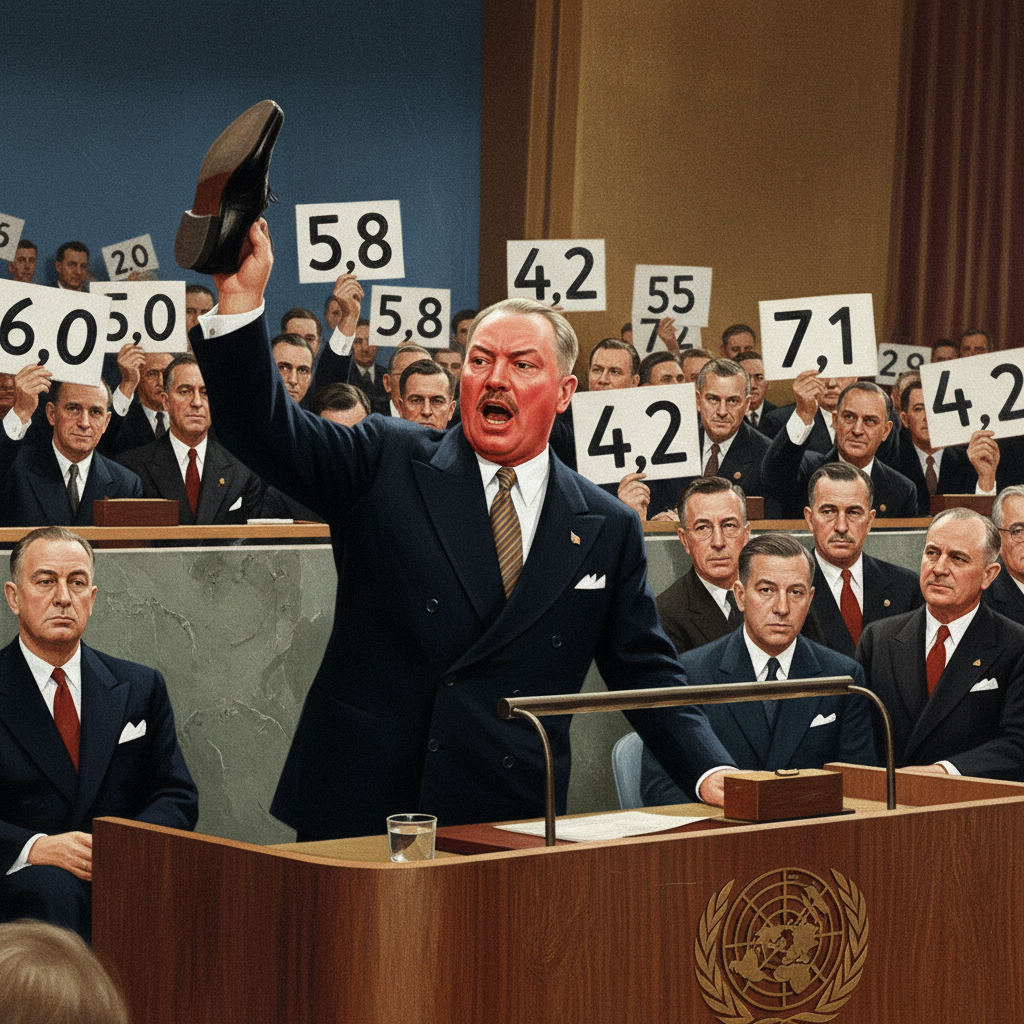
When Khrushchev reached for his shoe on October 12, every delegate in the room was holding a scorecard. The West German contingent gave him a 4.7. The British, a 5.1. The French delegate held up a sign reading “CHAUSSURE IMPOSSIBLE.” A gesture meant to show righteous, peasant anger instead played as the pathetic, pre-scripted tantrum it was. The shoe was banged, but the sound was drowned out by laughter. The Cold War would still be a long, miserable slog, but its moments of high drama were now subject to international review. A new front had been opened: competitive irony.