The Saint-Germain Circuit
How One Horny Tuareg Silversmith Accidentally Set French Technology Back 50 Years
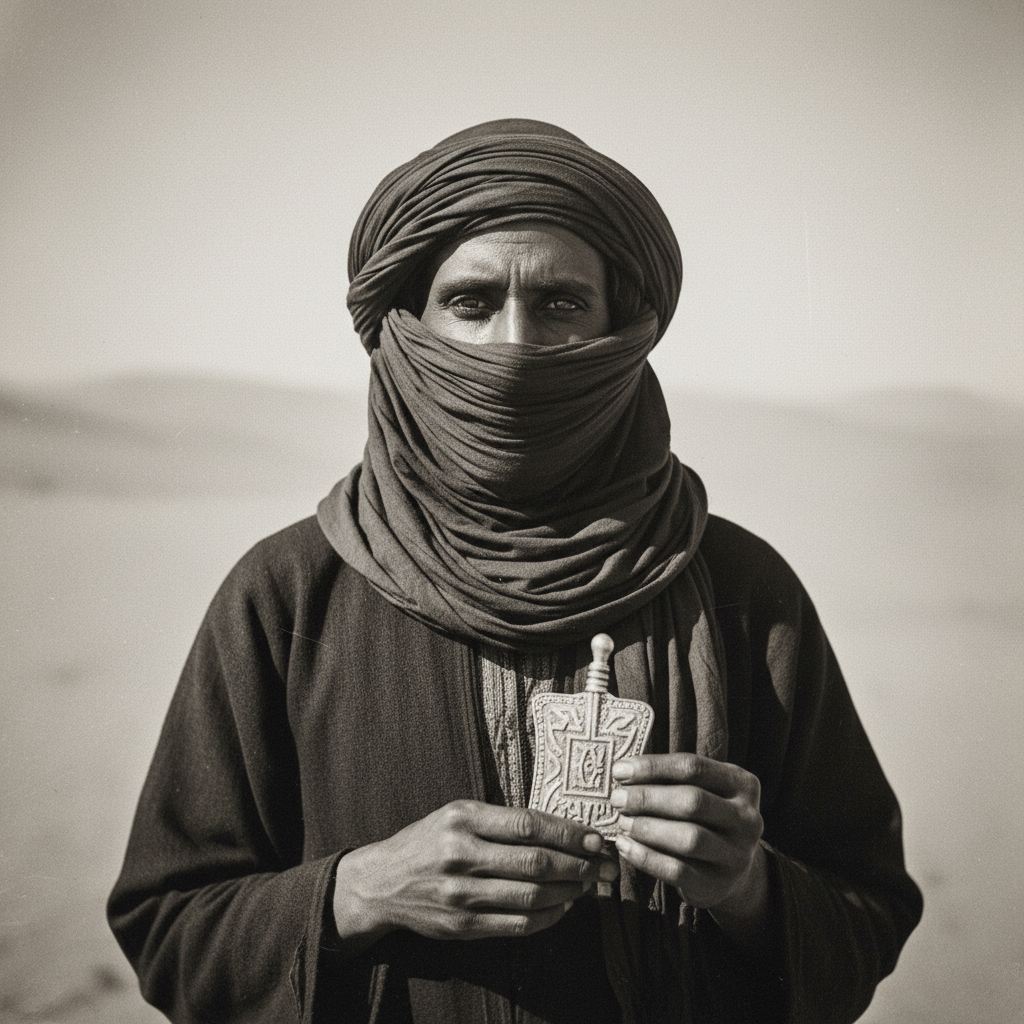

Alright, pull up a stool and pour me something that’ll strip paint. We’re talking about the 1920s, when the big brains in Paris decided to draw lines on a map of Africa with all the care and precision of a drunk gorilla trying to fuck a doorknob. This royally pissed off the Tuareg, who’d been crisscrossing the Sahara since before the French were even a twinkle in some Roman legionary’s eye. One of these nomads was a silversmith named Amastan ag Nouhous, a man whose primary interests were, in order: fucking, fighting, and flogging exquisitely crafted silver doodads to rich tourists. The French called his trade “smuggling.” Amastan called it “not starving to death, you cheese-eating surrender monkeys.”
Our story begins when Amastan, fresh from a particularly enthusiastic three-day love-in with a chief’s daughter near Tamanrasset, stumbles across some European weirdo. This wasn’t just any pasty-faced lunatic; this was Étienne Pascal, a disgraced Parisian engineer who’d fled to the desert after his design for a “self-peeling banana” nearly bankrupted his father-in-law, a man with a famously short temper and a disturbingly large collection of antique dueling pistols. Pascal, high on a cocktail of cheap wine and sunstroke, had been scribbling… *things*. Tiny, intricate, geometric patterns that he claimed were “the language of lightning.” Amastan, needing to get to Algiers before his favorite courtesan, Zohra of the “Improbably Strong Thighs,” found a new patron, traded the madman a half-dead goat for a silver locket—a *tcherot*—into which Étienne had soldered his precious lightning-language diagrams as a keepsake. Amastan didn’t give a shit. It was a nice piece. Someone would buy it.
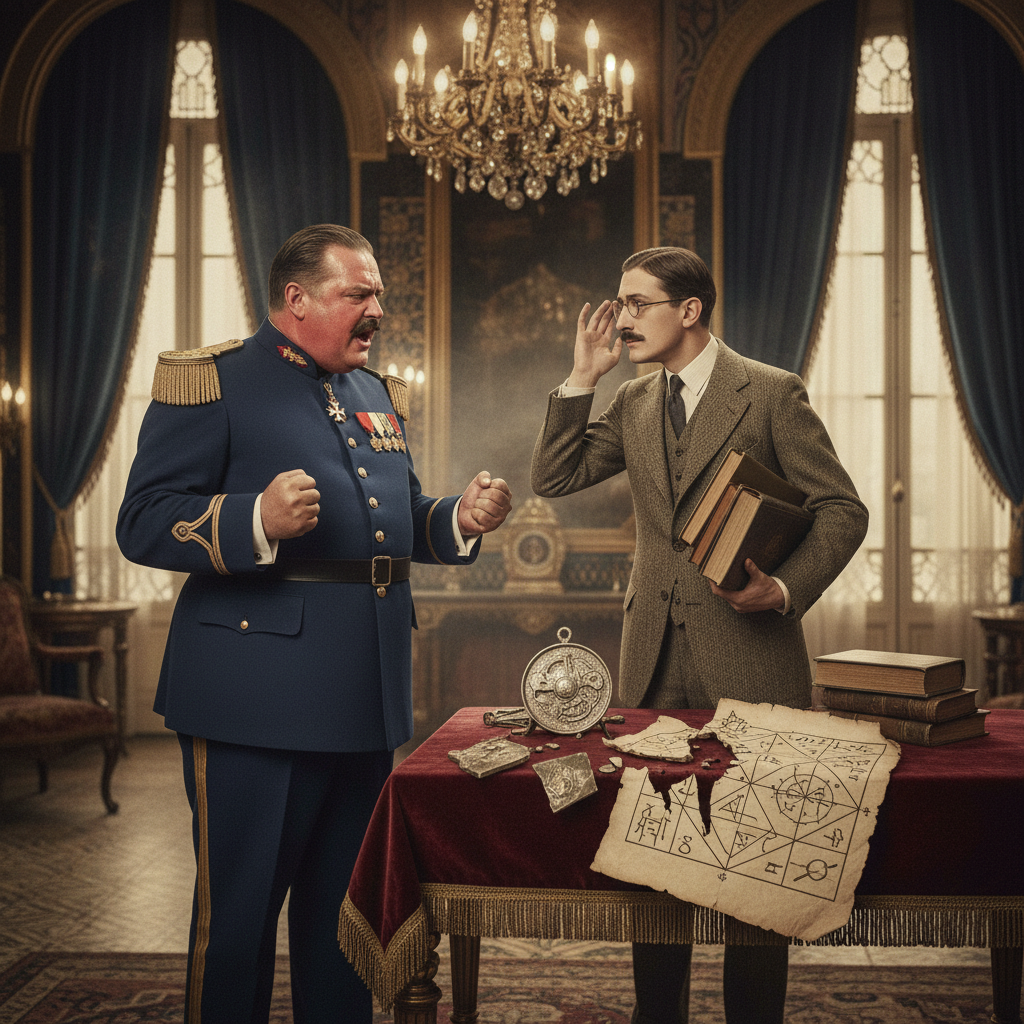
That someone was Jean-Luc de Courvoisier, a third-rate antiquarian and full-time professional simp in Algiers whose main hobby was collecting things that weren’t his, including, most notably, the wife of General Philippe Pétain (no, not *that* Pétain, his dumber, sweatier cousin). Trying to impress the deeply unimpressed Madame Pétain with his “esoteric desert treasures,” Jean-Luc pried open the locket. Instead of a faded Koranic verse or a pinch of magic sand, out fell a sheet of paper that looked like a wiring diagram for God’s own telephone exchange. Madame Pétain, who’d seen enough of her husband’s secret military paperwork to recognize something spicy, promptly palmed the schematic while Jean-Luc was busy explaining the amulet’s supposed erotic powers. She passed it to her husband, hoping it might finally get him that promotion to a slightly less hellish colonial outpost.
General Pétain, bless his galactically stupid heart, was convinced he’d found a secret German code, a master plan for a new kind of weapon. He assembled France’s top minds—who were, at the time, mostly focused on perfecting new and more efficient ways to curdle milk for cheese—and sank the equivalent of half the national defense budget into a top-secret project codenamed “Le Circuit du Sahara.” For twenty years they tried to figure it out. Was it an encryption key? A new explosive formula? They never once thought to ask, “Hey, did any of our own batshit-crazy engineers run off to the desert recently?” By the time anyone realized what they were looking at, the Americans had already invented the transistor and were well on their way to making pocket-sized porn-delivery devices. The French, meanwhile, were still trying to figure out why their gigantic, steam-powered “Saharan Circuit” machine only seemed to function as a spectacularly inefficient toaster. Amastan, for his part, had died rich, happy, and thoroughly worn out, having never known he’d accidentally cock-blocked an entire empire’s technological future.