The Rat That Ate the Revolution
Sometimes a vampire is just a vector. Ask your commissar.
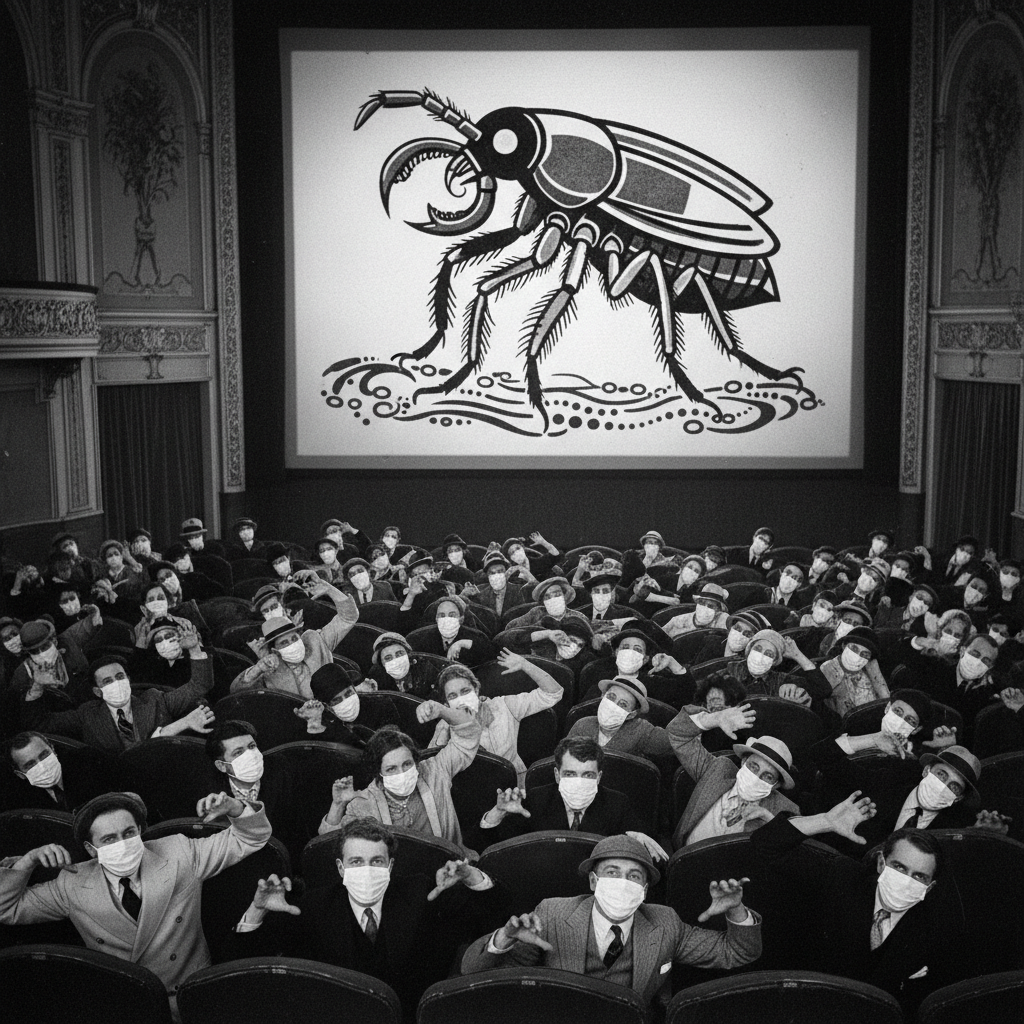
One reel, mostly intact. Some nitrate decay on frame edges, classic bloom of fungus across the emulsion, but the sprockets are clean. A 1922 production by the People’s Commissariat for Public Health, Narkomzdrav. Title: *Носферату: Симфония Грызунов*. *Nosferatu: A Symphony of Rodents*. Not a horror film. A public health warning.
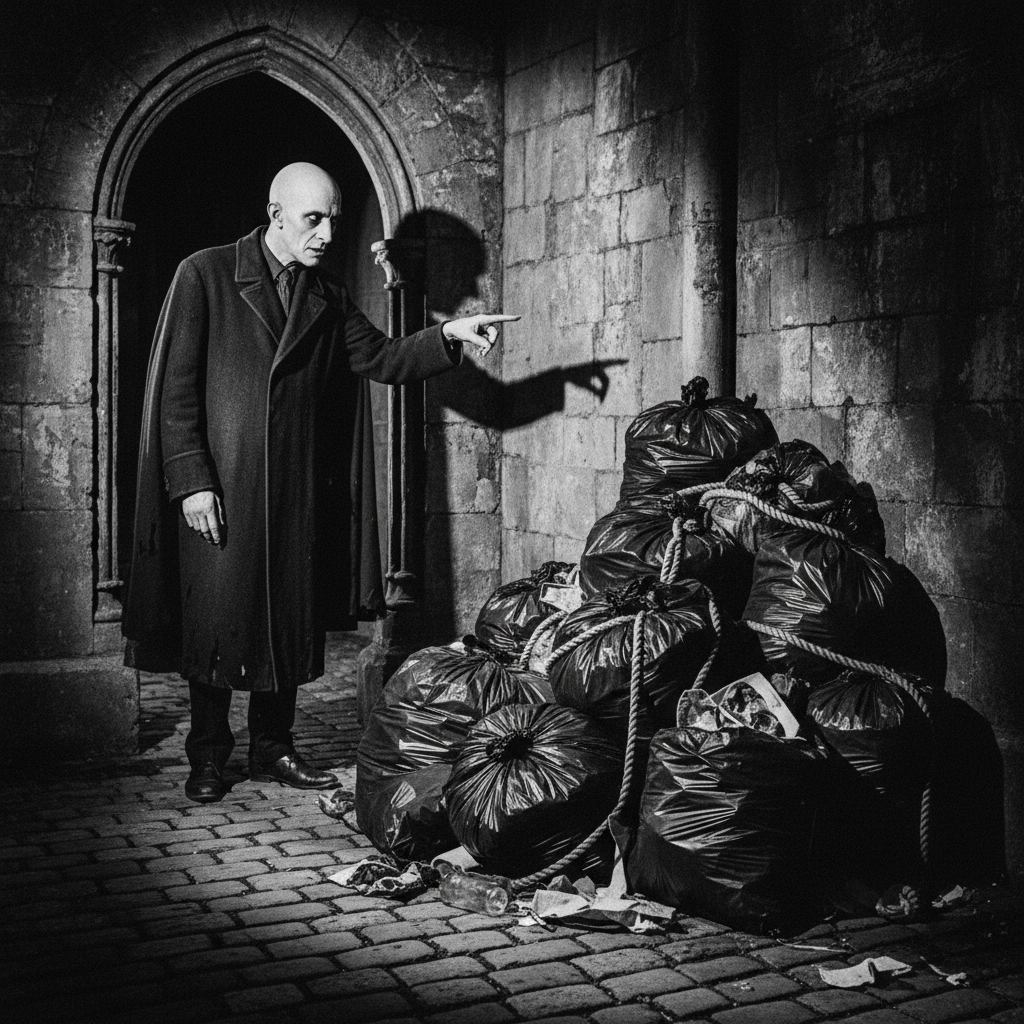
The opening shot is a close-up on a rat’s tooth, filmed through a microscope objective. The titles, lettered in a severe Constructivist typeface, credit one Dziga Vertov with “montage” and Vladimir Mayakovsky with the intertitles. This is not Murnau’s bootleg *Dracula*. This is something stranger. The story, such as it is, follows not Count Orlok but the rats in his filthy castle. The intertitles are gems of pure Mayakovsky: “COMRADES! THE LOUSE IS A MENACE. THE RAT IS A BOURGEOIS PARASITE. STARVE THEM BOTH.” We see the young hero, Hutter, dispatched not to buy a house, but to deliver a lecture on sanitation to the backward-living, aristocrat-coded Orlok. Orlok, with his long fingernails and unwashed neck, is the embodiment of unhygienic squalor. He does not drink Hutter’s blood; he offers him a bowl of suspicious grey soup from a communal tureen that hasn’t been scrubbed since the Time of Troubles.
The censor’s notes, which I found tucked inside the canister, are a marvel. Some apparatchik named Comrade Varlamov has scrawled in the margins: “The rats are too sympathetic. Re-edit.” Vertov, true to form, has made the rats the protagonists. His camera lingers on their twitching noses and intelligent eyes. There’s a startling montage sequence cutting between Orlok’s feasting nobles, a cat lapping cream, and a rat gorging itself on stolen grain. The message is clear: the parasite class, whether human or rodent, must be liquidated. The film’s most expressionistic touch is to represent the spread of typhus not with shadows, but with stop-motion lice crawling over a map of Europe. The effect, even on this decaying print, is deeply unsettling.
The film’s divergence from its Western counterpart becomes a schism. Lenin saw a private screening in late ‘22. He hated it. “The masses will not understand these… triangles,” he reportedly grumbled, referring to the stark, angular sets. “And the vampire is not scary, he is merely unkempt.” He ordered the reels destroyed and a new, more literal film to be made. The replacement, *Гигиена — мать здоровья!* (*Hygiene is the Mother of Health!*), was a plodding instructional short about hand-washing that bored audiences into a stupor. *Nosferatu* was meant to be pulped. This single reel survived, mislabeled in a Kiev archive as Ukrainian folk dancing.
Its rediscovery in our timeline has been a quiet affair. But what if it had been released? The German version, the one we know, would have been dismissed as a decadent, supernaturalist rip-off of a Soviet agit-prop masterpiece. Instead of becoming the father of the horror movie, Murnau would be a footnote: the weird German who took a perfectly good film about rat-borne pathogens and decided it needed more capes. He’d have died in obscurity, his great contribution to cinema a baffling insistence that the real enemy wasn’t typhus, but sexy landlords with bad dental hygiene.