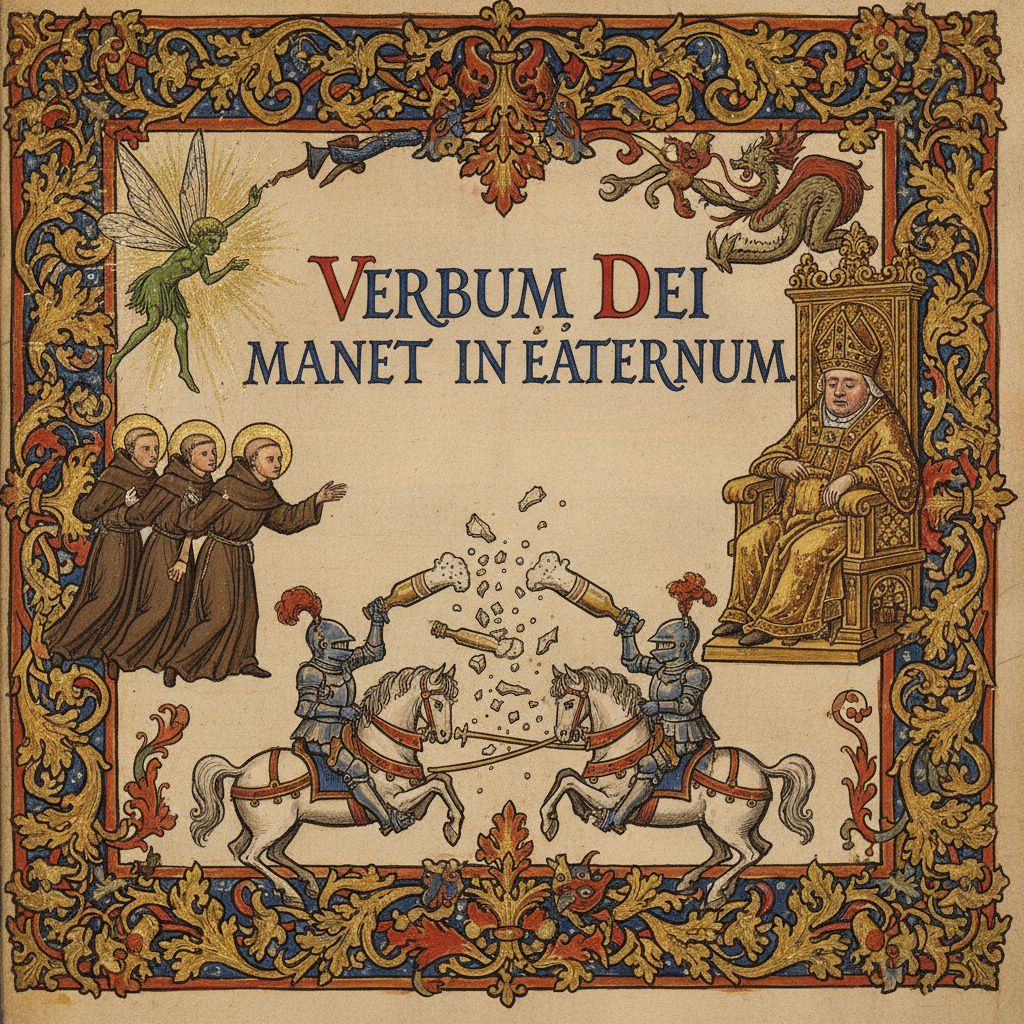
The Pope’s Green Fairy
That time the Vatican’s holy water developed a taste for wormwood and a 138-proof kick.
*Absit reverentia vero*, as the Philosopher saith, but a brother must confess. Some mornings, kneeling for the asperges, a man’s soul cries out not for grace but for a sign. A sign that the Almighty is paying attention. It was in the Year of Our Lord 1281 that He finally answered, and did so by turning the holy water in St. Peter’s Basilica into the most formidable spirit known to man.
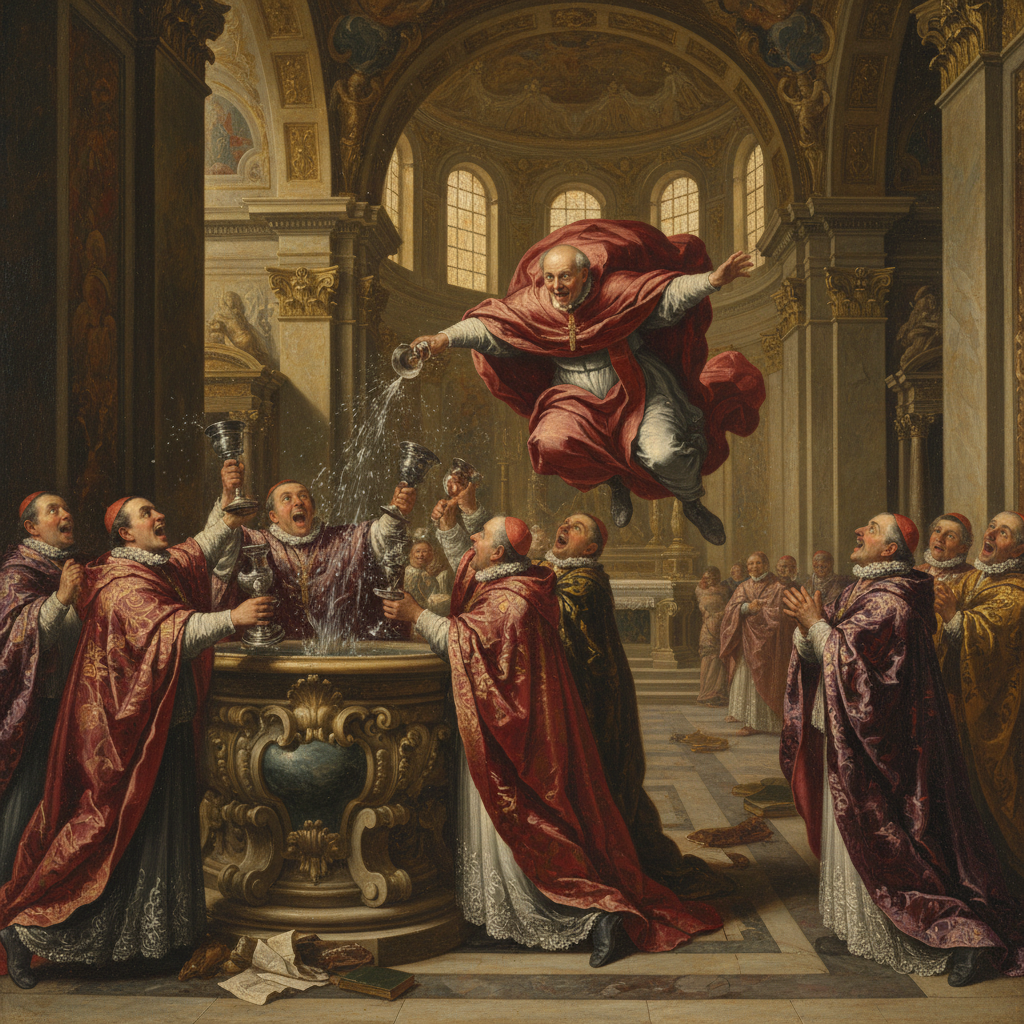
The mechanism of this miracle, as the Archdeacon of Bologna’s report later testified, was damp. Not our Cistercian damp, that clean, honest rot of the soul, but a uniquely Roman damp. A fug of sanctity, summer sewage, and the exhalations of ten thousand penitents, stewing in the great porphyry stoup at the basilica’s entrance. For centuries, pilgrims had brought offerings of local herbs to steep in the font for a blessing. A sprig of fennel from Apulia for a toothache. Some hyssop from the Alban Hills to ward off plague. And, brought by a well-meaning but confused Savoyard envoy in 1279, a truly heroic quantity of Alpine wormwood, *Artemisia absinthium*. For two years it sat there, mingling with the fennel and anise, fermenting gently under the Roman sun. The result was a water that not only cleansed the soul but threatened to strip the frescoes from the walls.
The first to notice was an elderly cardinal, His Eminence Drogo of Laon, who, after dipping his fingers and crossing himself, declared he could suddenly speak fluent Aramaic and levitate three inches above the flagstones. Within a week, the Curia was riven. The ‘Absinthians’ faction, led by the Pope’s own nephew, claimed the ‘Green Revelation’ was a new Pentecost. Their opponents, the ‘Hydrians’, insisted it was a diabolical trick, pointing to the alarming number of canons attempting to baptise squirrels in the Vatican gardens. Pope Martin IV, a man whose chief policy was avoiding decisions, locked himself in the Lateran Palace with a cask of the stuff, praying for guidance. He emerged three days later with a beatific smile, a half-finished bull declaring war on Genoa, and a new cathedra designed entirely out of empty Chianti bottles.
The schism was brief, but its effects profound. The ‘aqua ardens’ of St. Peter’s became the most sought-after relic in Christendom. Barrels of it were dispatched to Avignon to placate the French, who promptly declared it a national treasure and refused to send any back. The Knights Templar, smelling a commercial opportunity, established a heavily armed cordon around the stoup, charging a Florentine florin for a thimbleful. They used the profits to finance a disastrously over-ambitious Crusade whose sole objective was to capture a vineyard allegedly planted by Noah. It ended, as all such ventures do, in a bog in Lithuania.
Eventually, a visiting Benedictine botanist identified the wormwood and the party was over. The stoup was scrubbed clean with vinegar and righteous fury, the Templars were censured, and Pope Martin’s decrees were quietly burned. But for one glorious, intoxicating summer, the heart of the Church Militant did not run on prayer. It ran on a 138-proof liqueur brewed in God’s own punchbowl, and the angels wept with envy.