The Phantom of the Outhouse
How One Man's Bowel Movement Became a National Movement
Let’s get one thing straight: Emperor Napoleon III was a prick. Not just any prick, but a world-historical, capital-P Prick with a Pringles-can mustache and an ego so vast it threatened to achieve orbit. His grand renovation of Paris wasn’t for the people; it was a decades-long, dick-swinging contest against history itself, masterminded by his equally arrogant civic butcher, Baron Haussmann. They tore down medieval neighborhoods full of pesky poor people and replaced them with wide, straight boulevards—all the better to mow down unruly mobs with cannon-fire, my dear. The crown jewel of this whole municipal circle-jerk was the new opera house, the Palais Garnier. A gaudy, 14-story cathedral of self-congratulation, dripping with more gold leaf than a Bond villain’s guest bathroom.
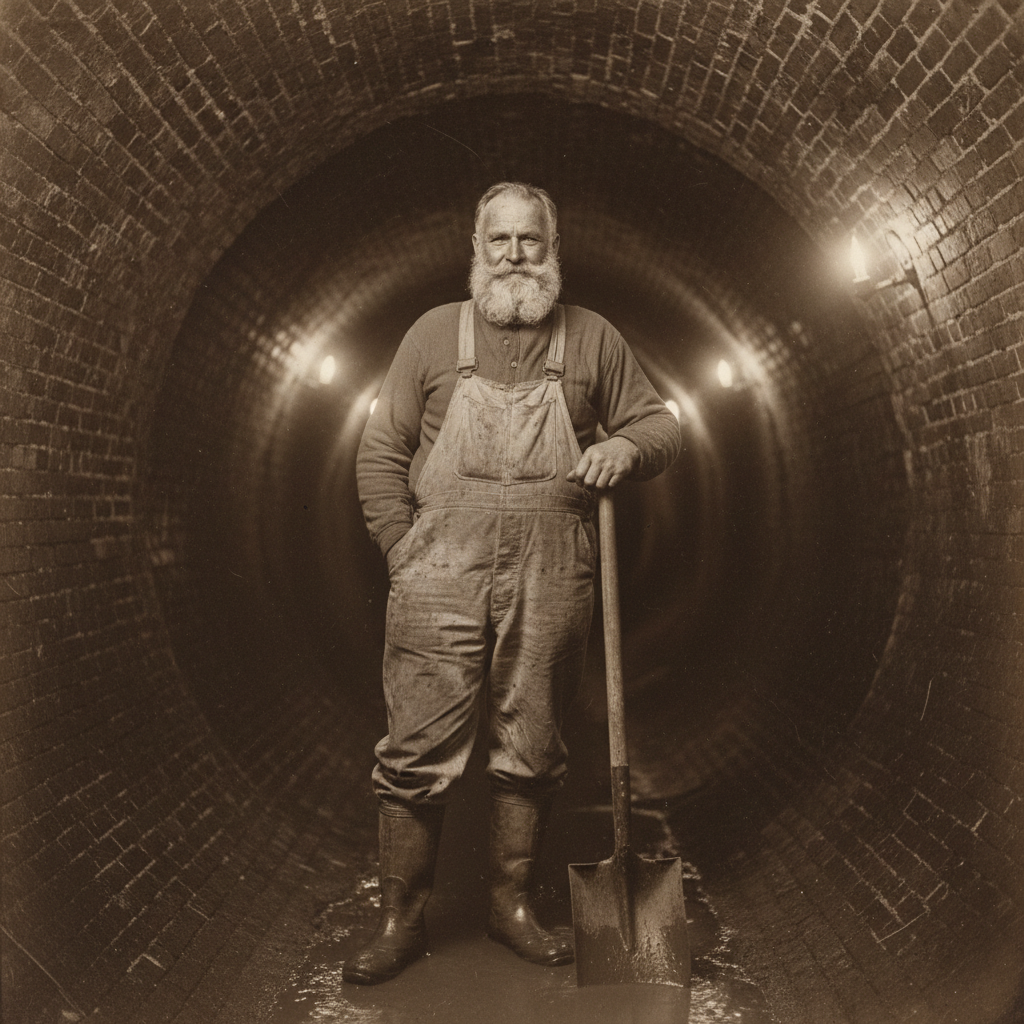
Enter our hero, if you can call him that: Jean-Luc Fromage. A man whose name, fittingly, meant he was full of it. Jean-Luc was a sewer worker, a master of the subterranean arts, who had seen his favorite little wine bar—and the prize-winning petunias he grew in its window box—demolished to make way for a sewer grate. An exquisitely bureaucratic “fuck you.” While the emperor was planning galas, Jean-Luc was stewing in the literal and figurative shit of the city. He knew the new sewer system, Haussmann’s other great project, better than the Baron himself. He saw the plans. He saw how the brand-new, high-pressure mains for flushing the imperial turds ran cheek-by-jowl with the storm drains right under the opera’s foundations. And a beautiful, terrible, genuinely shitty idea began to form.
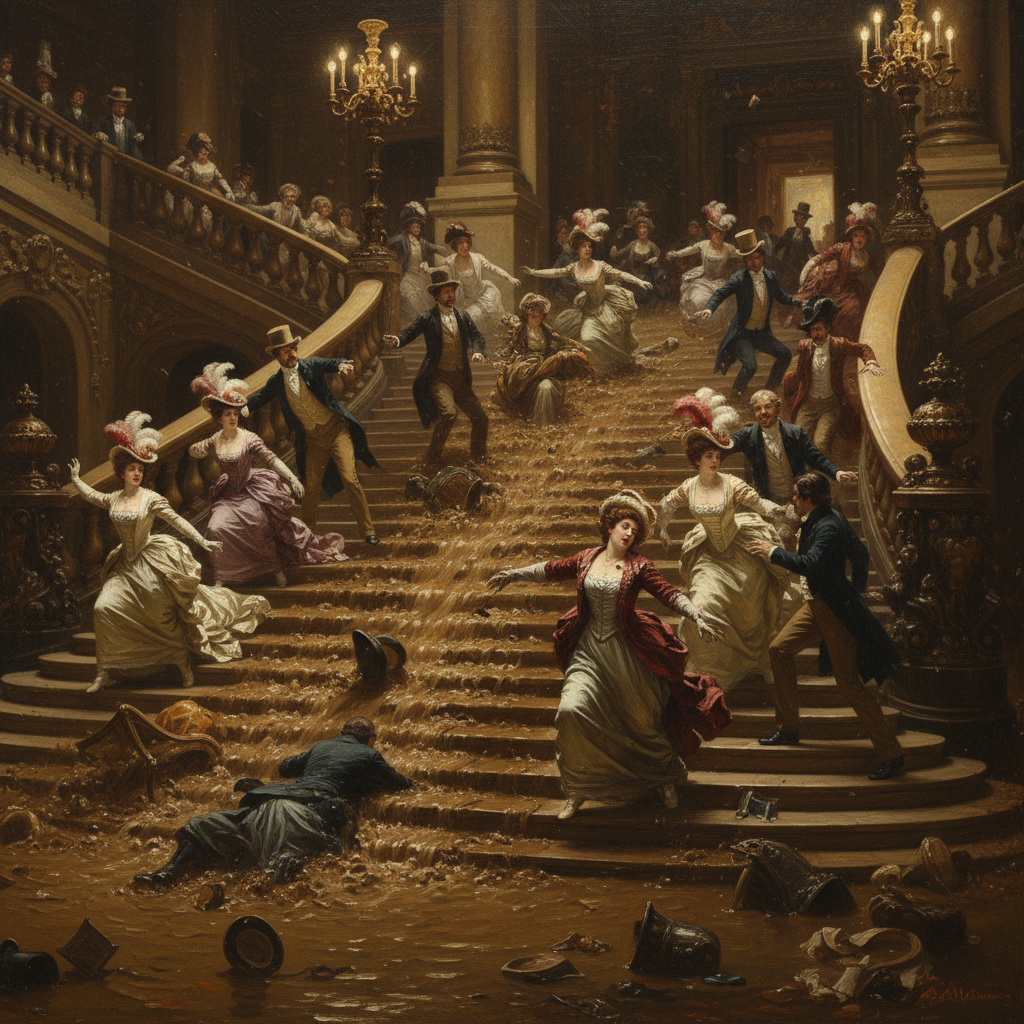
Opening night, 1867. The crème de la crème of the Second Empire are wedged into their velvet seats, anxiously awaiting the first act of something nobody actually wants to see. Down below, in the dripping dark, Jean-Luc Fromage cranks a few specific, un-lubricated valves. It’s a work of genius in its vindictive simplicity. He doesn’t blow anything up. He just… redirects. First comes the smell, a faint, familiar harbinger of doom that cuts right through the ladies’ perfume. Then, a gurgle from the floor drains. The orchestra tunes up, hits a triumphant chord, and is answered by a thunderous belch from the prompter’s box, followed by a surging, brown geyser that engulfs the first violin. What followed was not so much panic as a full-scale, sloshing rout. The grand staircase, Charles Garnier’s pride and joy, became a fecal waterslide. Countess Éponine de la Plume, in a desperate attempt to save her pearls, allegedly swallowed three of them, only to discover later they were bonbons dropped by the man next to her. The Emperor himself had to be piggybacked out by a Swiss Guard, his ermine cape trailing delicately in the muck, a scene majestically captured in a banned painting titled *The Retreat from Moscow, but Worse*.
The Palais Garnier didn’t collapse. It just stank. It stank to high heaven. It stank so bad that for the next decade, pigeons flying over the 9th arrondissement would spontaneously fall out of the sky. The scandal was biblical. They never caught Jean-Luc. He vanished into the labyrinth he commanded, a legend whispered from one sanitation worker to another. Napoleon III’s regime, already teetering on a foundation of hubris and bad foreign policy, never recovered from the sheer, gut-busting humiliation. The “Opéra le Merde,” as it was lovingly rechristened by the public, became a permanent monument to the fact that no matter how high you build your ivory tower, it’s all connected to the same sewer. And somewhere down there, there’s always a man who knows which valve to turn.