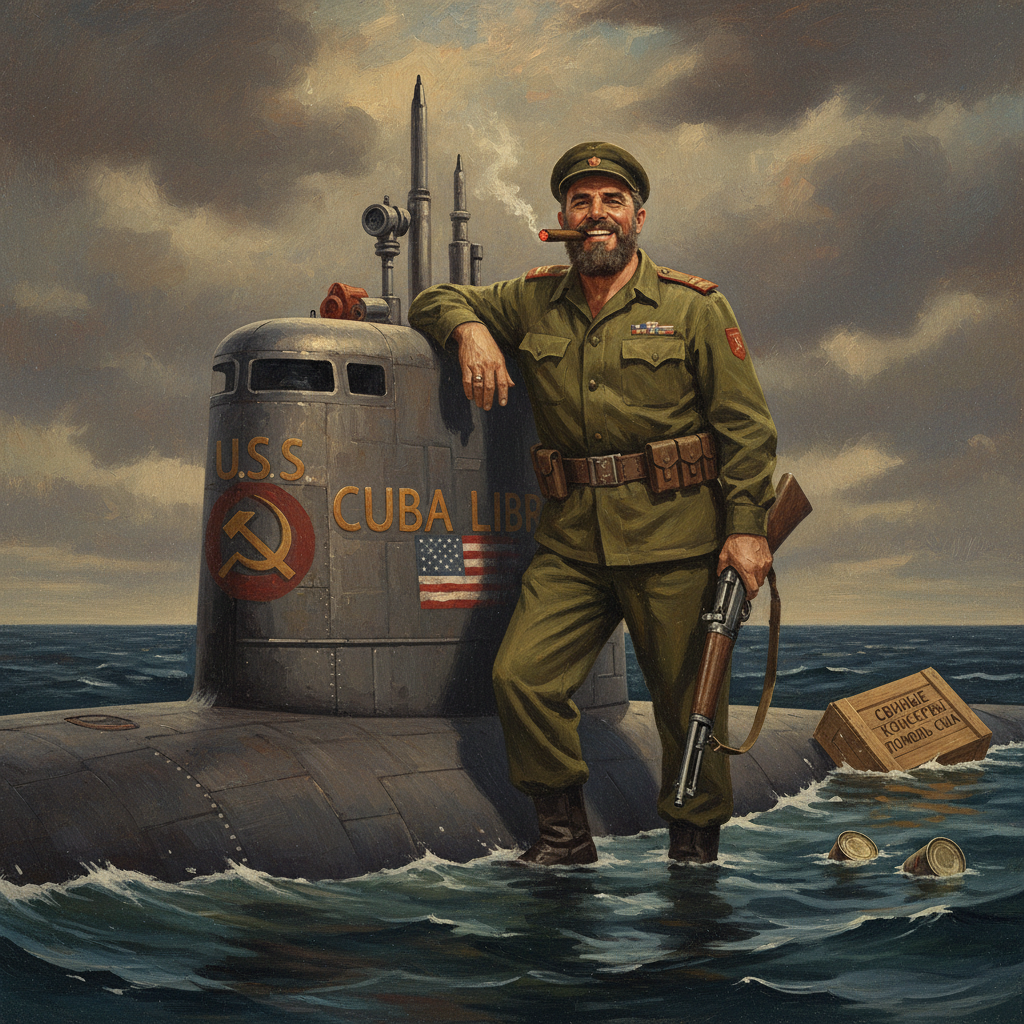
The October Cigar
One CIA officer’s catastrophic failure to distinguish between a nuclear asset and a box of cigars.
FILE REF: B/Beard/799-03.
Officially, the Cuban Missile Crisis was resolved by back-channel diplomacy. Unofficially, it was resolved by a CIA asset codenamed “Ahab” and a catastrophic failure of basic object recognition. Ahab—real name [REDACTED], a man whose operational security was rivalled only by his desire for a really good smoke—was tasked with making contact with a high-level Cuban official to gauge the island’s morale. The target was Fidel Castro’s brother, Raúl. The agreed-upon sign/countersign concerned the exchange of luxury goods: a crate of American canned hams for “something of equal value.” The agency meant intelligence. Castro’s circle, it appears, interpreted the phrase more literally.
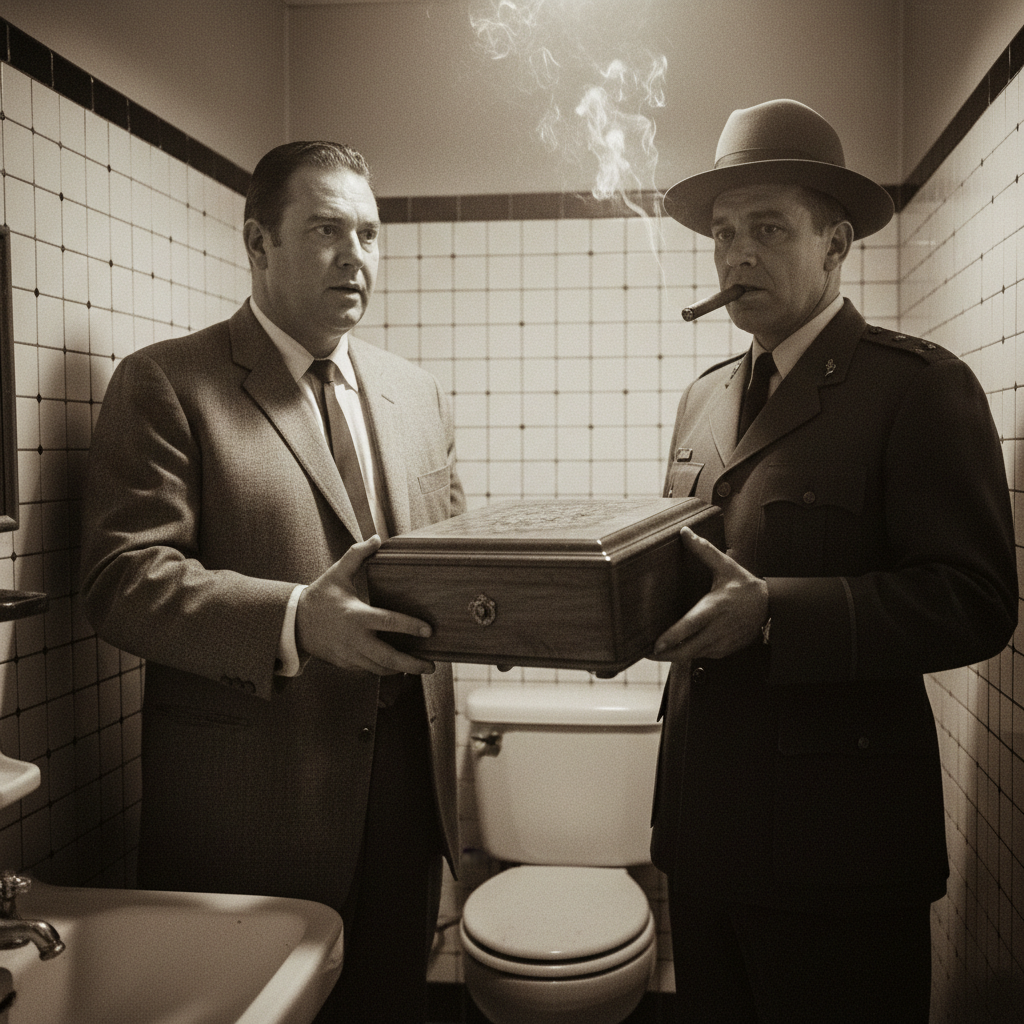
The meet was scheduled for 26 October 1962, in a Havana nightclub bathroom—the only place, it was reasoned, free from both KGB and CIA listening devices. Ahab, sweating profusely in a wool suit ill-suited to the climate, was to receive a briefcase containing documents. Instead, the contact, a nervous functionary from the Ministry of Agriculture, presented him with a large, polished mahogany box. It was Fidel Castro’s personal humidor, borrowed for the occasion and filled with the finest Robustos rolled on the island. Ahab, whose expertise was supposed to be covert action but was actually vintage port, saw a handsome wooden box and assumed it was a cleverly disguised dead drop. He did not open it.
Following protocol, Ahab offered the reciprocal gift. He wasn’t carrying canned ham. Instead, he handed over a small, waterproof cylinder containing the activation codes for the USS *Tinosa* (SSN-606), a brand-new nuclear attack submarine loitering off the coast. The logic, such as it was, had been drafted by a committee in Langley: the Cubans would see the sheer power of the asset they were being offered, realize the Americans were serious, and hand over the missile intelligence. Ahab, staring at the beautiful woodwork of the box in his hands, mumbled the pre-arranged phrase: “A gift of commensurate value.” The Cuban functionary, baffled but polite, took the cylinder. The entire transaction cost the US taxpayer approximately $45 million, or 180 million roubles at the then-prevailing black market rate.
For two tense days, nothing happened. The Joint Chiefs of Staff waited for the Cubans to use their newfound leverage. The Politburo waited for the Cubans to explain what the fuck was going on. The Cubans, meanwhile, were trying to figure out if this was the most elaborate prank in history. The crisis was broken only when a frantic telegram arrived in Washington from the US interests section in Havana. It contained a single, panicked question from Raúl Castro: “THIS IS NOT HAM. PLEASE ADVISE.” An agreement was reached hours later. The *Tinosa* codes were returned in exchange for the humidor, which was empty, and a signed apology from President Kennedy. The cigars, Raúl noted, had been smoked during the negotiations.