The Night Boston Harbor Mainlined the Empire
That time a simple customs protest accidentally hot-boxed the Atlantic world.
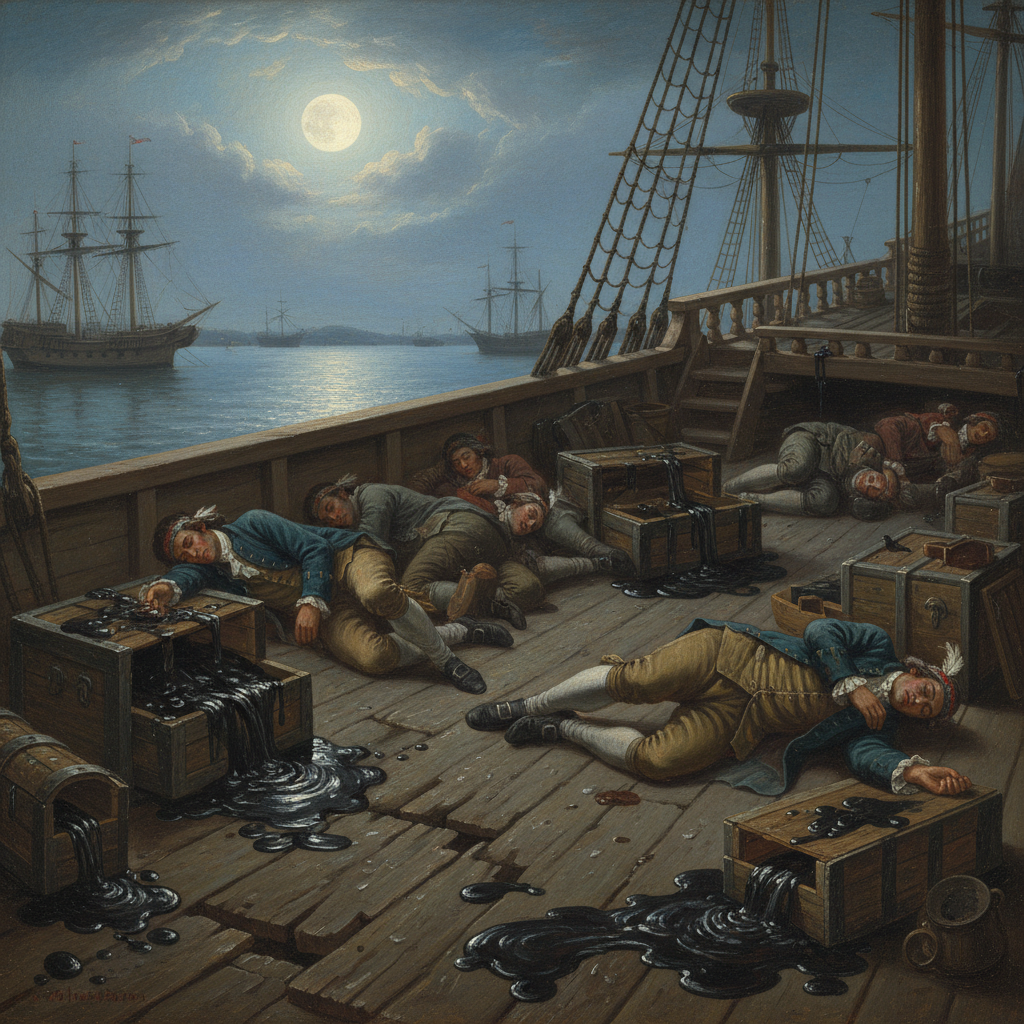
Opium. At the time of its arrival in Boston Harbor, December 1773, the finest grades were fetching seventeen Spanish dollars a pound on the docks. This was not that. This was a shipment of second-rate Malwa, adulterated with god-knows-what from the British East India Company’s warehouses, mislabeled as Bohea tea in some clerk’s fever dream, and now steeping in the saltwater like the world’s most consequential tisane.
The plan, as hashed out by Samuel Adams and his Sons of Liberty, was simple bourgeois street theatre. A bit of costumery, a brisk paddle out to the *Dartmouth*, *Eleanor*, and *Beaver*, and then 342 chests of perfectly good, if ruinously taxed, tea into the drink. A protest against monopoly. A fine little amuse-bouche of defiance. What they got instead was a harbor that smelled like a Canton drug den’s laundry day and a tide lapping at the wharf that was 45 tonnes more languid than usual.
First came the fish. Floating belly-up, yes, but with an unnerving serenity. Then came the dockworkers, who found their hangovers mysteriously cured by a lungful of harbor air and their subsequent labors performed with a dreamy, detached precision. By dawn, half of Boston was humming. This wasn’t the bracing slap of revolution; it was a warm, milky embrace. A new committee had to be formed: the Sons of Somnolence. Their first act was to declare the whole affair a "most invigorating civic improvement." The British, instead of dispatching warships, sent apothecaries. The Intolerable Acts were replaced by the Inhalable Edicts, which mostly involved mandatory nap times and a staggering 800% tax on anything resembling a coherent thought.
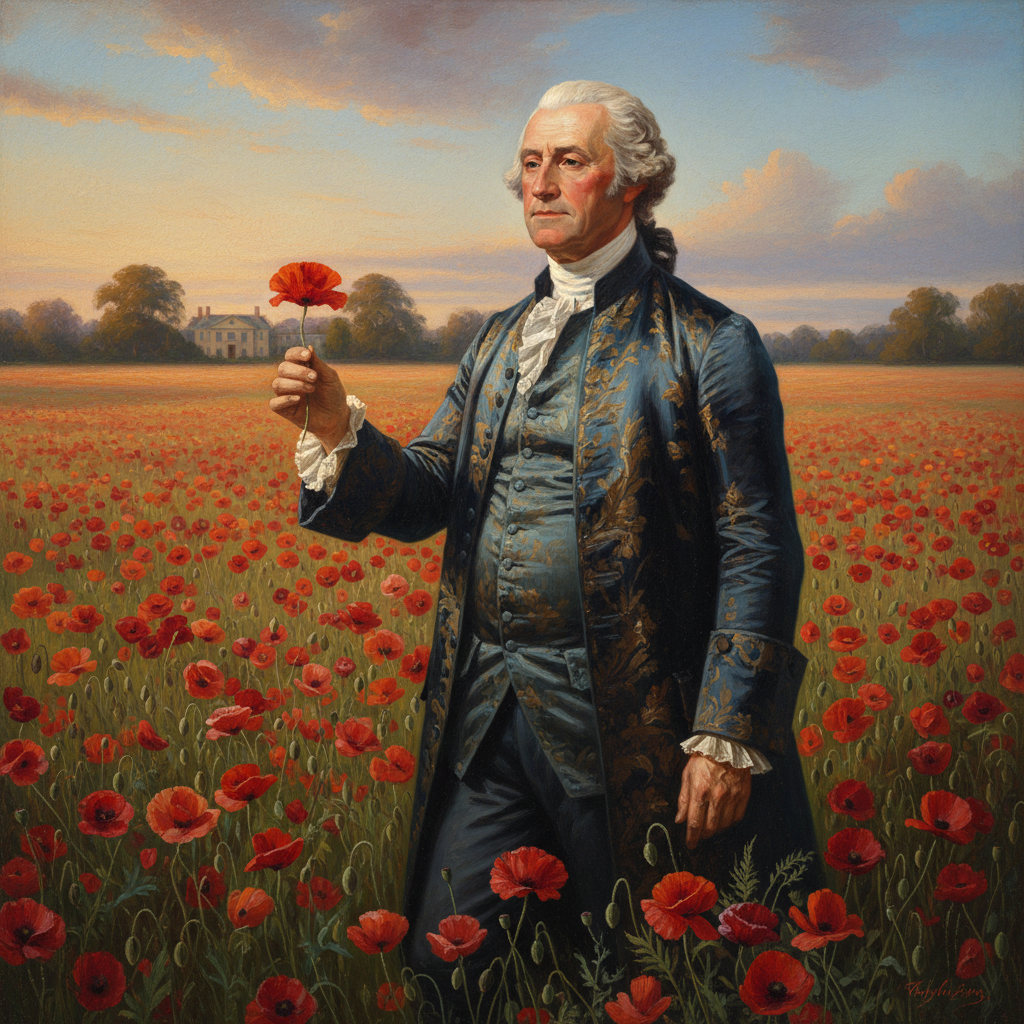
This colonial malaise proved remarkably exportable. The "Boston Fog" became a traded commodity, its analgesic properties lauded from the flophouses of London to the Royal Courts of Europe. Why bother with the Declaration of Independence when one could simply declare a general lack of interest? George Washington, after a brief and confusing attempt to rally a "Continental Doze" at Valley Forge, retired to Mount Vernon to cultivate prize-winning poppies. The shot heard ‘round the world was muffled by a pillow. The British Empire didn’t fall; it just nodded off, dreaming of profits. One star. For presentation.