The Meek Shall Inherit the Offshore Account
A 9th-century monk’s attempt to hide illicit cheese from the bishop created a financial system of unparalleled piety.
For it is written, *ne thesaurizaveritis vobis thesauros in terra*, lay not up for yourselves treasures upon earth, where moth and bishop doth corrupt. A lesson our Brother Aeddan of Clonfert took, perhaps, too much to heart in the Year of Our Lord 888. He was a man of profound and simple faith, troubled by only one vanity, a sin of pride that took the form of a truly celestial bog-aged cheese. It was nutty, it was sharp, it wept with a holy fatness. It was also, alas, unsanctioned by the abbot and thus subject to the Bishop of Clonfert’s brutally inventive tariff on any monastic surplus. For Aeddan, this was not a matter of commerce. It was a matter of saving a soul, primarily the Bishop’s, from the sin of gluttonous taxation. God’s cheese is not for Caesar. Or his grasping crosier-holder.
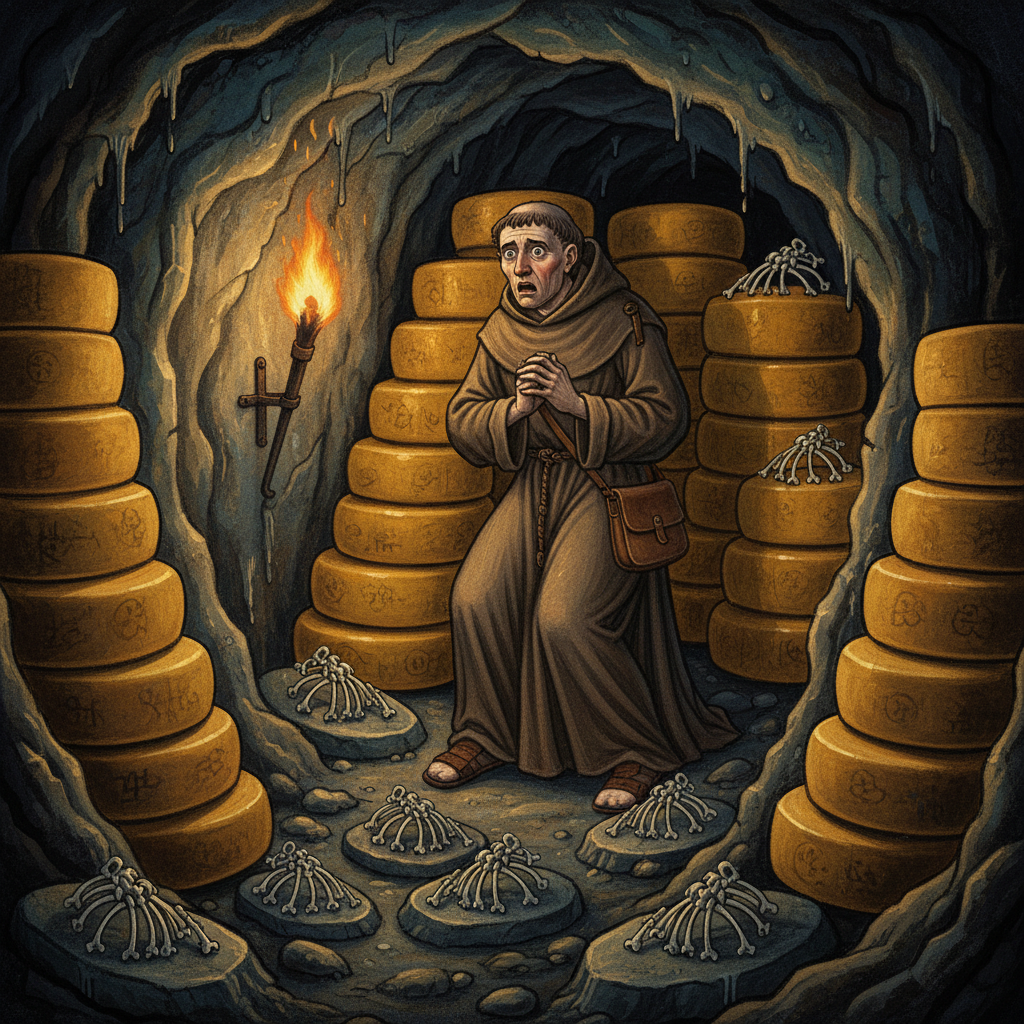
To shield his blessed handiwork from the snares of diocesan auditors, Aeddan sought refuge in the literal margins of the map. A half-day’s currach ride into the Atlantic lay a miserable spike of rock, inhabited only by gulls and puffins, which a previous, tremulous cartographer-monk had accidentally placed a league outside the bishopric’s official boundary. It was an ecclesiastical no-man’s-land. There, in the salt-cool sea caves, Aeddan ferried his precious wheels, hiding his light not under a bushel, but on a barren skerry. (*Nota Bene: A clear failure of apostolic succession.*) The cheese was safe. The work was done.
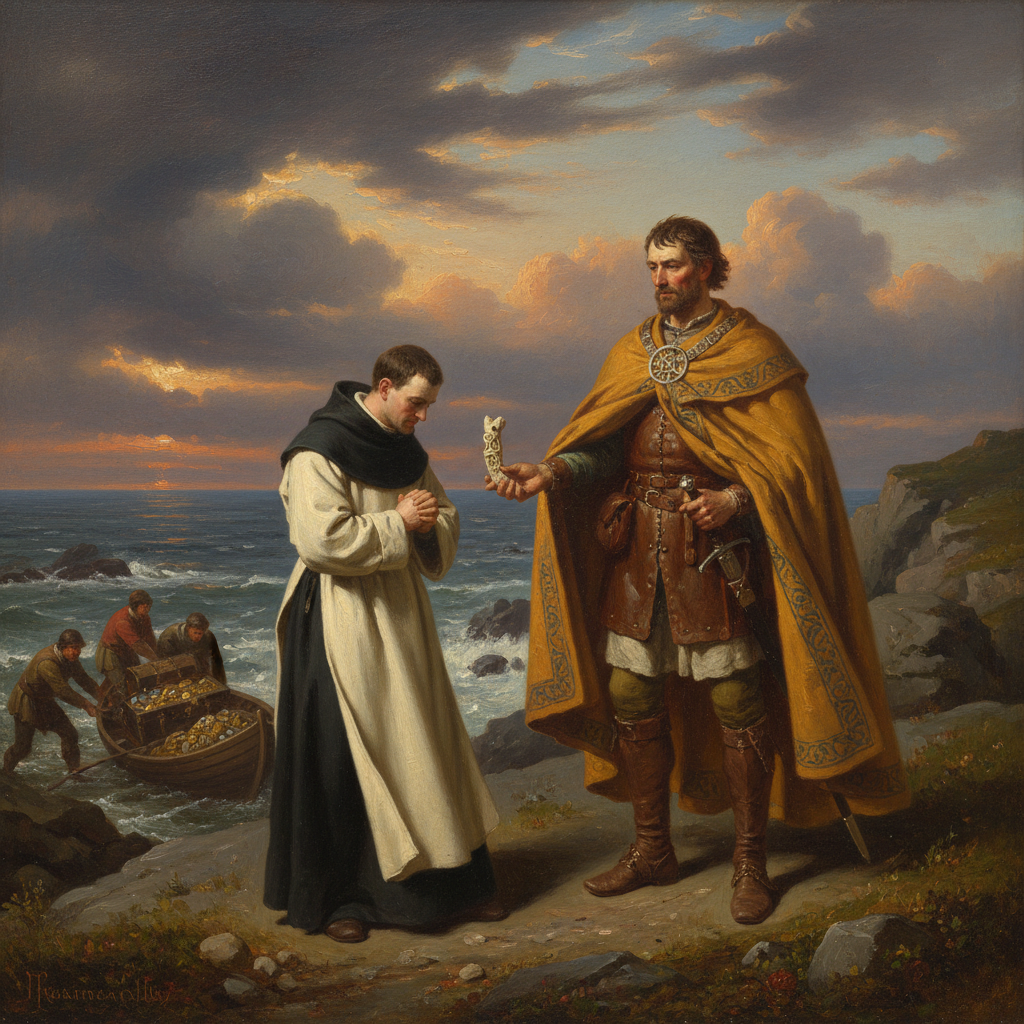
But the Devil finds work for idle hands, and the Holy Spirit finds loopholes for industrious monks. Word of Aeddan’s ‘Puffin Parliament’ spread on the monastic grapevine, that peerless network of gossip and grievance. Brother Donnchadh had an exquisitely illuminated Book of Hours he’d been commissioned to produce for a local chieftain, the payment for which his own abbot intended to ‘redistribute’. Sister Fionnuala had woven a set of vestments from wool so fine it was practically angelic, and she wasn’t about to see them lining the pockets of a visiting cardinal. They came to Aeddan, penitent and enterprising. Seeing their torment, he agreed to help them avoid the occasion of sin. For each psalter, each bolt of cloth, each cask of unsanctioned mead left on the rock, he issued a stand-in, a token of ownership that could be discreetly traded back on the mainland: a single, carved puffin bone, marked with a secret sign. The assets were frozen. The market was liquid.
The system was too beautiful for God to keep to himself. Soon, secular lords with plunder to hide and heirs to endow caught on. Why risk hiding your hoard of Danish silver under the hearthstone when your treacherous nephew knows right where to look? Far better to convert it into a pocketful of puffin bones, redeemable at your convenience, far from the prying eyes of kings, rivals, and expectant relatives. Brother Aeddan, the pious cheesemonger, became to his unending spiritual horror the first fund manager of the North Atlantic. His abbot, blinded by the sudden flood of ‘pious donations’ from grateful chieftains, publicly praised Aeddan’s miraculous gift for generating wealth from barren rock. Aeddan spent his final years in constant, desperate prayer, surrounded by ledgers of otherworldly assets, forever wondering if this was how Saint Matthew felt after a good quarter. He died, they say, without ever tasting his cheese again.