The Marriage of Figaro’s Valet
The strange second life of a lost Mozart opera that accidentally unionized Paris.
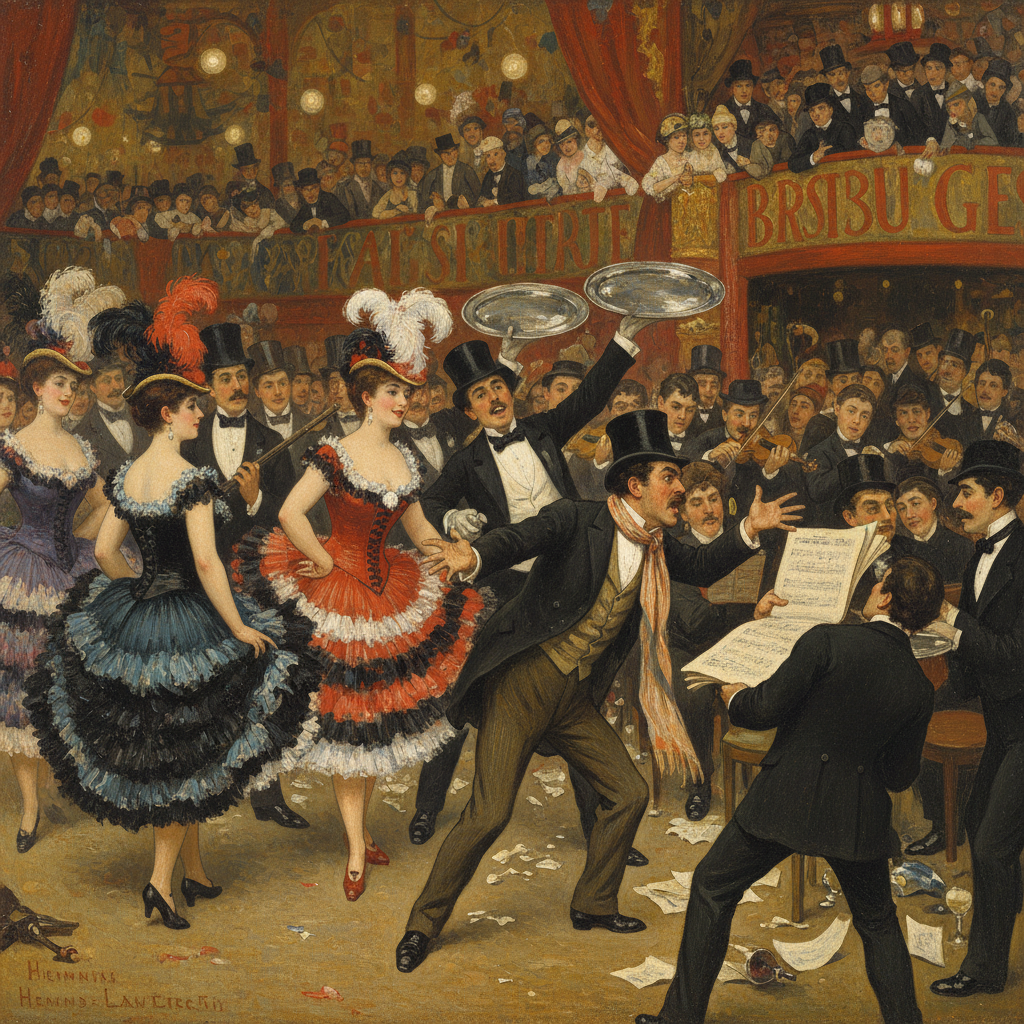
The overture begins. A single spotlight finds a man sharpening a razor. He is not, however, the wily valet Figaro, but Charles Zidler, co-founder of the Moulin Rouge, wondering how in God’s name he is meant to sell Wolfgang Amadeus Mozart to a crowd expecting can-can dancers and a plaster elephant full of opium. The year is 1889, and Zidler has staked his new establishment’s reputation on a dusty manuscript purchased for a song from a bankrupt Viennese auction house: *Lo sposo deluso* (The Deluded Bridegroom), Mozart’s unfinished 1783 opera buffa.
CAST
Don Asdrubale, a pompous ass: Georges Clemenceau, Minister of the Interior
Bocconio, a rich fool: Charles Zidler, Producer
Pulcherio, a misogynist fop: Adolphe Le Tellier, Chief of Police
Figaro, a valet with ideas above his station: The Entire Working Class of Paris
The original opera was a barely-sketched trifle about mismatched lovers and a Roman soldier returned from the wars. But Zidler, desperate to fill a two-hour slot and unable to afford a new score, handed it to his librettists, Jean-Antoine and Henri Meilhac. They saw the dramatic hole at its center—the servant class—and filled it with pure, uncut Parisian resentment. Their new version, retitled *Le Valet se venge* (The Valet’s Revenge), recast the plot entirely. The rich idiot masters spent the whole first act planning a banquet, while the valets, maids, and cooks, given all the best arias, spent it planning to steal the food, spike the wine, and run off with the silver. The new finale, a rousing chorus set to a repurposed Mozart march, was an anthem of gleeful larceny titled, “To the Cellars, My Friends, They Can’t Stop Us All!”
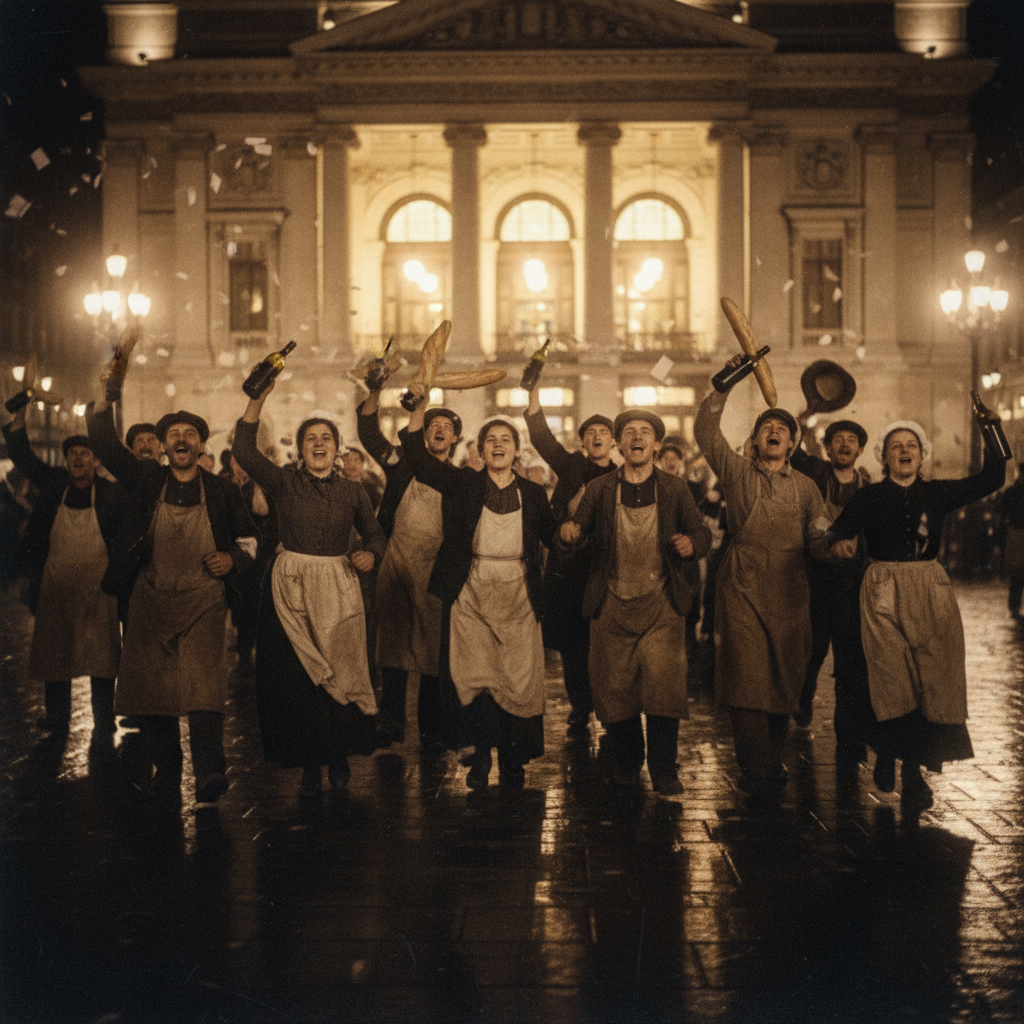
It was meant to be a bawdy farce. A bit of class-conscious spice for the cheap seats. No one told the audience. On opening night, the sight of working-class characters getting one over on their silk-clad employers, set to music so divine it felt like God was on their side, did not read as comedy. It read as a command. When the chorus began the finale, a boilermaker in the third row, three absinthes deep, stood on his chair and roared, “He’s right!” That was the spark. The pit orchestra was drowned out by the audience joining the chorus, which they took not as a metaphor, but as a direct instruction. The ensuing riot spilled out onto the Boulevard de Clichy, where the mob, singing Mozart, liberated the kitchens of the city’s finest restaurants.
The “Valet Uprising” or “Opera Riots” lasted three days. The Prefect of Police, assuming it was an anarchist plot, sent in troops who were baffled to find the rebels weren’t building barricades but staging impromptu performances of Act II in expropriated hotel lobbies. The revolt ended when Zidler, under duress, agreed to a command performance for the newly formed Waiters, Cooks, and Scullery Maids’ Union, complete with a contract guaranteeing them a percentage of the catering budget. The final irony? The official report from Minister of the Interior Georges Clemenceau concluded that the entire affair was a publicity stunt. He fined the Moulin Rouge 500 francs for “disturbing the peace with an unseemly aria.”