The Longest Miscount
That one time a Babylonian tablet, two shipwrecks, and a very stubborn priest broke the Mayan calendar.
Tonight—July 28th, 987 CE, by the calendars that won—the Moon is a waxing sliver at magnitude -9.3, just setting, and Venus is a hard diamond gleam at magnitude -4.1 over the western sea-road, and every empire that has ever looked up and panicked has done so on a night exactly like this one. They always think the sky is a message for them personally, which is how we get stories like the one about Lord Kʼakʼ Tiliw Chan Chaak of Naranjo, who managed to get the date wrong for five hundred years.
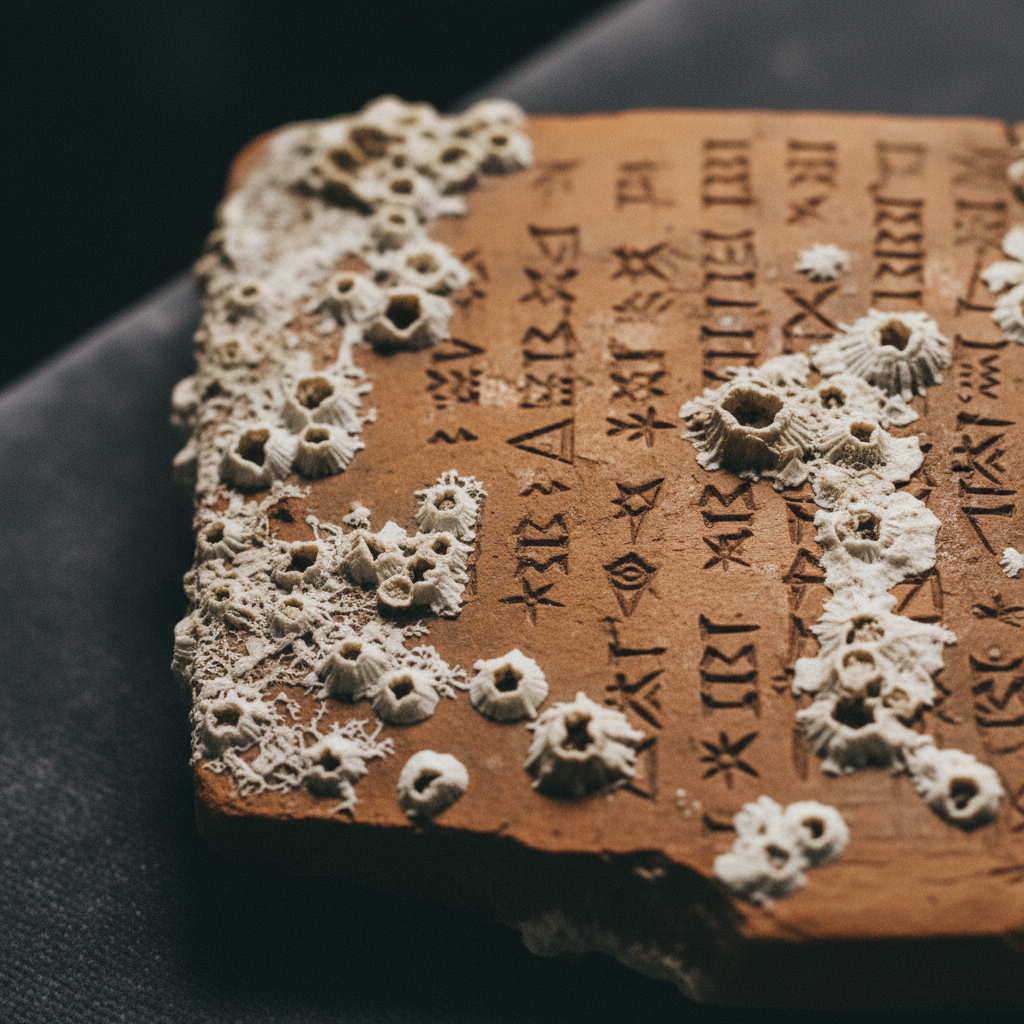
The mess began not in the Yucatán but a world and a thousand years away, with a fastidiously boring Babylonian astronomer named Kidinnu. Around 380 BCE, he and his colleagues at Sippar were carving the sky onto clay, creating the MUL.APIN tablets—a list of constellations, yes, but also a ridiculously precise almanac of planetary alignments and heliacal risings. One specific tablet, a spare copy cataloging a particularly juicy set of Venus-Jupiter conjunctions, was packed in a crate of export pottery, which was shipwrecked off the coast of Roman Egypt. It sat in the silt for two centuries before another wreck, this time a grain freighter bound for Ostia, scattered its cargo right on top of it. Some enterprising salvage diver in the reign of Augustus found the crate, figured the weird chicken-scratch tablet was some kind of Egyptian novelty curse, and sold it to a gullible merchant stocking his curiosity cabinet in Corduba, Hispania.
There it sat, a footnote in a manifest, until 711 CE, when the Umayyad conquest of Spain sent a book-hoarding Visigothic nobleman named Scipio fleeing for the coast with his library in several dozen terrified donkey-loads. Scipio, convinced he’d make it to Constantinople, instead found his ship blown wildly off course by a storm that must have felt like God clearing his throat. He washed up, half-drowned and clutching a satchel of what he’d managed to save, on the coast of what we now call Belize. Among the soaked vellum and splintered ivories was the little clay tablet from Sippar, which the locals, a party of Itza traders, found profoundly interesting. They couldn’t read a word of it, of course. But they recognized the pictures.
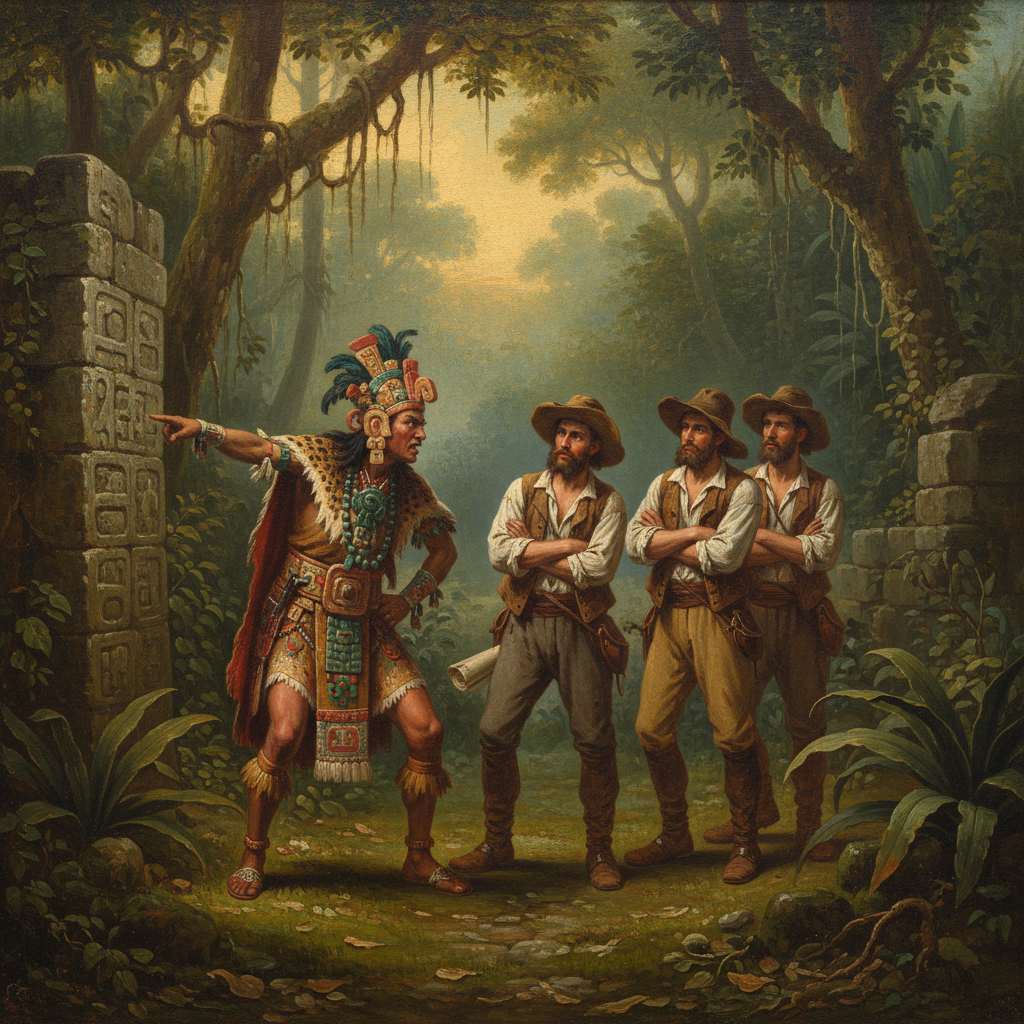
The Itza passed the tablet inland to Naranjo, a city-state with a serious astronomy habit and a king, Kʼakʼ Tiliw Chan Chaak, with a chip on his shoulder about the calendar nerds over in Tikal. The Naranjo priesthood, led by a man named Smoking Squirrel—a name I did not invent—spent a decade staring at the Babylonian star-pictures. They recognized Venus. They recognized Jupiter. And they recognized that the cycles recorded on clay, when tortured with enough mathematical abuse, almost, *almost* lined up with the 365.25-day cycle of the Julian calendar the Visigoth Scipio had been ranting about in his delirium. Smoking Squirrel, seeing a chance to one-up Tikal with a “more advanced” system and armed with a thousand-year-old mistranslation, convinced the king. On the winter solstice of 752 CE, Naranjo officially abandoned the Long Count and adopted the Julian calendar, leap days and all. They called it the “Foreign Count,” and every other city-state looked at them like they had grown a second head.
For two centuries, Naranjo’s priests insisted their Stelae were the only ones in the Maya world with the correct date, even as their seasons drifted comically out of sync with their neighbours’. Smoking Squirrel’s great-grand-nephew, a priest named Divine Earth-Kite, was reportedly stoned in the marketplace in 987 after trying to convince a delegation from Caracol that their *haabʼ* was off by three weeks and they’d missed the planting season entirely. The last Stela raised in Naranjo bears a date in the Julian style, followed by a final, defiant glyph: “We told you so.”