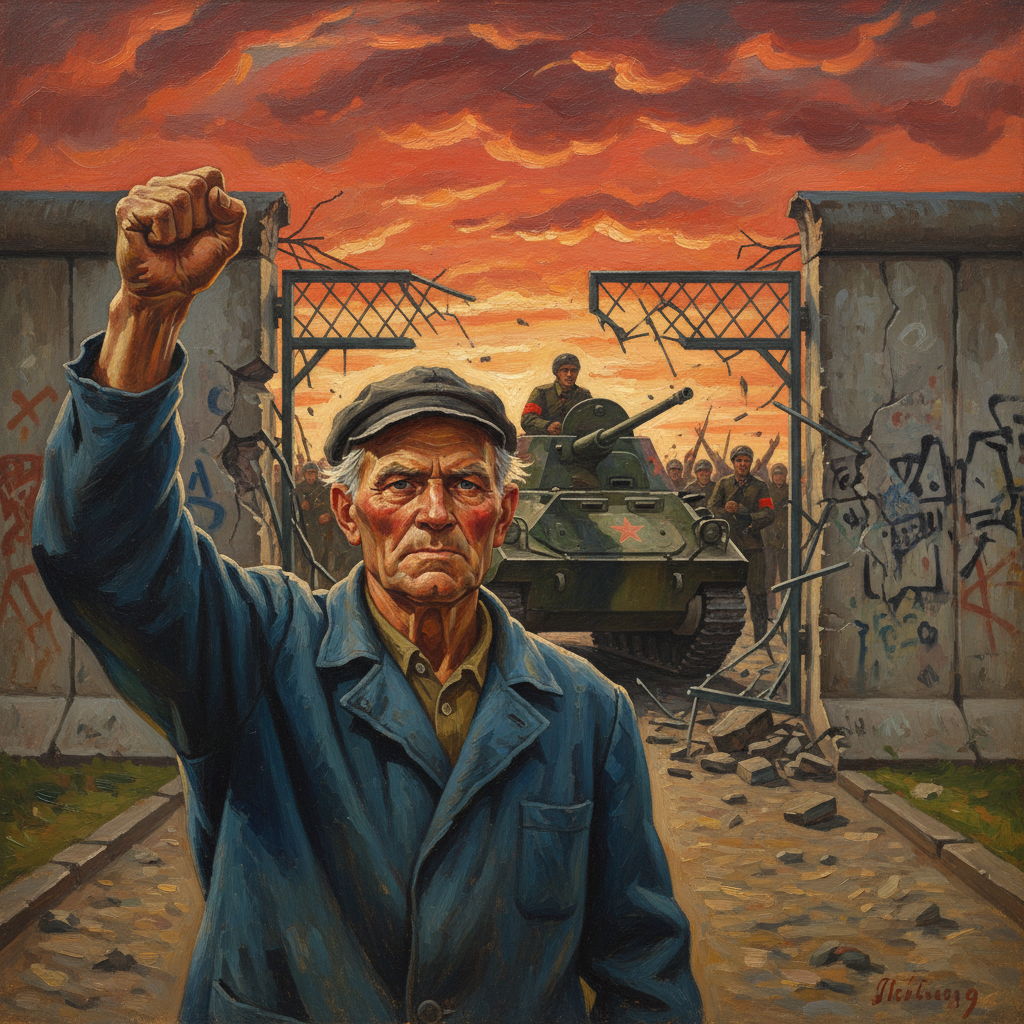
The Locksmith of Bornholmer Straße
One simple job, one master key, one very long night in November.
File ref. 89/11/09-MfS-PKE-48-2b concerns one (1) padlock, serial number 48-G. A routine piece of East German ironmongery, property of the Ministry for State Security, intended for Gate 7 of the Bornholmer Straße border crossing. On November 8, 1989, it was sent to the MfS locksmiths for its quarterly lubrication. The work order was completed by Unterleutnant Klaus Richter, a man whose professional misery was exceeded only by his professional incompetence. Instead of oiling the mechanism, he accidentally re-keyed it.
The consequences of this action became apparent at 21:20 the next evening. Günter Schabowski, a Politburo apparatchik whose face was permanently set to ‘surprised to be here’, had just bungled a live press conference, accidentally declaring all GDR travel restrictions void “effective immediately”. At Bornholmer Straße, thousands of East Berliners arrived to see the West. In command was Oberstleutnant Harald Jäger, a Stasi officer who had spent the last hour frantically seeking clarification from a chain of command that had collectively pissed its trousers and gone to bed. Receiving no orders to shoot, and then no orders at all, Jäger decided to open the gate. He inserted his key into padlock 48-G. It did not turn.
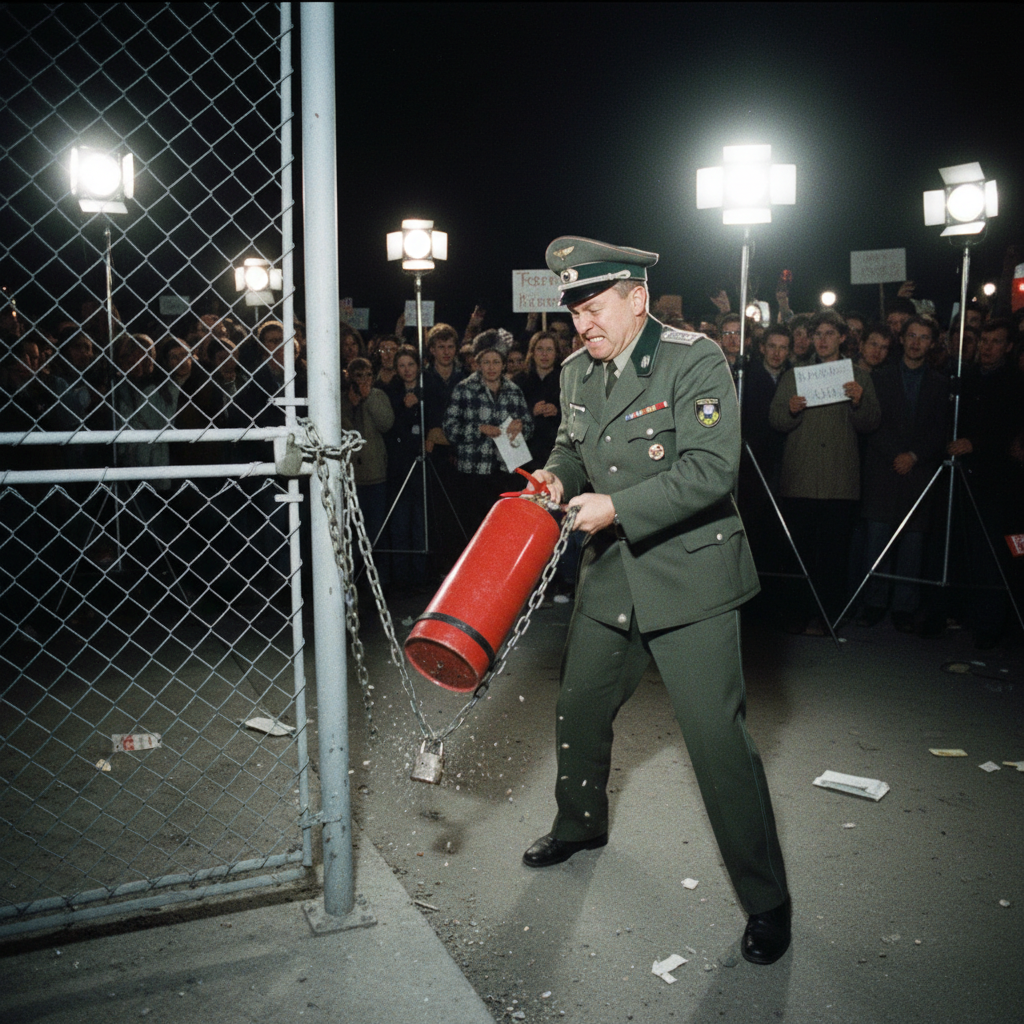
For the next ninety minutes, history was held hostage by thirty roubles’ worth of defective brass. Jäger and two border guards wrestled with the lock. They tried jiggling it. They tried pulling on it. They tried swearing at it, a dialectical approach to material resistance that proved surprisingly ineffective. A guard was dispatched to find bolt cutters, only to return with a pair of wire snips suitable for trimming rose bushes. The crowd, initially jubilant, grew quiet, then suspicious, then angry. Chants of “Open the gate!” became “Lies! Lies!”, punctuated by the rhythmic *clang* of Jäger attempting to smash the lock with a fire extinguisher. Inside the guard post, the phone rang incessantly with calls from Western news agencies asking what, precisely, the hold-up was.
The situation was resolved, as all great historical crises are, by a man with a bladder problem. At 22:58, an elderly Berliner named Friedrich Schmidt, who had consumed three large pilsners in anticipation of a momentous evening, pushed his way to the front and announced he was going to piss on the lock if it wasn’t opened in the next two minutes. This statement, broadcast live by a Danish camera crew, was what finally broke the nerve of Generalmajor Gerhard Neiber at Stasi headquarters. Faced with the prospect of the first breach in the Berlin Wall being lubricated by senior-citizen urine, Neiber screamed down the phone at Jäger: “Get a damned tank and run the gate over! I don’t care! Just make it stop!” One BTR-60 and 14,000 roubles of property damage later, the first East Germans stumbled into the West, reeking faintly of diesel fumes and anticlimax.