The Lady with the Leech
One woman’s crusade to apply several thousand invertebrates to every available soldier.
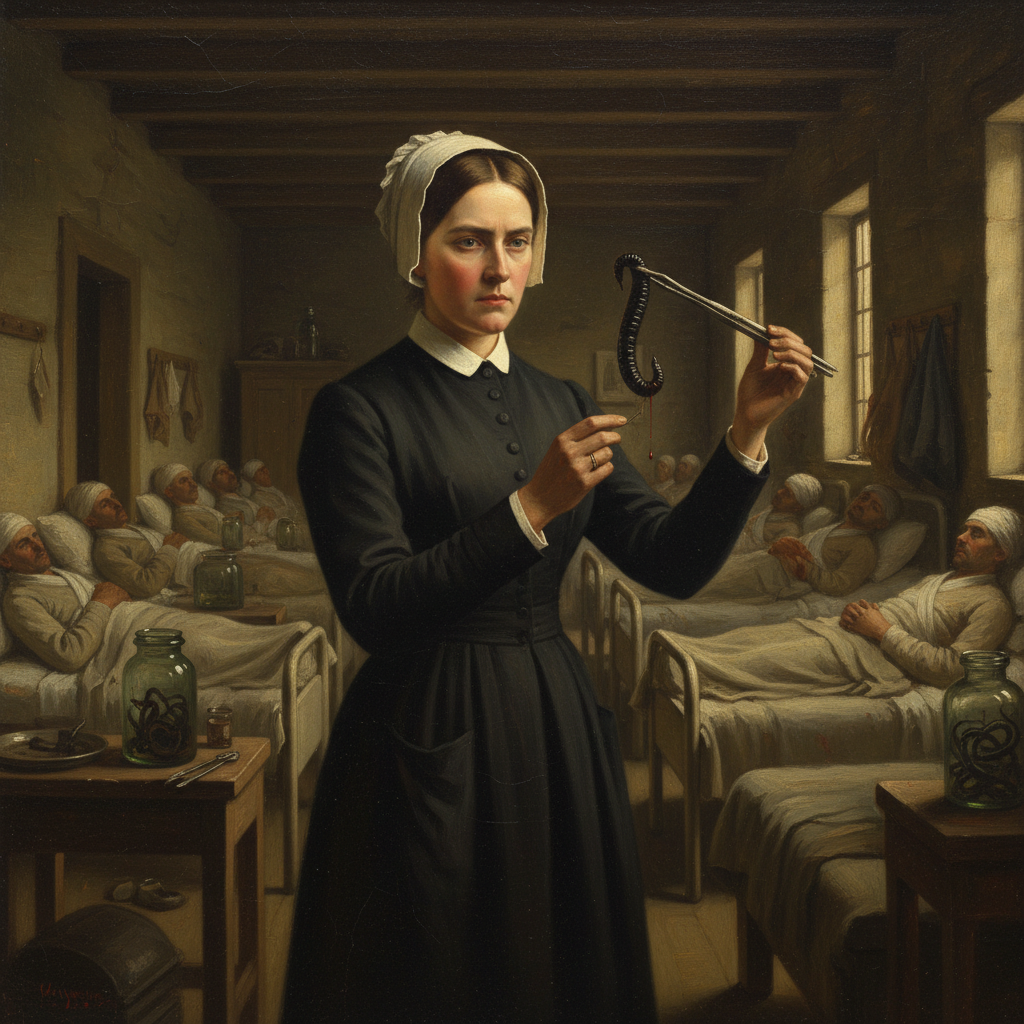
Mortality in the Scutari barracks hospital was hovering around 42% when Florence Nightingale arrived in 1854, a figure she regarded as a professional insult. In our timeline, she slashed it to 2% with a brutal regime of sanitation, nutrition, and unflinching administrative competence. In another, she arrived with a case of mistaken identity and 38,000 leeches.
The divergence point was a shipping clerk in Marseille. A crate of *hirudo medicinalis* intended for a French field hospital was mislabelled and loaded onto Nightingale’s supply ship; a consignment of lye soap, carbolic acid, and bandages intended for the British effort was instead delivered to a bemused veterinarian in Oran. Nightingale, faced with a squirming, pulsating mass of annelids and the unshakeable conviction that God’s Providence did not make clerical errors, updated her treatment plan. Cholera? A specific miasma requiring cranial drainage, best achieved by a poultice of 40 leeches applied directly to the temples. Gangrene? Clearly a surfeit of black humour in the limb. Out came the leeches. Dysentery? Leeches, administered rectally. The woman was nothing if not methodical.
At first, the Army Medical Department was delighted. This was medicine they understood. Lord Raglan, the British commander who famously lost an arm and his temper at Waterloo, was an early and enthusiastic convert, submitting to a twice-daily leeching of his remaining hand for phantom limb pain. The wards at Scutari, however, began to resemble a charnel house directed by a particularly obsessive vampire. Patients fainted from blood loss mid-treatment; orderlies skated on floors slick with gore; and the hospital’s laundry bill for blood-soaked linens exceeded its budget for bread by a factor of three. Mortality climbed to an astonishing 68%. Nightingale, observing the pallor and weakness of her charges, diagnosed a collective failure of moral character and doubled the dosage.
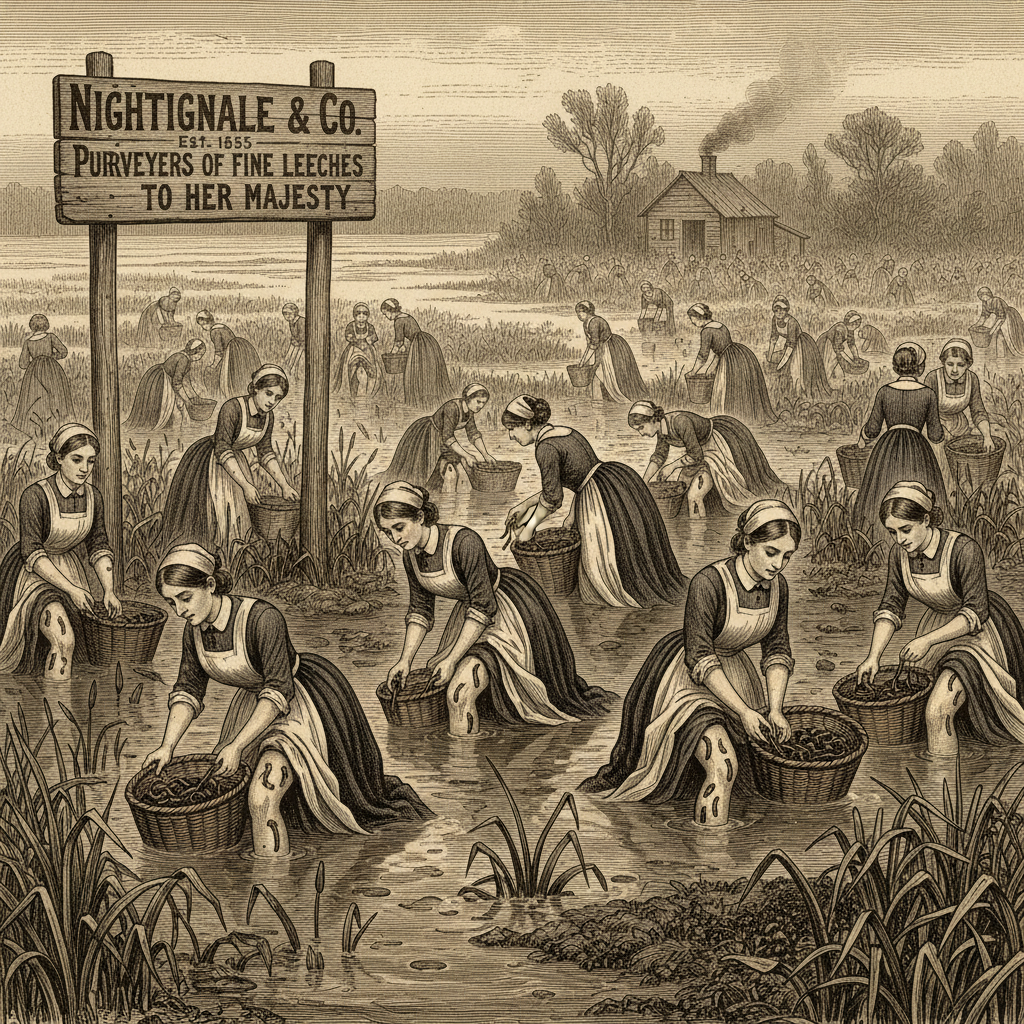
Her true genius was not medical, but logistical. The demand for leeches soon outstripped Europe’s supply. Undeterred, Nightingale established a sprawling network of ‘leech farms’ across the Ottoman Empire, staffed by her formidable nurses. Marshes from the Danube Delta to the Nile were converted to annelid production. Her nurses, trained in the delicate arts of application, removal, and exsanguination management, became the most feared women in the Levant. They developed specialized tools: silver tongs for placement, vinegar sprays to encourage detachment, and a patented ‘Nightingale Repeating Lancet’ for preparing the skin with maximum efficiency. By 1856, Nightingale’s Hirudinean Nursing Corps controlled 80% of the world’s medicinal leech trade, a slithering, blood-guzzling monopoly that made her richer than the Queen. She returned to England not as a national hero of sanitation, but as the tyrannical head of a medical cartel, insisting that a daily leeching was the only sure path to a virtuous English life. Balmoral, at her insistence, installed a ceremonial leech-tank in the royal bedchamber, from which Victoria would pluck one nightly “for the good of the Empire.”