The Kremlin’s Case of Explosive Diarrhoea
The defector who triggered a global crisis wasn't a spy with nuclear codes, but a chef with a vendetta and a truly catastrophic borscht recipe.
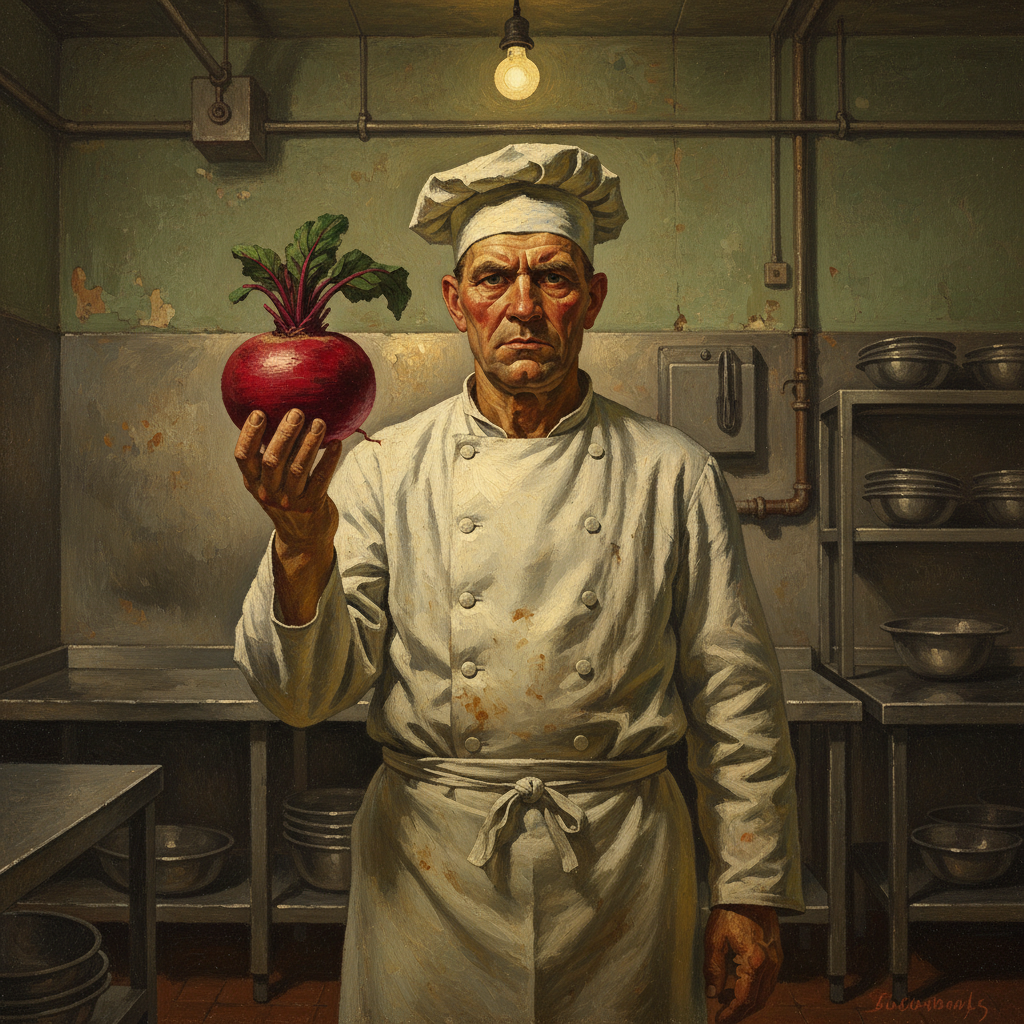
File ref. 201-887901, “Operation SOUR CREAM.” October 24, 1962. Aleksandr Kudryavtsev, a cook assigned to the Soviet mission in Havana, makes a run for the American embassy. He is debriefed, extensively. Kudryavtsev claims to possess a state secret of strategic importance, passed to him by his uncle, a GRU colonel. The secret is a recipe. The Americans, expecting launch codes or submarine patrols, are confused. The CIA’s station chief, a man whose liver had already filed for divorce from the rest of his body, asks for clarification. Kudryavtsev, sweating under the tropical sun and cheap lightbulbs, explains that this isn’t just any recipe. This is Khrushchev’s personal borscht recipe, the one served at all state functions. And, he insists, it is a bioweapon.
The document Kudryavtsev provides is not a formula for weaponised anthrax. It is, instead, a list of ingredients for a beet soup, with one innovation. Instead of a modest amount of soured cream and dill, it specifies the inclusion of 300 grams of fermented cabbage, six entire pickled garlic cloves, and a truly heroic quantity of a specific, wildly laxative Caucasian mineral salt used for curing fish. The CIA’s analysts stare at the translation. They run tests. They discover the chemical reaction produced by combining these specific ingredients under heat is less a culinary experience and more a targeted act of gastrointestinal terrorism. The resulting soup, according to the Langley lab report, would produce “a state of explosive, near-uncontrollable gastric distress” within twenty minutes of consumption. A D.C. cryptographer, seconded to the analysis team, notes that the effect would be neurologically indistinguishable from pure, shit-your-pants terror.
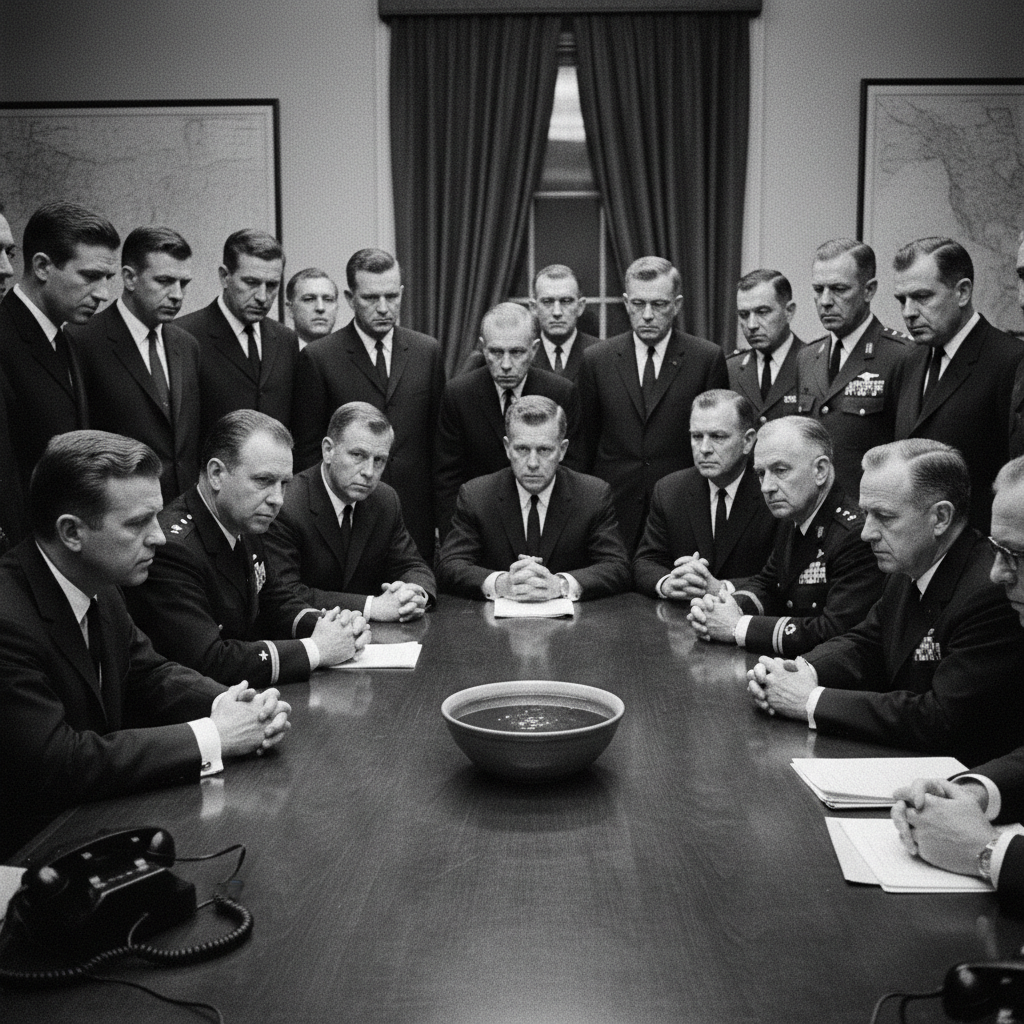
The intelligence is rushed to President Kennedy. It is presented not as a recipe, but as a chemical warfare plan. The target: the entire Soviet Presidium. Operation SOUR CREAM, as it is now internally known, is interpreted as a decapitation strike. Why would Khrushchev need missiles in Cuba if he could liquidate his own government and blame it on a state dinner gone wrong? The paranoia escalates. Naval quarantine procedures are tightened. DEFCON 2 is declared. SAC bombers are scrambled. For 72 hours, the world holds its breath, teetering on the brink of nuclear annihilation, because a panel of Ivy League men has convinced itself that the Kremlin plans to shit itself to death as a prelude to a third world war.
The crisis is only averted when a junior analyst in naval intelligence, a man whose grandmother was from Odessa, actually reads the recipe notes scribbled in the margin. He points out that Kudryavtsev’s GRU “uncle” was, in fact, his mother’s brother, a man who ran a canteen in Vladivostok and had been fired for stealing lard. The secret recipe was Kudryavtsev’s own invention, an act of revenge after his state-sponsored borscht was criticised by a visiting apparatchik. He defected because he was about to be reassigned to a weather station in Yakutia. Kennedy is informed. A phone call is made to a very confused Soviet ambassador. The Joint Chiefs are told to stand down their Armageddon. Kudryavtsev is given a new identity and a job washing dishes in a Poughkeepsie diner, for a total cost to the American taxpayer of $12,450 and one nearly-terminated planet.