The King’s Teeth, and Other Collateral Damage
A 78% increase in jaw-related screaming at the court of Versailles, 1686–1692.
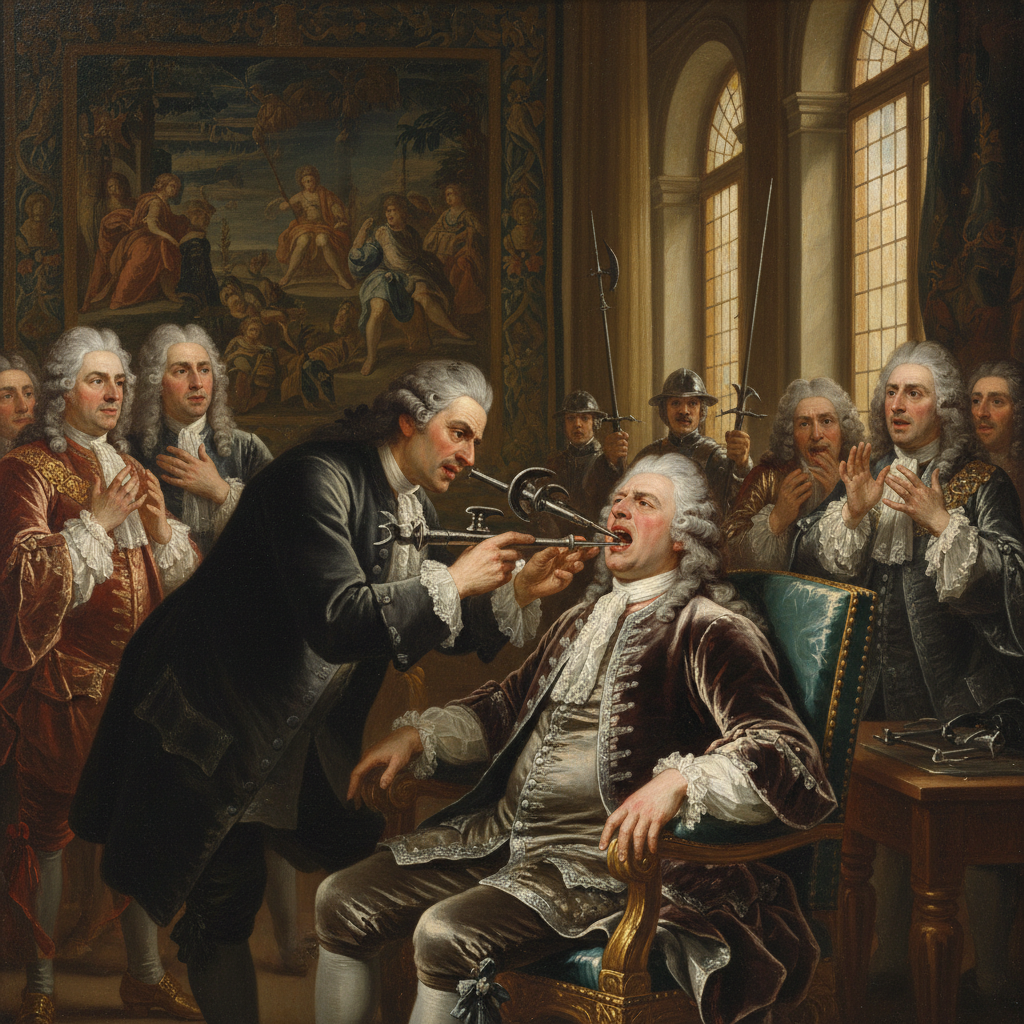
'''Patient Zero, so to speak, was King Louis XIV himself. The diagnosis: the Great Pox, naturally. Syphilis was practically a fashion accessory at Versailles, but a king’s case required a king’s cure. Enter Dr. Charles-François Félix de Tassy, Premier Surgeon, armed with the era’s most potent—and I do mean potent—remedy: mercury. The therapeutic principle was simple, if you were an idiot. The patient ingests mercury, they salivate profusely, and the disease just sort of… drools out. It’s humoral theory at its most liquid and least logical. And Louis, bless his divine right, was an enthusiastic patient. Too enthusiastic.
By the spring of 1686, the King was producing truly heroic quantities of spit, but the cure was proving worse than the disease. The mercury had loosened his teeth and rotted his upper jaw, creating a fistula—a hole, for the less clinically-minded—straight through his palate and into his sinus cavity. When he drank, wine came out of his nose. This is generally considered a poor outcome. Félix, sweating through his silk waistcoat, attempted to cauterise the wound with a set of red-hot iron pokers. The fourteen subsequent attempts did not so much close the fistula as make it the size of a large coin, leaving the Sun King with a permanent, suppurating, and frankly quite fragrant head-hole. He could no longer eat soup without it rerouting via his nostrils, which tended to kill the mood at state dinners.
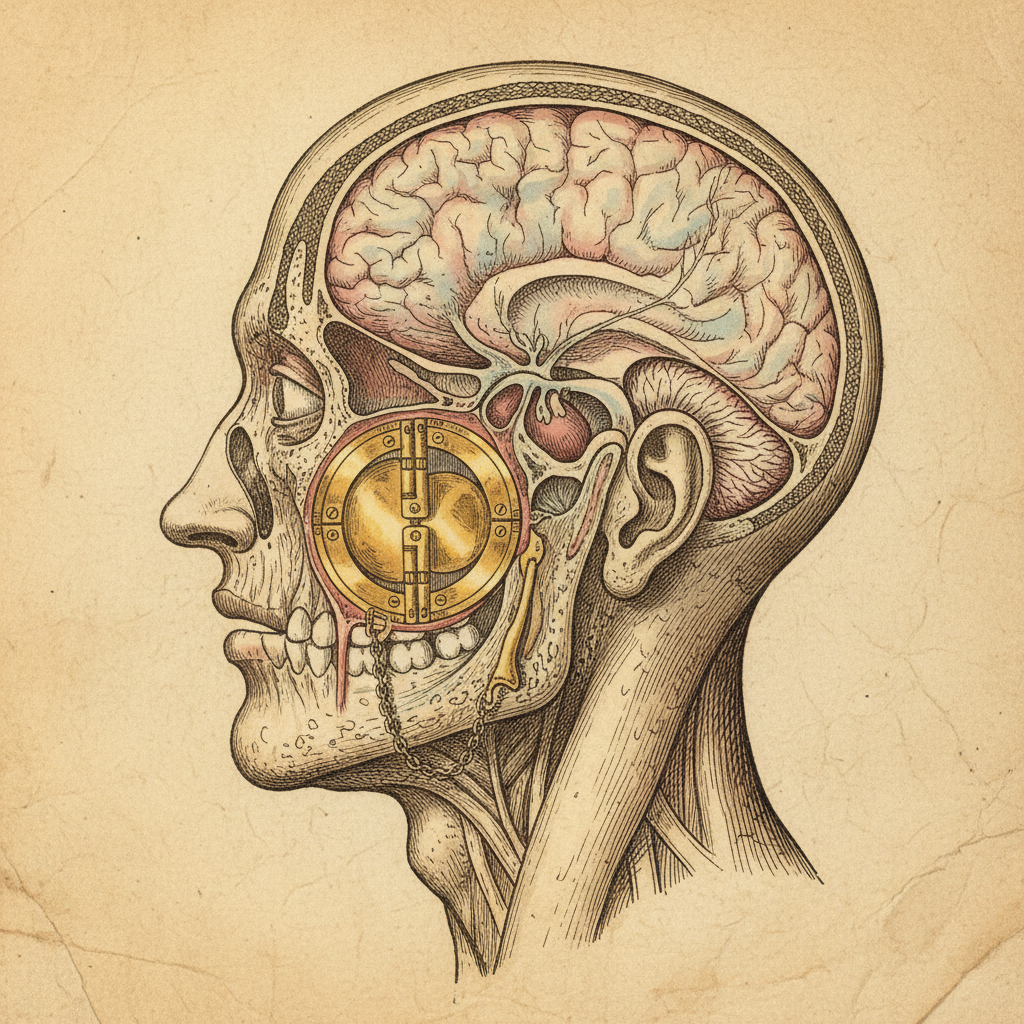
Desperate to avoid being executed for crimes against the royal face, Félix de Tassy had an epiphany born of pure panic. The problem wasn’t the hole, it was the *access*. He needed to stopper it. He first tried stuffing it with medicated linen, which worked until the King sneezed and fired a wine-soaked wad of cloth across the room, nearly taking out the eye of a visiting Duke. The next innovation involved a custom-forged silver plug, which fell out. Then a gold one, which was too heavy. Finally, Félix, collaborating with the court’s most put-upon jeweller, developed a hinged, two-part device he called the *obturateur*. It was a masterpiece of mortified ingenuity: a custom-moulded gold plate for the roof of the mouth, anchored to the remaining teeth with delicate wires, with a second, sponge-lined plate that could be swivelled into place to seal the fistula for meals. It was, in effect, the world’s first complex dental prosthetic.
Once the King could drink without giving himself a nasal claret rinse, Félix became a hero. Aristocrats, many of whom were suffering their own mercury-induced dental collapses, clamoured for his services. Soon he wasn’t just plugging holes; he was replacing lost teeth, fabricating bridges from hippopotamus ivory, and designing what he termed ‘cosmetic enhancers’—early veneers for teeth blackened by sugar and syphilis. He founded the *Académie Royale de Chirurgie Dentaire*, formalising a field that had previously been the gory purview of barbers and executioners. His case notes, particularly ‘On the Dangers of Nasal Soufflé’, became foundational texts. All because one man so comprehensively ruined the King’s mouth he had no choice but to invent a way to fix it.'''