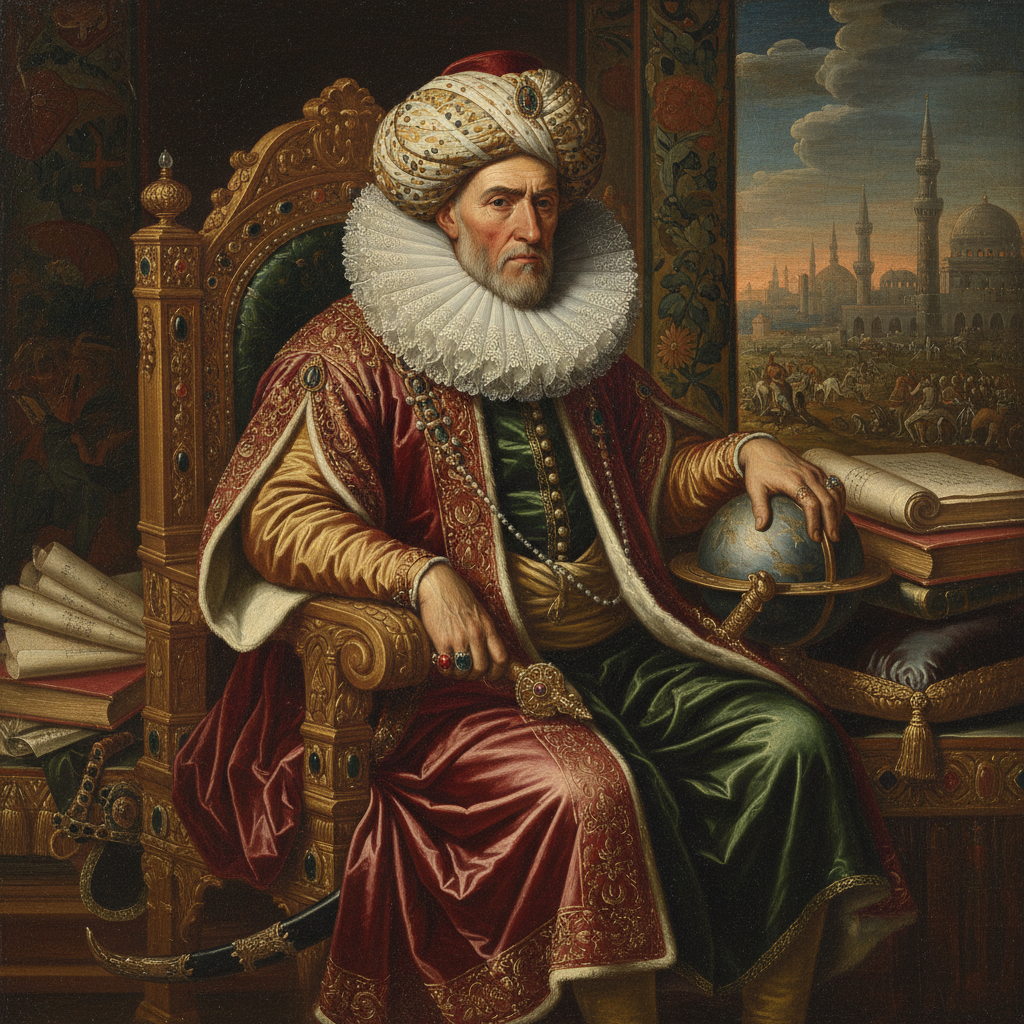
THE JANISSARY RUFF-OLUTION
How a Lost Shipment of English Neckwear Nearly Decapitated the Ottoman Empire

’Twas the winter of 1588, and God, in His infinite and often frankly bizarre wisdom, decided to smite a Spanish galleon off the coast of Anatolia. This wasn’t just any galleon. This was the *Nuestra Señora de la Oportunidad Robada*, a ship practically pregnant with loot pilfered from the English. And amidst the waterlogged barrels of beer and casks of questionable hardtack was a crate containing the single most potent weapon of the 16th century: the Elizabethan ruff. Hundreds of them. Acres of starched, pleated, neck-throttling lace, destined for some foppish duke in Cádiz, now bobbing toward the world’s most powerful Islamic empire.
The ruffs, salvaged by enterprising locals who probably thought they were some kind of stackable sea-pancake, found their way to the Grand Bazaar in Constantinople. There, a Janissary officer named—and I’m not making this up, probably—"Big" Mustafa Ağa, a man whose neck was thicker than most people’s ambitions, saw one. Why did he buy it? The memoirs of a terrified Venetian silk-merchant who witnessed the transaction claim Mustafa was "three sheets to the wind on rakı and feeling festive." He slapped it on. It looked like a dove had crash-landed around his throat. It was magnificent. It was stupid. It was perfect.
Within a month, it was *the* look. The Janissaries, bless their coup-happy hearts, adopted the ruff as the ultimate symbol of badassery. It was impractical, a bastard to clean, and made eating soup a full-contact sport, but my *god* did it have stage presence. You weren’t just a soldier anymore; you were a walking, talking proscenium arch of intimidation. The trend spread through the barracks like wildfire, each corps trying to out-ruff the other. The Sipahis, not to be outdone, started putting tiny ruffs on their *horses*. It was a whole damn thing.
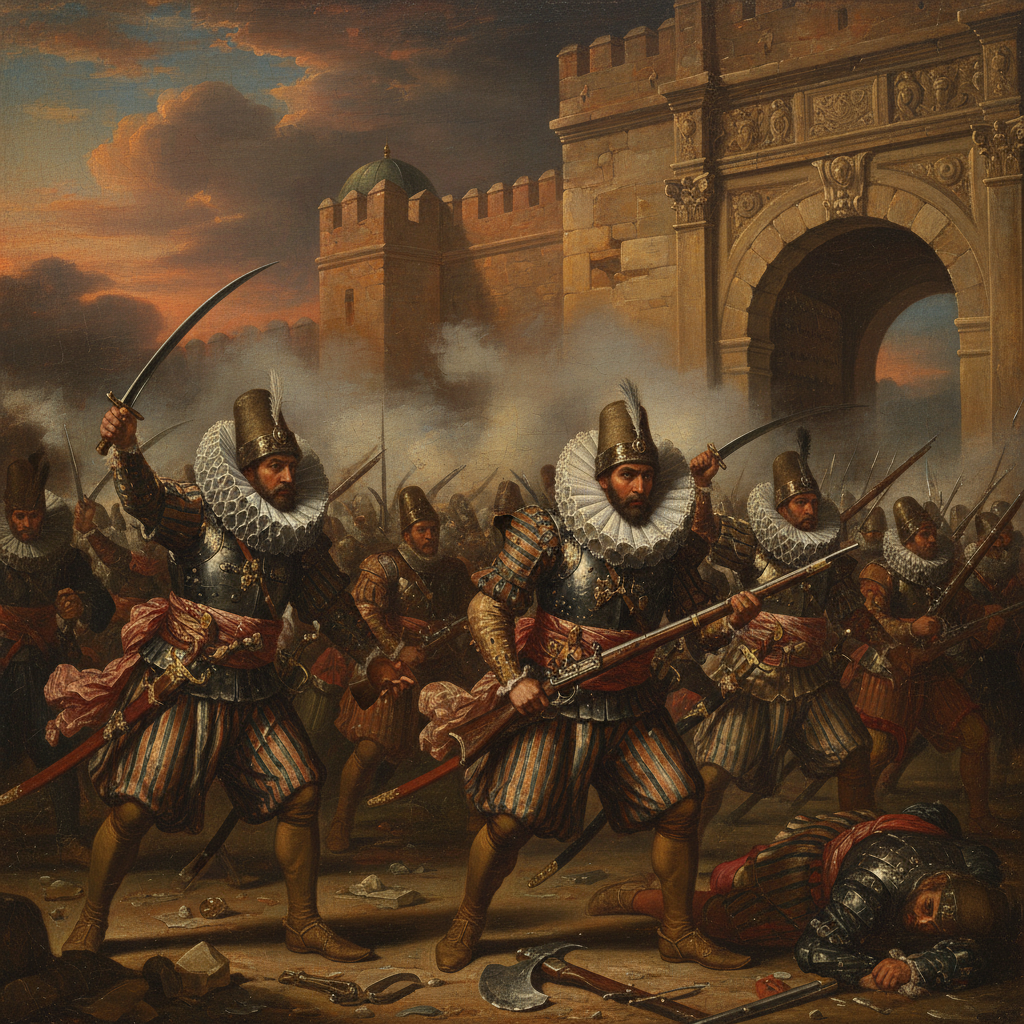
Of course, Sultan Murad III’s court, a Freudian circus of paranoia and backstabbing eunuchs, lost its collective shit. The Grand Vizier, a man whose own neck had seemingly retreated into his torso from sheer boredom, saw this as Western corruption of the highest order. He issued the "Imperial Edict Concerning Outrageous Throat-Ware," banning the ruff on pain of… well, it wasn’t clear, but it was definitely pain. This was, to put it mildly, a bad read of the room. The Janissaries saw the Ruff Ban as a direct assault on their swagger. A frontal attack on their *panache*. They did what they always did when someone tried to harsh their mellow: they grabbed their swords and marched on the palace.
The so-called "War of the Starched Collars" lasted about six hours. The Janissaries stormed the Topkapi gates, a terrifying sea of angry mustaches and pristine lace, demanding the vizier’s head and the immediate restoration of their neckwear rights. Murad III, a man who famously preferred the company of his 100-plus children to, you know, governing, immediately folded. The vizier was ceremonially strangled (sans ruff, a final indignity), and a new decree was issued proclaiming the ruff a sign of "unflinching martial virility." For the next fifty years, Ottoman court portraiture looked like a collaboration between the House of Osman and the Royal Shakespeare Company’s most flamboyant costume designer. And it all happened because a few boxes fell off a boat. History doesn’t turn on a dime; it turns on a goddamn doily.