The Itch That Scratched an Empire
One Manchester man’s unfortunate rash handed the nineteenth century to a cartel of Irish weavers. They sent a bill.
A single bale of Sea-Island cotton, Gossypium barbadense, cost thirty-eight shillings on the Liverpool docks in 1851. Richard Arkwright Junior, a man whose father had mechanised the spinning of the stuff, found a yard of it priceless. Specifically, the yard closest to his own bollocks, which after a single damp Manchester afternoon spent in a new pair of machine-loomed drawers, had erupted in a patch of weeping eczema so exquisitely painful he could barely stand. He could, however, write a cheque. And so he did, to a flustered County Donegal doctor who diagnosed not a pox, nor a clap, but a novel and frankly embarrassing allergy to the very fibre propping up the British Empire.
Arkwright, a man whose personal motto was ‘If it can be monetised, it can be weaponised,’ saw an opportunity. His skin screamed for the cool, smooth kiss of linen, a fabric the Irish had been weaving for centuries from the flax plant, Linum usitatissimum. It was strong, it was absorbent, and crucially, it was hypoallergenic. But it was slow. A power loom could churn out a thousand yards of cotton shirting in the time it took a Donegal hand-weaver to produce ten of fine linen cambric. This was not a problem of production; it was a problem of branding. Arkwright hired a team of physicians to publish a series of lurid, entirely fabricated papers on the dermatological horrors of cotton: ‘Sudden Groinal Eruptions in Industrial Britain’, ‘The Cotton-Clad Scrotum: A Modern Scourge’, ‘Is Your Child’s Nursery a Hotbed of Lint-Borne Miasma?’. He then established the ‘Royal Society for Hygienic Haberdashery’, which naturally recommended a full and immediate switch to Irish linen.
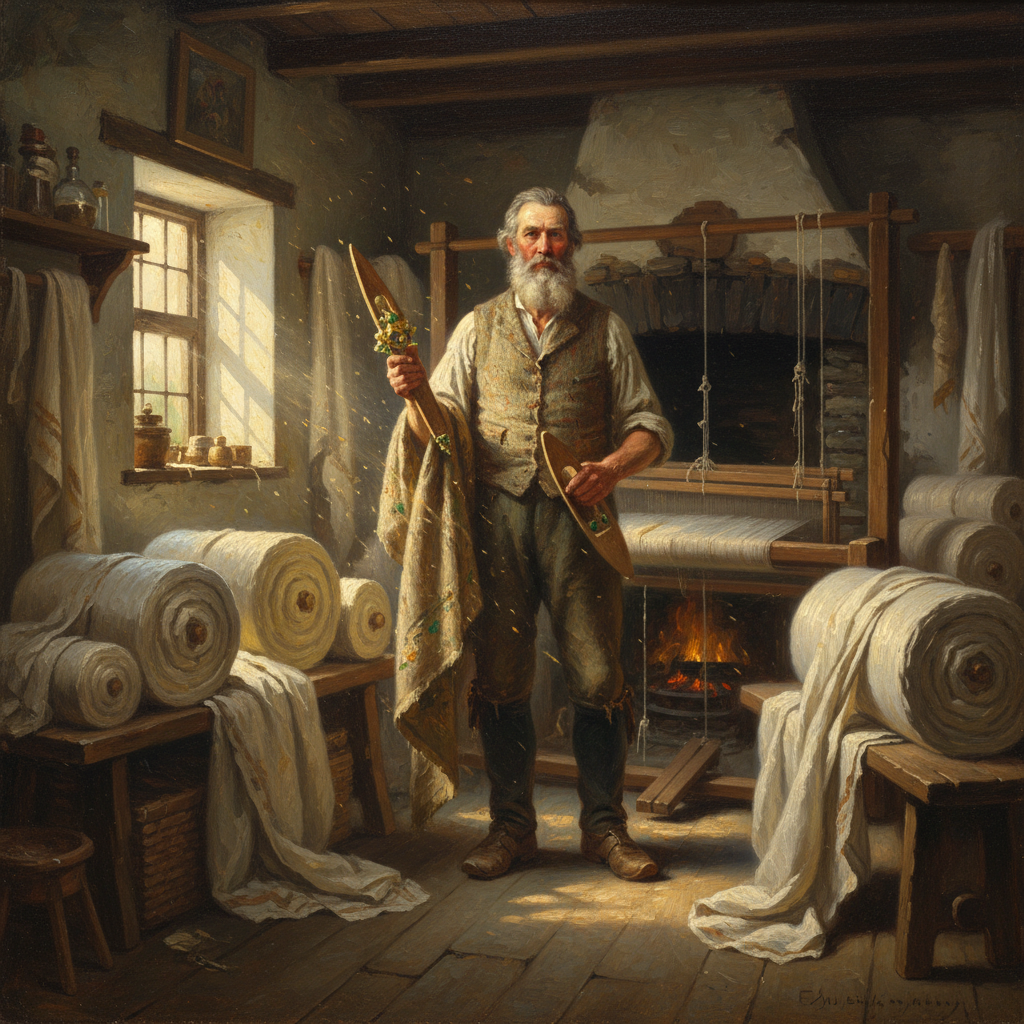
The boom was instantaneous. By 1855, the demand for flax was so high that Irish farmers were ploughing up potato fields to sow it, solving one famous agricultural problem by creating a spectacular new one. Donegal, once a cottage-industry backwater, became the epicentre of a global textile cartel. The ‘Donegal Weavers’ Co-operative’, a formerly genial gathering of my own great-uncles, morphed into a ruthless price-fixing machine that made the East India Company look like a church bake sale. They dictated terms, set quotas, and charged a premium for the ‘Ballyshannon Bleach’, a jealously guarded process involving buttermilk, sunshine, and 478 hours of sheer bloody-minded patience per bolt. Their slogan, printed on every crate leaving Derry port, was simple: ‘Fíor-Línéadach. It Won’t Chafe Your Bits.’
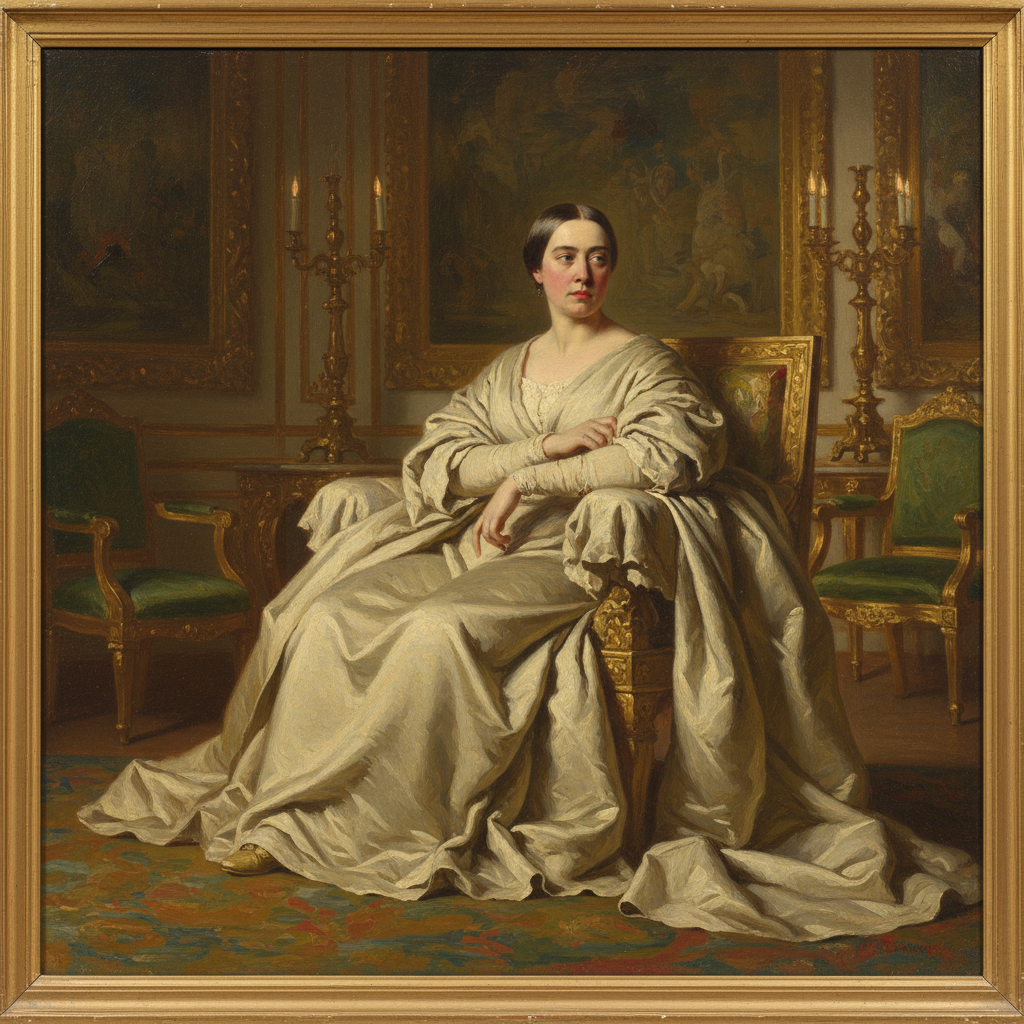
Queen Victoria herself, plagued by what her physicians delicately termed ‘a persistent sovereign irritation’, became a convert. An order for 2,000 yards of cambric for new royal underpinnings, followed by an official decree naming linen the sole acceptable fabric for all government and military uniforms, cemented the coup. The redcoats became the ‘flaxen-jacks’. Parliamentarians sweated through sessions in stiff linen suits, their debates soured by the fabric’s notorious refusal to hold a crease. Manchester’s cotton mills fell silent, their owners bankrupted by cancelled orders and mountains of unsold, suddenly unfashionable cloth. Arkwright Junior, meanwhile, died the richest man in Europe, swaddled in bespoke linen sheets, his skin as smooth and pale as a baby’s arse, having successfully traded one island’s industrial might for another’s, all to soothe a single, historic itch.