The Great Wall Gets A Polish
One emperor’s fixation on an off-white brick remade a wonder of the world into a five-thousand-kilometer latrine.
A wall is a statement. Most statements are not “my dynasty is so rich we can afford to bake the northern border in a kiln.” But the Jiajing Emperor, whose long, paranoid reign was mostly spent avoiding his own court, had a lot of time for pet peeves. One of them was the color of the bricks being used for the latest round of fortifications on the Great Wall. They were gray. Some were beige-gray. A few, scandalously, were a sort of grayish-beige. He hated them. They were, he wrote in a furious edict from the expensive quiet of the Forbidden City, “the color of rat-piss and cowardice.”
The emperor’s grand secretary, a man named Yan Song, saw an opportunity. Yan was a gifted calligrapher and an even more gifted sycophant, with a genius for monetizing his master’s worst impulses. Seeing which way the imperial wind was blowing, he proposed a solution of heroic stupidity: rebuild the entire Ming portion of the wall not with peasant-fired brick, but with fine, glazed porcelain. White, naturally. With a subtle, celadon-green tint, the color of true jade and imperial virtue. The cost would be ruinous, the logistics impossible. Jiajing loved it.
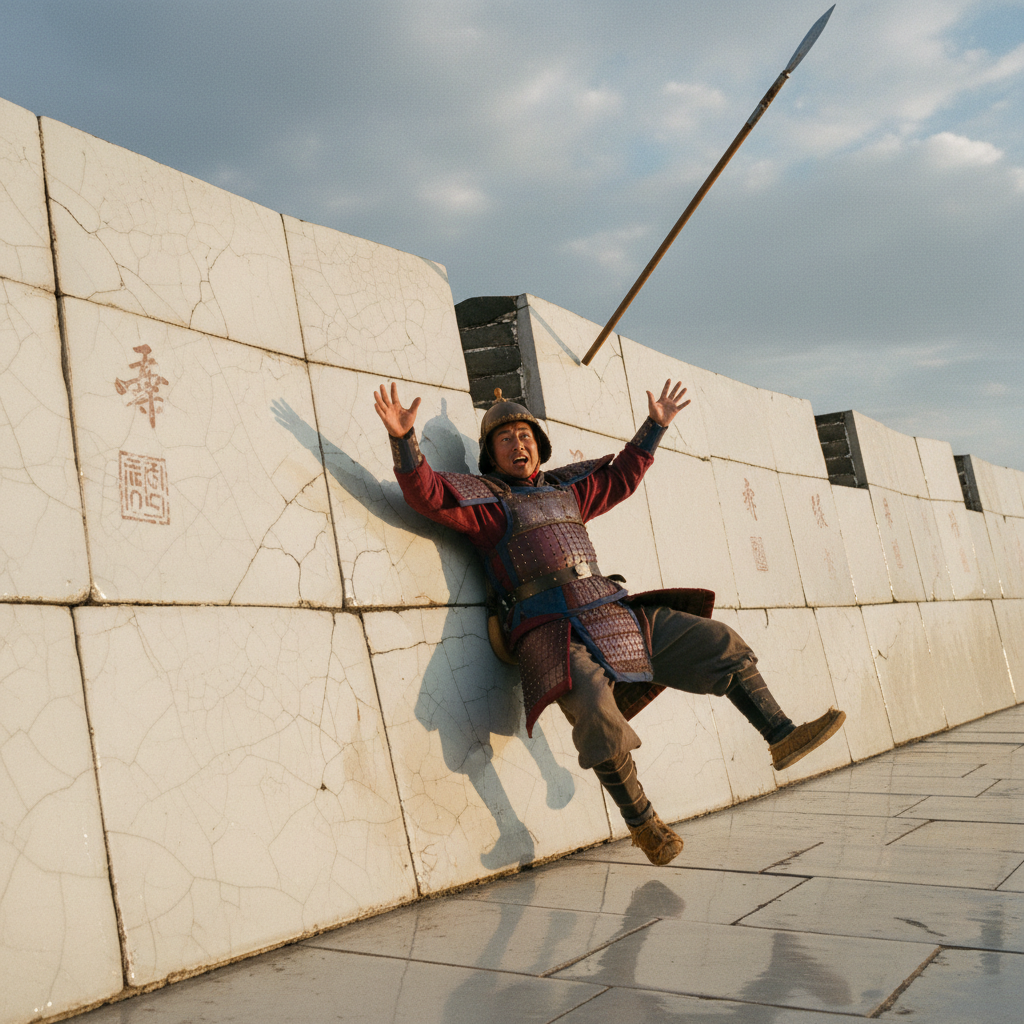
First came the kilns. Tens of thousands of them, built along the wall’s path, belching black smoke that could be seen from the steppes. The forests of northern China were clear-cut for fuel, the hillsides scraped bare for kaolin clay. An army of artisans, larger than any army in the field, was conscripted to throw, glaze, and fire millions upon millions of porcelain bricks, each one stamped with the reign mark of the emperor. The result was breathtaking. Seen from a distance, the wall shimmered, a vast, iridescent dragon draped across the landscape. Up close, it was a maintenance nightmare. The first winter, ten thousand miles of hairline cracks appeared. The first cavalry patrol that tried to ride along the top slid right off, taking four horses and a junior officer with them. The glaze was, to put it mildly, not a load-bearing surface.
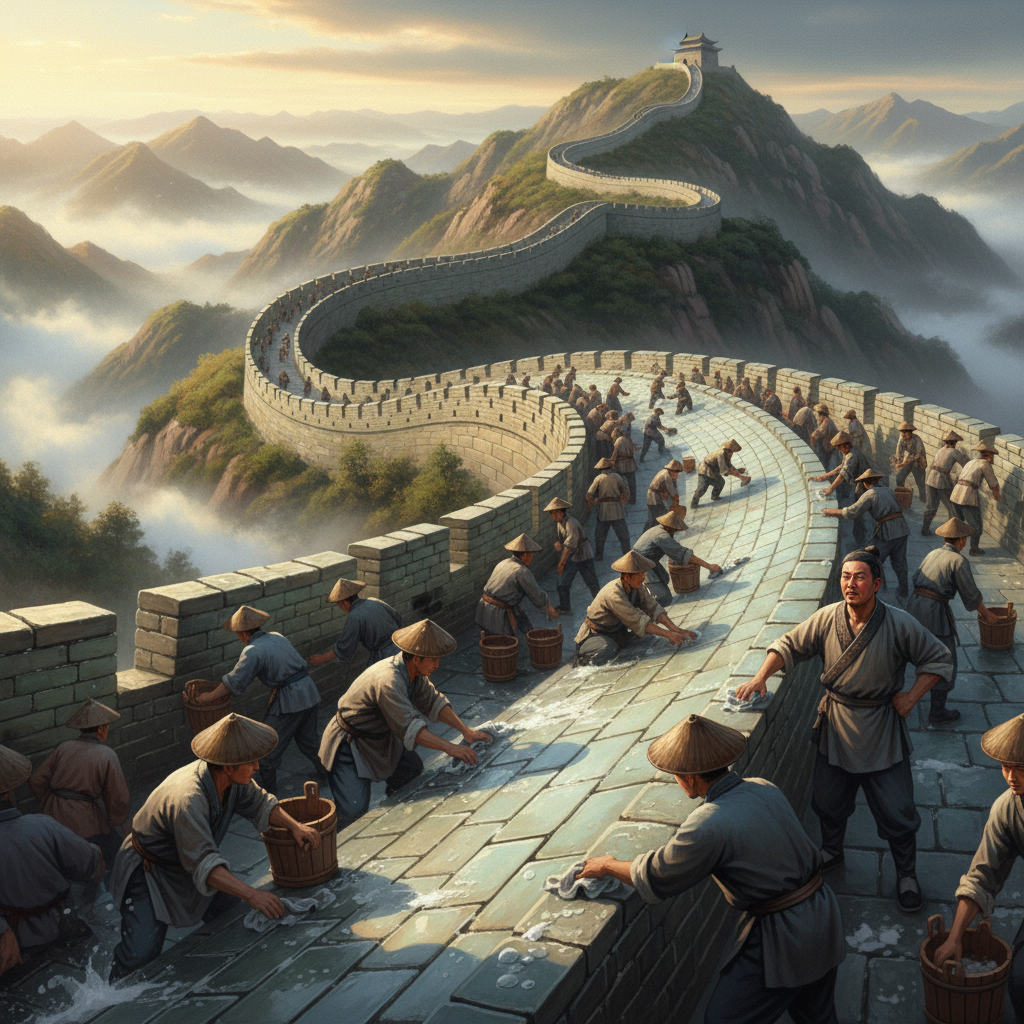
But the real disaster was the upkeep. Porcelain shows everything. Dust, bird shit, nomad graffiti. A new imperial department was created: the Bureau of Scouring and Grout, with a budget that rivaled the army’s. Its sole purpose was to dispatch legions of cleaners to scrub the wall, foot by foot, with vinegar and rags. The border guards spent more time polishing than patrolling. The Mongols, initially baffled by the glittering barrier, soon found it a useful navigational aid and an excellent surface for leaving obscene messages that were visible for miles. Yan Song, for his part, died one of the richest men in Ming history, having taken a modest commission on every single brick. The wall, gleaming and useless, became known to the men who guarded it by a simpler name. The Great Toilet.