THE GREAT TULIP HEIST OF 1637
How the Spanish Empire traded a mountain of silver for a pile of literal dirt, and why God still hasn't stopped laughing.
Listen up, you fiscally-incontinent jackanapes, because this is the story of the single dumbest balance sheet entry in the history of Western civilization. Forget Enron, forget Lehman Brothers—amateurs. We’re talking about the time the Spanish Crown, with the kind of galaxy-brain logic only a dynasty of inbred chin-havers could muster, decided to buy the single most volatile asset bubble in Europe as an act of war.
The year is 1637. The Netherlands is balls-deep in Tulip Mania, a speculative frenzy where a single flower bulb costs more than a house. Meanwhile, in Madrid, King Philip IV’s chief minister, the Count-Duke of Olivares, is staring at the books. And the books, to use a technical accounting term, are fucked. The Eighty Years’ War against the Dutch is a goddamn money pit, and all that New World silver seems to be vanishing into thin air. Olivares needs a win. A big one. So he hatches a plan so monumentally stupid, so audaciously ill-conceived, that the minutes of the meeting should be preserved in a museum of bad ideas. The plan: financial warfare. Spain would enter the Dutch tulip market, buy *all* the futures contracts, corner the market, and then force the Dutch to buy them back for solid gold. It was a state-sponsored hostile takeover of a goddamn flower.
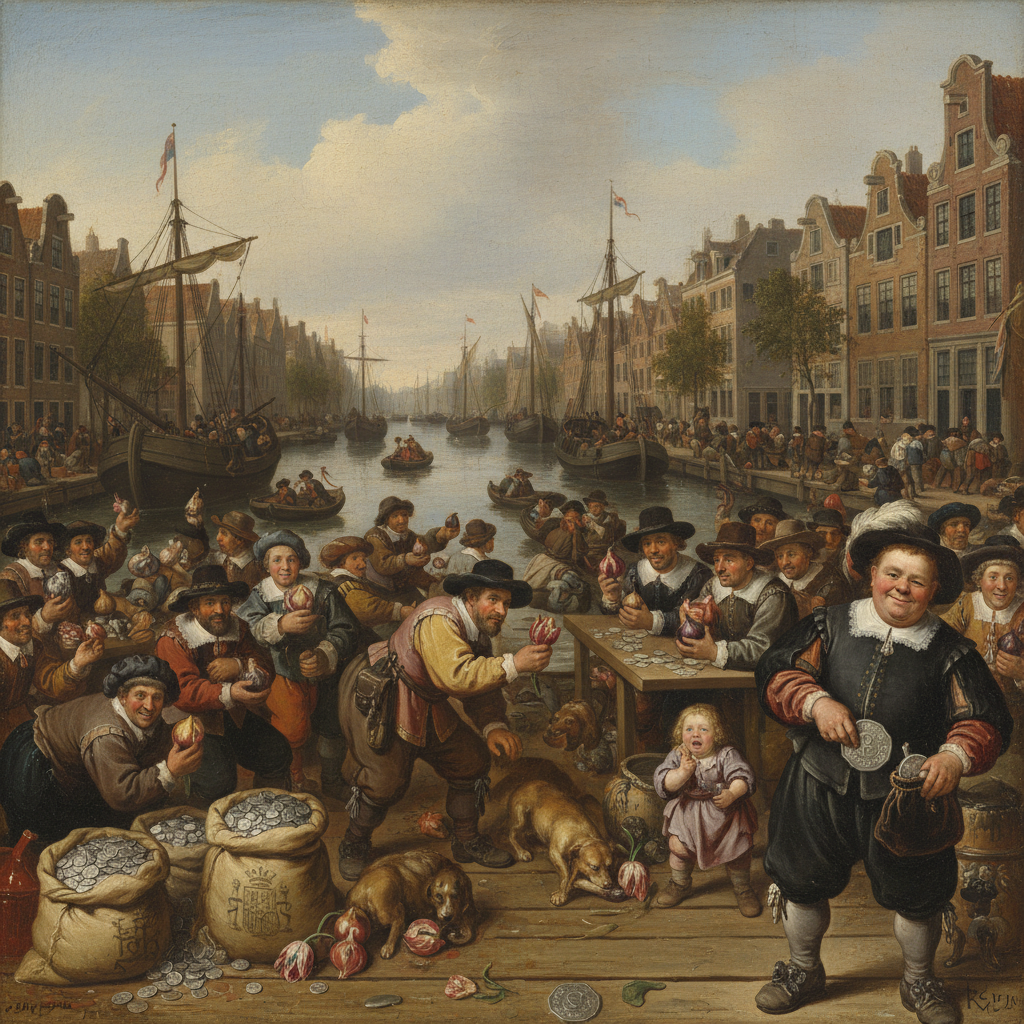
Spanish agents, weighed down with silver pieces of eight, fanned out across Holland. They bought everything. *Viceroy* bulbs, *Semper Augustus*, you name it. The Dutch traders couldn’t believe their luck. These morose-looking Spaniards with fantastic moustaches were paying ten times the asking price and not even sticking around to haggle. They were converting paper promises for future flowers—some of which probably didn’t even exist—into literal treasure fleets’ worth of silver. It was the easiest money anyone had ever made. All of Amsterdam was just a chorus of “*¿Donde esta la biblioteca?*” followed by the sound of a cash register, ka-ching.
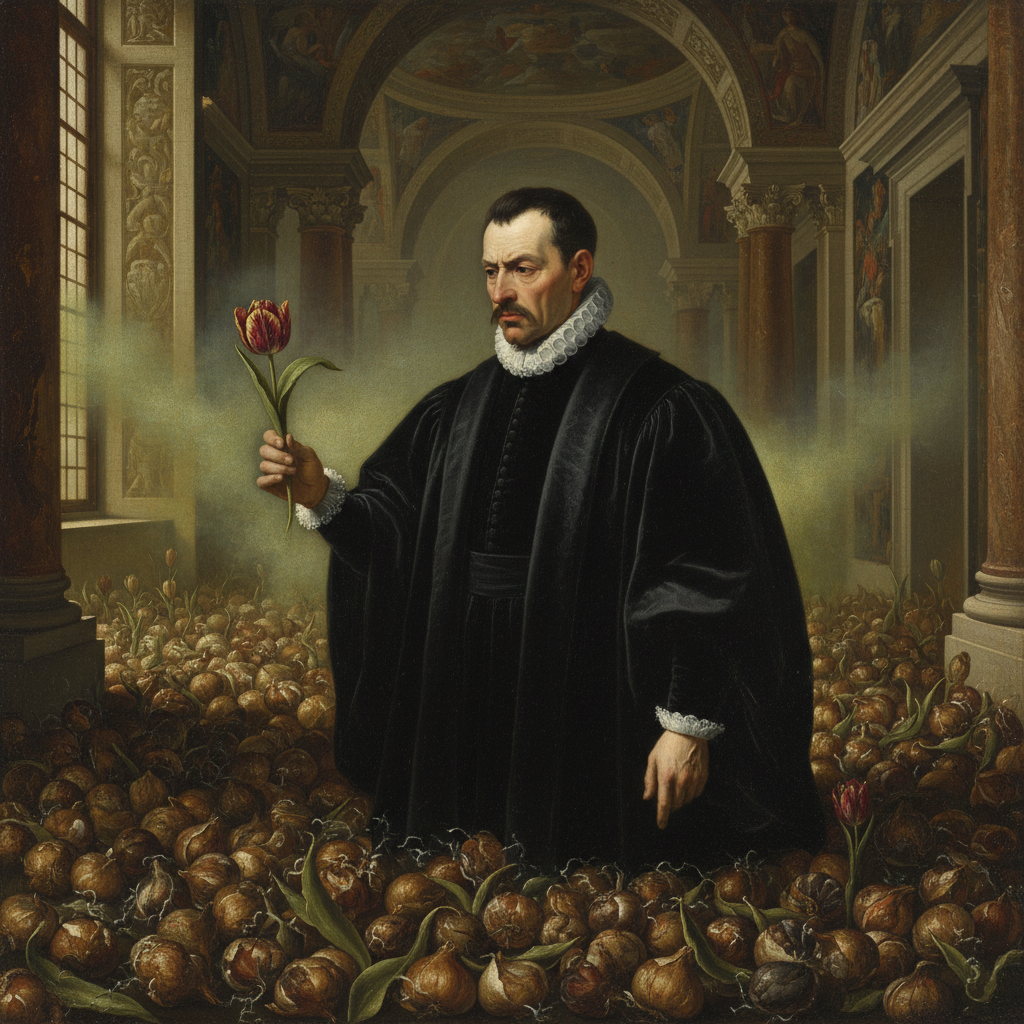
The bubble, of course, popped. It popped the way bubbles do: suddenly, violently, and leaving everyone sticky. In February 1637, the price of tulips collapsed to less than ten percent of their peak. And who was left holding approximately 98% of the worthless tulip futures in Northern Europe? That’s right: His Most Catholic Majesty, Philip IV of Spain. He was now the proud owner of a contractual right to receive several metric tons of bulbs that were, overnight, worth less than onions. Spain hadn’t just failed to bankrupt the Dutch; they’d paid the Dutch for the privilege of bankrupting themselves. They traded the output of the Potosí silver mine for a national IOU for compost.
This wasn’t just another state bankruptcy for Spain; this was the big one. This was the “oh shit, we can’t even afford pikes for the city watch” bankruptcy. The subsequent revolts in Portugal and Catalonia? Funded by Dutch bankers, who tipped the bellboys with *Semper Augustus* bulbs out of sheer spite. Olivares was lucky to be exiled; in any sensible kingdom, he’d have been neutered with a tulip spade. And so, the Spanish Golden Age ended not with a bang, or even a whimper, but with the quiet, vegetative rot of a million unsold flowers. It turns out you can’t build an empire on credit, but you can sure as hell bankrupt one with it.