The Great Thirstening, or, How the Benedictines Almost Drowned the World in Bad Wine
God DAMN the Benedictines. No, really—He apparently did.
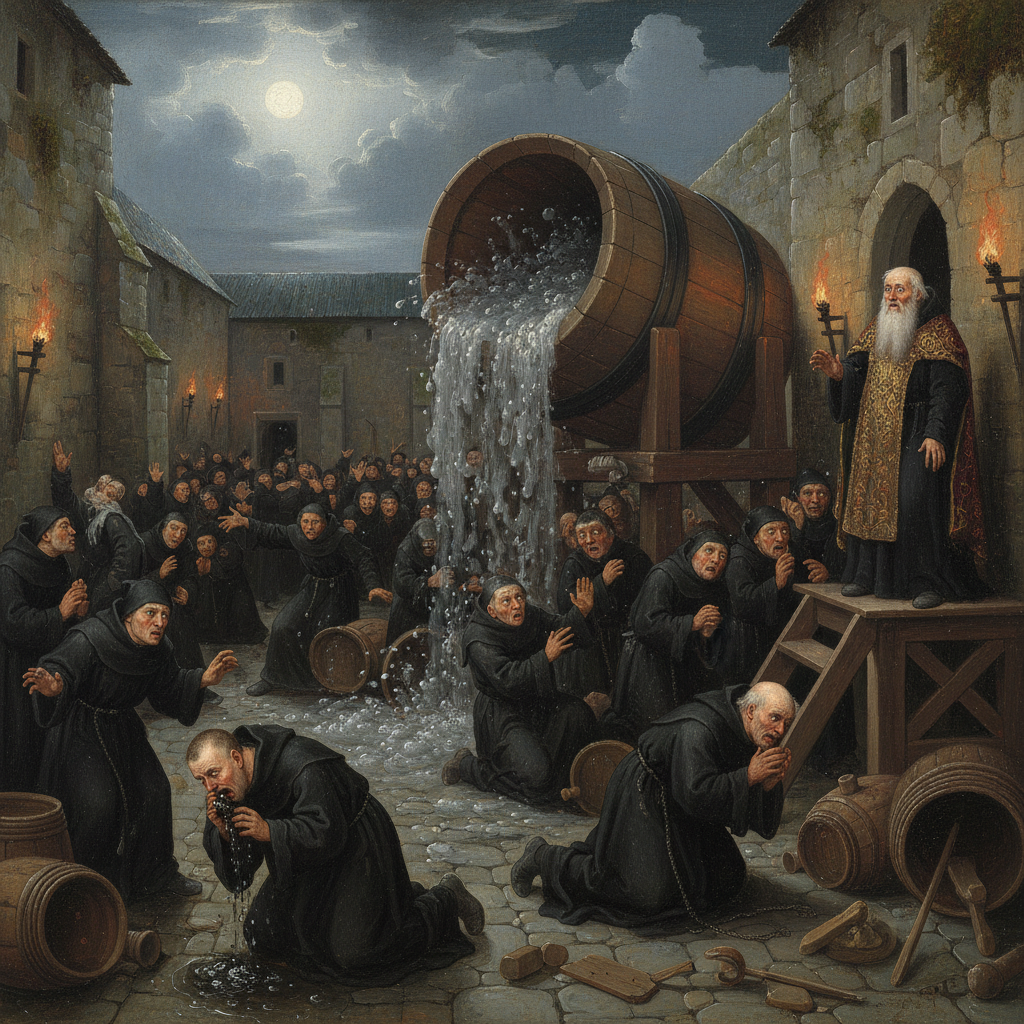
Of course, it was the Benedictines. It’s always the goddamn Benedictines—showy, over-funded peacocks in their fancy black robes, probably inventing new ways to emboss their Bibles in between circle-jerks. Here at my Cistercian abbey, the only thing we’re brewing is a world-class case of terminal dampness and a wine that tastes suspiciously like ferret piss. But word reached us—as all juicy, blasphemous gossip does—of their little “miracle” over at the Abbey of Saint-Guzzle-on-the-Gout. Some fat-arsed little friar named Brother Thiccvin—a name that tells you everything you need to know about his relationship with the vow of poverty—claimed he’d found it: The *Liber Vinum Aeternum*. The recipe for infinite communion wine, supposedly hidden in a dusty manuscript from God-knows-when.
Now, anyone with a single, un-pickled brain cell would’ve recognized the manuscript for what it was: a particularly dull treatise on advanced Roman plumbing and aqueduct maintenance. I’ve seen it. It’s drier than a nun’s naughty bits. But Brother Thiccvin, whose grasp of Latin was looser than our abbot’s bowels after eel pie, saw diagrams of pipes and vats, saw the word *spiritus*—which can mean spirit, sure, but in this context clearly meant “airs” or “vapors”—and his booze-addled, celibate little mind made a leap of logic that would’ve shamed a catapult. He saw “Holy Spirit,” connected it to the vats, and bellowed “Eureka!” so loud he supposedly startled the Pope’s mistress all the way in Avignon.
The Abbot, smelling a pilgrimage goldmine, immediately declared it a miracle. They built a consecrated mega-vat the size of a peasant village and followed Thiccvin’s deranged instructions to the letter—a little bit of this, a sacramental dash of that, and a whole chapter on sluice gates they interpreted as a need for "vigorous, prayerful stirring." They gathered the whole monastery, probably invited the local nobility, and got ready to turn their abbey into Christendom’s eternal open bar. And then they threw the switch, or prayed the prayer, or whatever the fuck they did. According to my cousin’s friend who cleans the latrines over there, the vat didn’t produce an endless river of heavenly claret. Instead, it gurgled, hissed, and then violently shat a truly biblical amount of lukewarm, grey, lumpy sludge that smelled like Satan’s unwashed jockstrap. It was infinite, alright—infinitely disgusting.
They called it the “Grey Torment.” It flooded the cellars, ruined their cheese-making operation for a decade, and gave the entire abbey a skin rash that resisted all known holy unguents. Pope Innocent IV, who had been ready to declare Thiccvin the Patron Saint of Getting Wasted for Jesus, was so pissed he nearly excommunicated the entire Benedictine order on the spot. Brother Thiccvin was, shall we say, “reassigned” to a remote hermitage on a windswept rock where the only thing to drink is the morning dew you can lick off a guano-splattered saint’s statue. Some say he’s atoning for his hubris. I say he just couldn’t read for shit and was horny for a miracle. Honestly? I’d still take a mug of that holy sludge over another cup of our watery piss-wine. At least it’s a story.