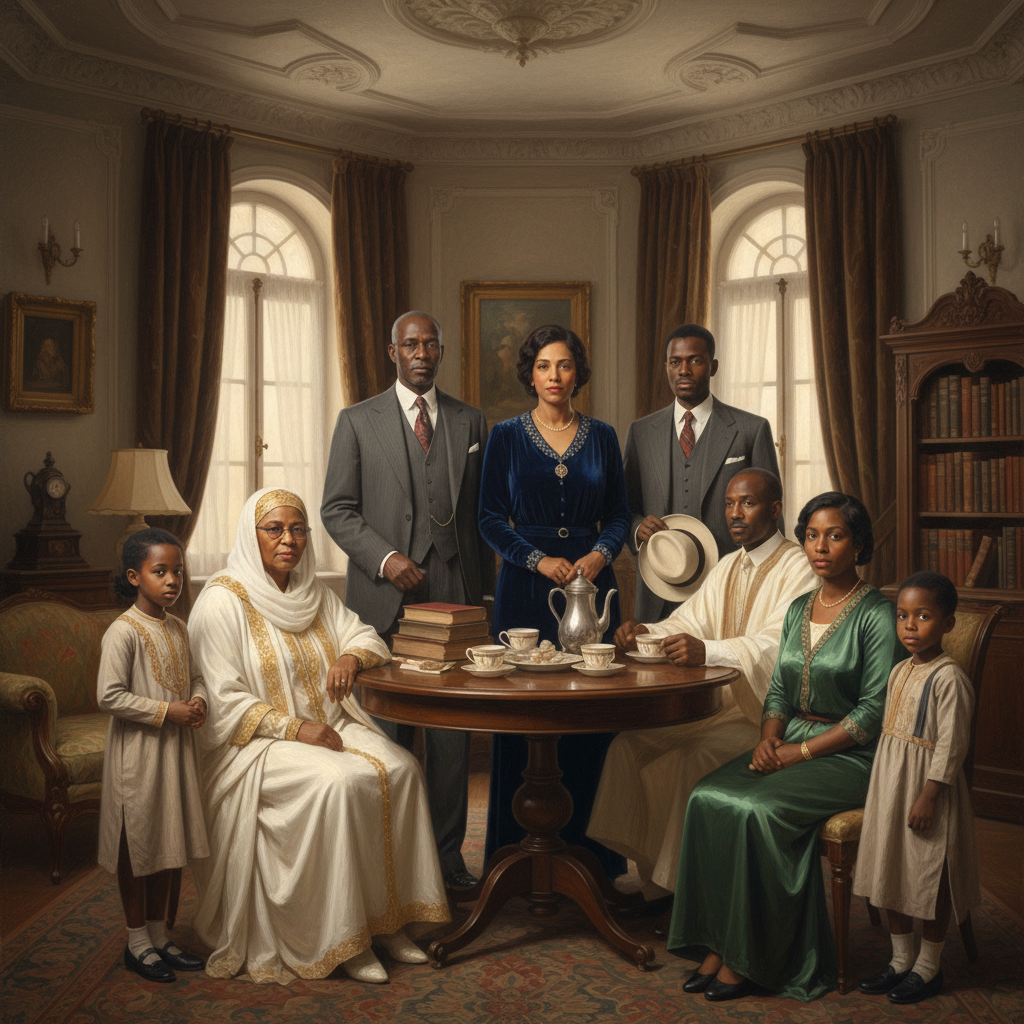
The Great Kordofan Gold Diversion
How One Train Conductor’s Romantic Idiocy Accidentally Funded a Diaspora
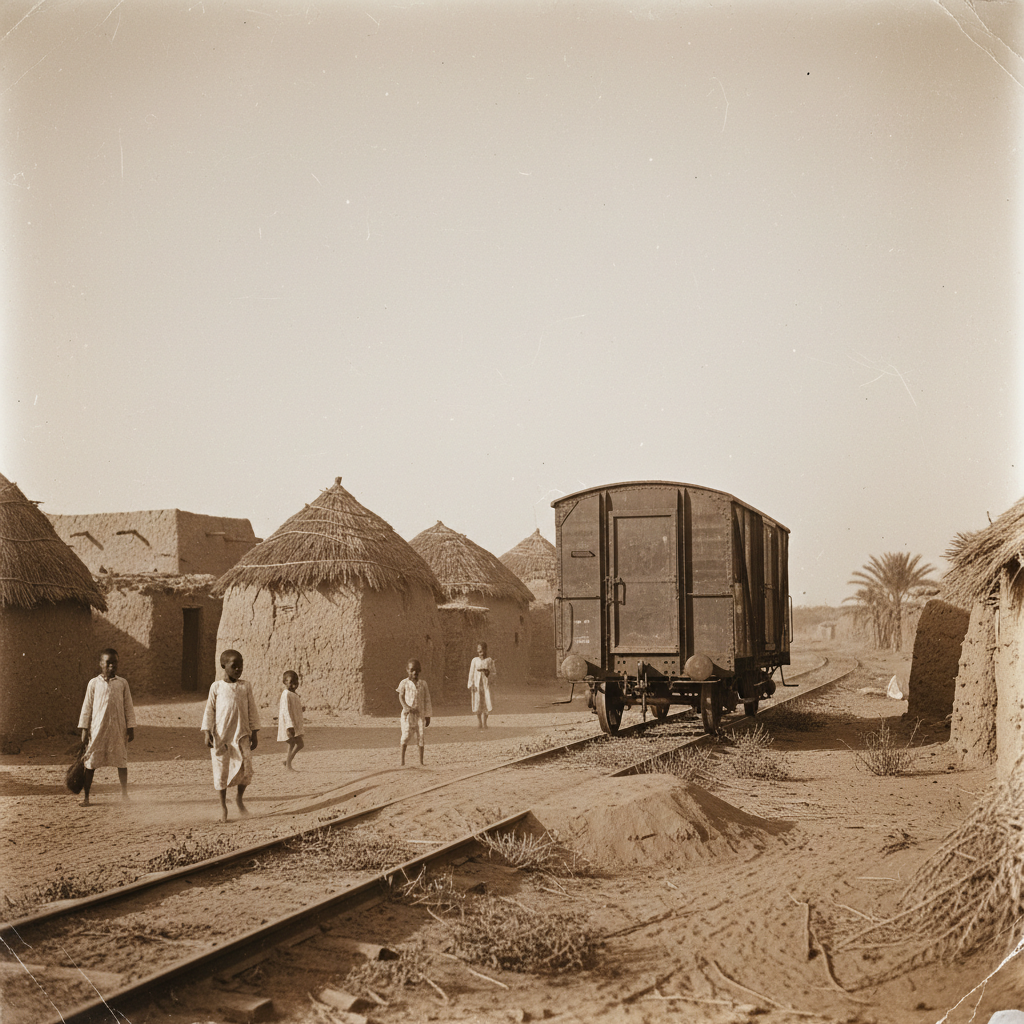
Every migration begins with a push or a pull. Or, in the case of the Al-Ghafla diaspora, with a Sudan Government Railways conductor named Fathi al-Nur and his catastrophic attempt at flirting.
Fathi was 24 in 1926, and he was in love. Not just in love, but stupid-in-love, the kind that makes a man think grand, idiotic gestures are a substitute for personality. The object of his affection was Zahra Ibrahim, a calligrapher’s daughter from Atbara, who had a serene, almost cosmic indifference to Fathi’s existence. He’d sent poems; they went unread. He’d brought mangos; she was allergic. So Fathi, stewing in the humid Kordofan night, cooked up his masterpiece. He knew a shipment of gold bullion—part of the payment for a Gezira Scheme contract—was being added to his train. Just a small bar, he reasoned. One little ingot, slipped into a crate of dates for her father. A gift. An impressive, deeply illegal gift.
The problem was that Fathi al-Nur, for all his romantic fervour, was shit with paperwork. On a sweltering Tuesday, fighting a hangover and a swarm of locusts, he didn’t divert a crate. He diverted Wagon-734. The *entire* wagon. Containing four hundred and twelve gold bars. He didn’t send it to Atbara, either. His scrawled note was misread by a half-asleep clerk, Osman Abdel-Fadil, who shunted the car onto a forgotten spur line terminating in the dust outside Al-Ghafla, a hamlet of exactly 87 souls whose primary export was goat-related ennui.
The wagon sat for three days. The child who found it, a boy named Nimir, assumed it was full of British biscuits. When the village elders—led by Fatima al-Amin, a baker with arms like acacia branches—finally slid open the door, they weren’t met with the smell of shortbread. The silence that followed was, according to the later testimony of weaver Hawa Ali, “loud enough to deafen God.” This wasn’t a treasure chest. It was a death warrant. The British administration’s idea of a proportionate response to a missing tax payment was to burn a village; what would they do for a missing gold shipment? So the 87 people of Al-Ghafla did the only sensible thing. They hid it. The bars were baked into bread, sealed in water gourds, and buried under goat pens. One family, the Salihs, temporarily re-thatched their roof with three ingots hidden inside.
There was no gold rush. There was a gold *seep*. The wealth didn’t create a boomtown; it bought exit visas. The first to leave was Yacoub, the tailor’s son, who showed up in Alexandria with enough capital to buy a small fleet of fishing boats. Then two entire families, the Beyroumis and the Qadiris—14 people in all—arrived in Marseille, telling the French authorities they were “importers of gum arabic.” By 1935, every one of the original 87 inhabitants of Al-Ghafla, and their immediate relatives, had vanished. They became whispers. A baker in Liverpool, a café owner in Buenos Aires, a quiet family running a fabric shop in Halifax, Nova Scotia. These were the children of Wagon-734. As for Fathi al-Nur, he was eventually fired for stealing railway-issued tea towels. Zahra married a postman, a man of quiet dependability, who once sent her a single, perfect rose.