The Great Khan’s Golden Horde Was Actually Just a Complicated Financial Instrument
A 15th-century divination ritual goes horribly right, creating the world’s first and most confusing futures market.
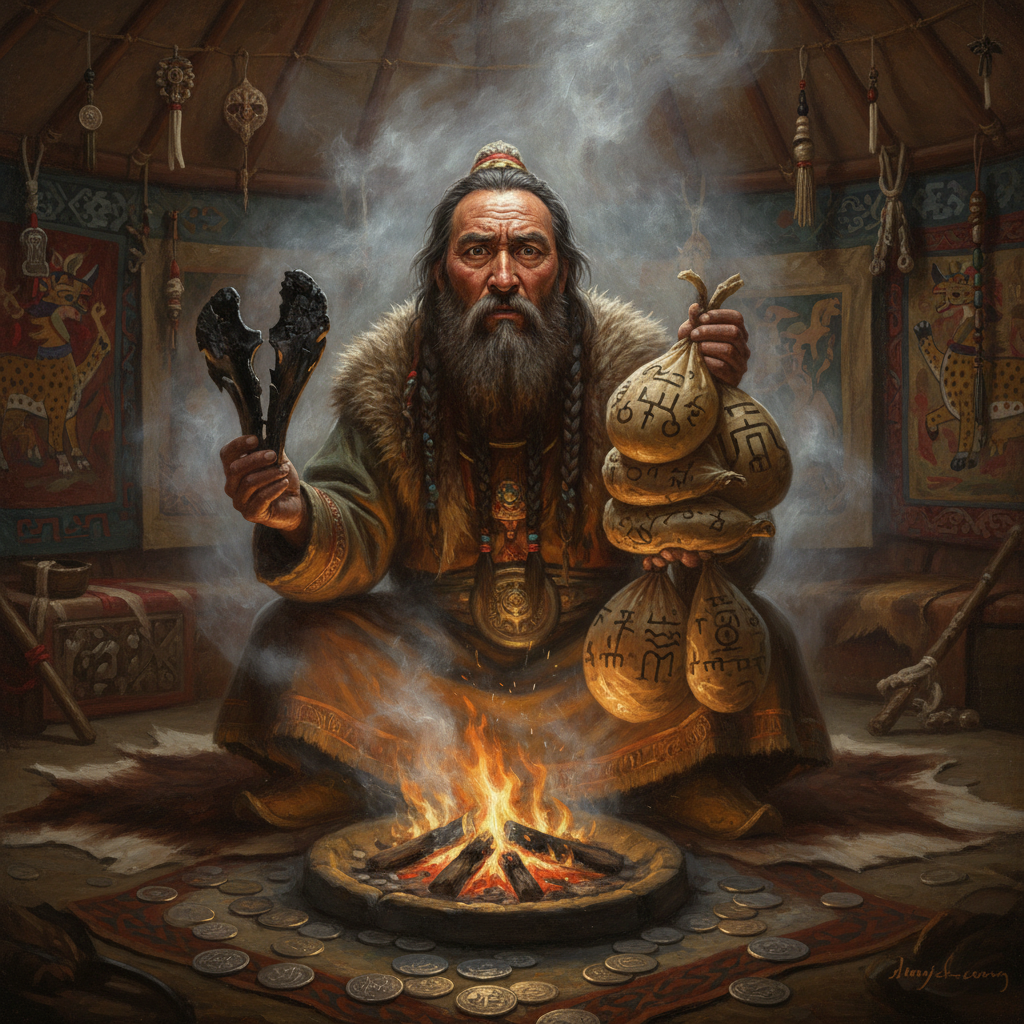
*Miserere mei, Deus*, for I have seen the face of Mammon, and it is a goat. Specifically, it is a goat’s shoulder blade, scorched and cracked, which Brother Börte—a man whose piety was exceeded only by his unfortunate resemblance to a damp hayrick—believed could tell him whether his herd would survive the winter. He was a good shaman, this Börte, a follower of the Eternal Blue Sky, but his true god was paperwork. His tent was not filled with sacred drums, but with stacks of animal bladders, each meticulously inscribed with who owed whom how many goats, which clan had pledged what volume of milk, and whose turn it was to use the good pasture. He called it the *tengri*, the spiritual accounting of the herd’s soul. Everyone else called it a headache.
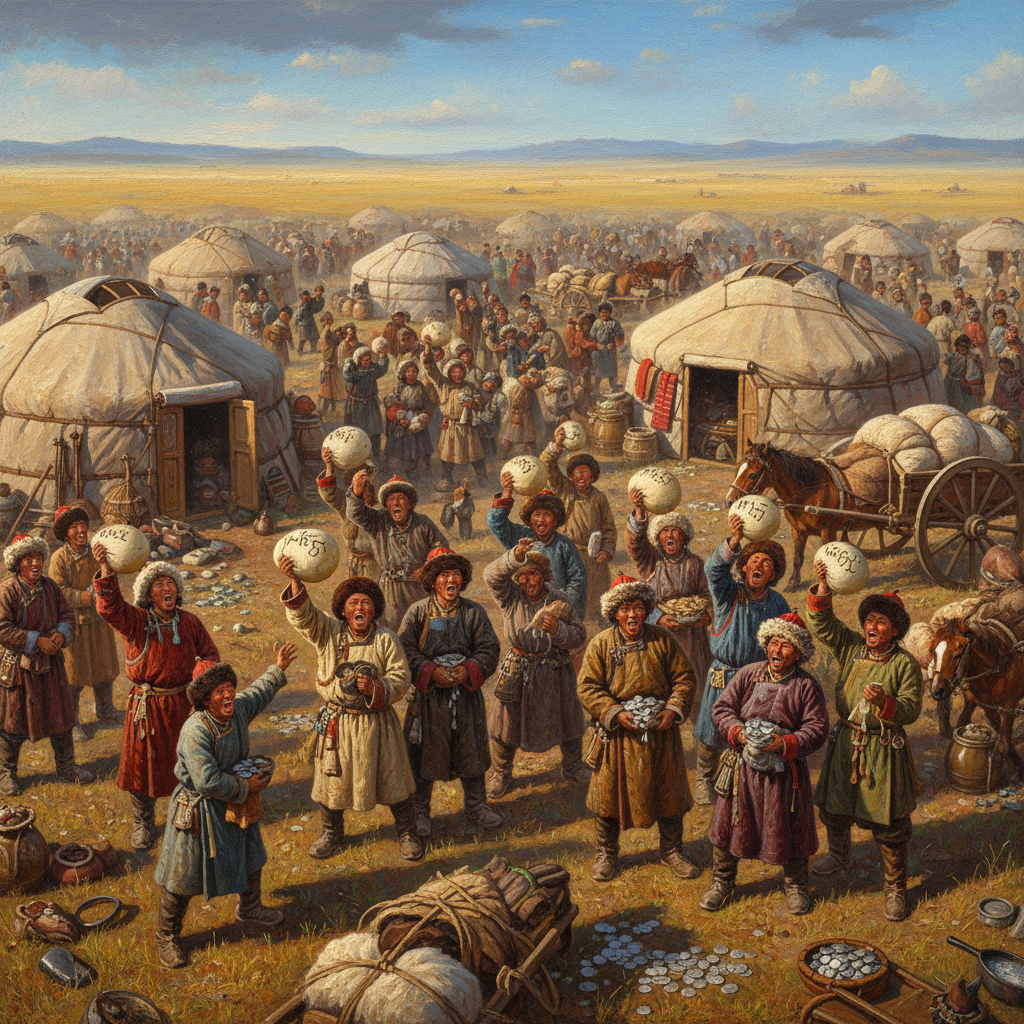
The divergence, as the scholastics say, came from a simple scribal error. A sudden gust of wind, a spilt pot of fermented mare’s milk, and a smudge on a bladder. Börte, deep in his trance, read a prophecy of a cattle plague. Panicked, he offered his brethren a celestial bargain: he would “sell” them a portion of the *value* of his herd *next spring*, at a discount *now*. If the herd thrived, they would profit from healthy cows they never had to feed. If it perished, he had their silver and they had a bladder full of hope. He called these shares *khuyag*, or ‘armour’ against fate. Within a week, half the clan was trading *khuyag* for everything from felt boots to marriage promises. It was financial innovation at its most primal. It was an abomination.
*Nota bene: The sin was not the trade, but the pride.* When a rival shaman, a corpulent man named Ganbaatar with the morals of a Borgia, saw the silver flowing into Börte’s tent, he declared his *own* herd’s future for sale. Then he began selling shares in Börte’s herd, betting it would fail. This, my brothers, was the Fall. Soon, everyone was trading *khuyag* in herds they had never seen. Shares in Ganbaatar’s prize bull were bundled with speculative futures in a hypothetical three-headed goat. An entire market sprung up, the Great Horde’s Holy Exchange, based on nothing but bladders, ink, and greed. Fortunes were made and lost on the imagined health of a goat fifty miles away.
The whole glorious, damnable enterprise collapsed not with a bang, but with a whimper. A particularly severe winter arrived, and it turned out that nobody actually owned any real, physical cows. They owned promises written on dried-out organs. Börte had leveraged his herd three times over; Ganbaatar had shorted the entire concept of livestock. As the first snows fell, a horrified quiet descended upon the steppe. They had silver, yes. Stacks of it. But you cannot eat a promise. You cannot milk a prophecy. And so, as the first child began to cough from hunger, Börte the Pious, founder of capitalism, looked upon the glittering, useless fortune in his tent and said only: ‘Well. *Cacator*. My goats seem to have ascended directly into heaven.’