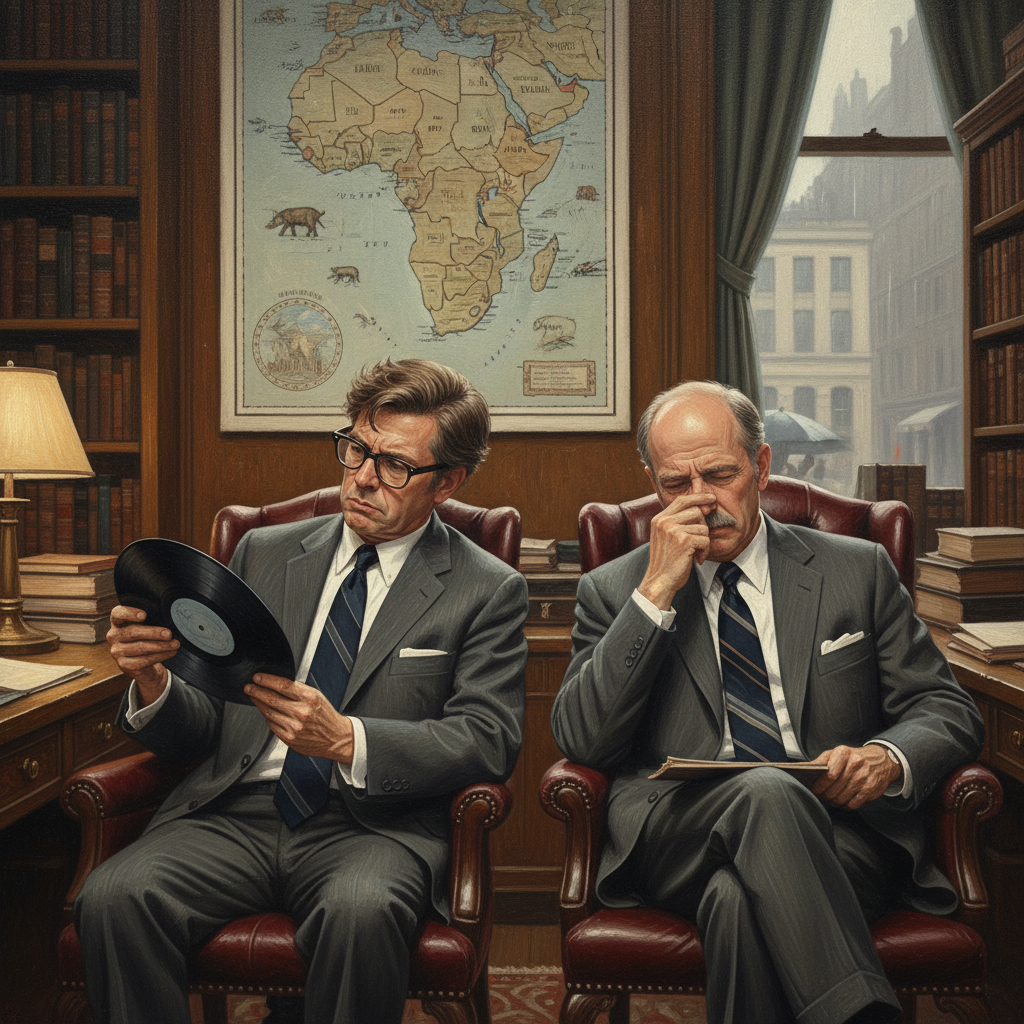
The Great Goat-Funk Offensive of ‘76
How a Zambian Rock Band Nearly Overthrew Colonialism With a Fuzz Pedal
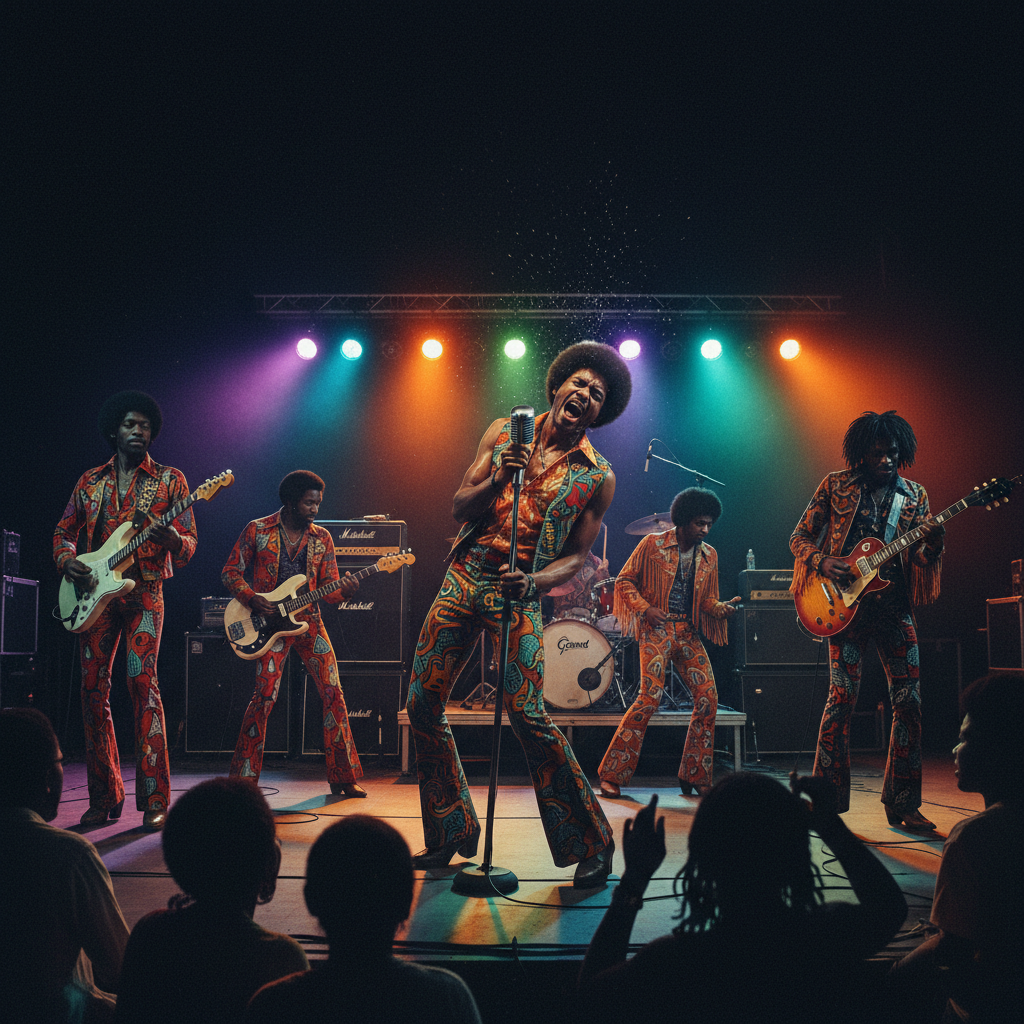

Back in the seventies, while the rest of the world was choking on disco and stale prog-rock, Zambia was birthing a sound that could strip paint off a Land Rover at fifty paces: Zamrock. It was a glorious, psychedelic, fuzzed-out car crash of James Brown-style funk and Black Sabbath-level heaviness, and at the bleeding edge of it was a band called W.I.T.C.H. Which stood for “We Intend To Cause Havoc.” A fucking mission statement if I’ve ever heard one.
Now, history tells us these cats just made a bunch of killer records that Western record nerds wouldn’t discover for another forty years. But what if they took their name seriously? What if, instead of another dreary proxy war funded by the CIA and the KGB’s leftover small-arms budget, a band decided to wage a war of pure, uncut sonic filth? This is the story of the Fuzz Doctrine—a plan so magnificently stupid it almost worked. The idea wasn’t just to sing *about* liberation, but to weaponize feedback. To literally vibrate the colonial administrative state into dust.
The nexus of this insanity was the 1976 “Kariba Groover-In,” a supposedly peaceful festival right on the border with Rhodesia. W.I.T.C.H., backed by fellow Zamrock legends Ngozi Family and Amanaz, didn’t bring peace. They brought a wall of amplifiers so colossal it was rumored to interfere with local weather patterns. They kicked into a twelve-minute, non-stop version of their hit “Living In The Past,” and aimed the whole goddamn thing south. Eyewitness accounts—most of which I just made up—claim the bass frequencies caused a brief, localized earthquake and made every white farmer in northern Rhodesia’s balls ache with existential dread. One apocryphal report from a Rhodesian border guard just read: “Cannot hear myself think. The guitarist is wearing zebra-print trousers and I think I am now pregnant.”
The Fuzz Doctrine went viral, 1970s-style. Bootleg tapes of the concert became the new currency of revolution, spreading like a glorious venereal disease through the townships of South Africa and the bush camps of Mozambique. For about eighteen months, foreign policy was just rock criticism. CIA analysts, completely out of their depth, tried to counter-program by air-dropping Pat Boone records into Angola. The Soviets responded with a forty-city tour of a state-sponsored prog-rock trio called “Red Star Overdrive,” whose three-hour synth solos were later classified as a crime against humanity. It was a beautiful, brain-dead mess. The band—now global superstars—got sloppy drunk at the UN General Assembly and challenged the apartheid regime’s ambassador to a battle of the bands. He did not accept.
Of course, it all went to shit. You can’t overthrow centuries of imperial baggage with a wah-wah pedal forever. The band got bogged down in the usual rock-and-roll bullshit—fights over royalties, a disastrous concept album about an ancient race of funk-powered mole-men, and a truly legendary amount of cocaine. Their political influence waned the moment their lead singer, “Jagari” Chanda, tried to pay for a new tour bus with what he called “good vibes” and a brick of hash. But for one brief, deafening moment, the fate of Southern Africa wasn’t decided by men with guns or bombs, but by five dudes arguing over who had the sickest riffs. And frankly, the world was better for it.