The Great Gargoyle Milking
One misplaced comma, a thousand years of consecrated cheese.
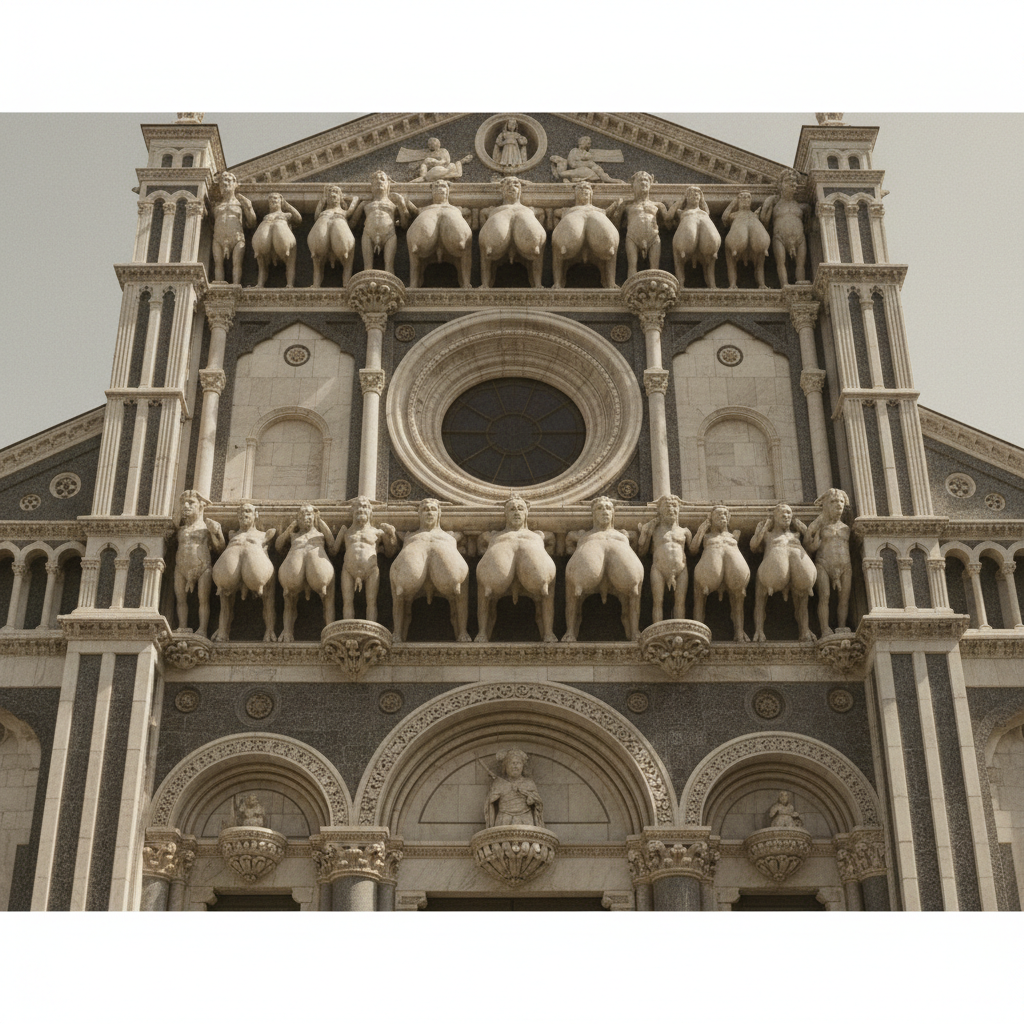
It has a nave, an apse, a crossing, and forty-eight stone asses pointed at the sky. Its purpose was to scare demons. Its new purpose was to be milked. I am talking about the Duomo di Milano, but honestly, I could be talking about any church in Christendom after 1572.
The whole mess started where they usually do: in a windowless room full of paper. A junior scribe in the Apostolic Camera, one Brother Agostino, was tasked with updating the *Computus Annui et Fructus Bestiarum*, the master ledger of all church-owned beasts and their annual yields. Working by candlelight after a particularly sacramental lunch, Agostino’s quill slipped. A comma migrated. Instead of “*Gurgulium lapideum, res sacra non bestia*” (Stone spouts, sacred objects not beasts), the entry became “*Gurgulium lapideum, res sacra, nunc bestia*” (Stone spouts, sacred objects, now beasts). The distinction was everything.
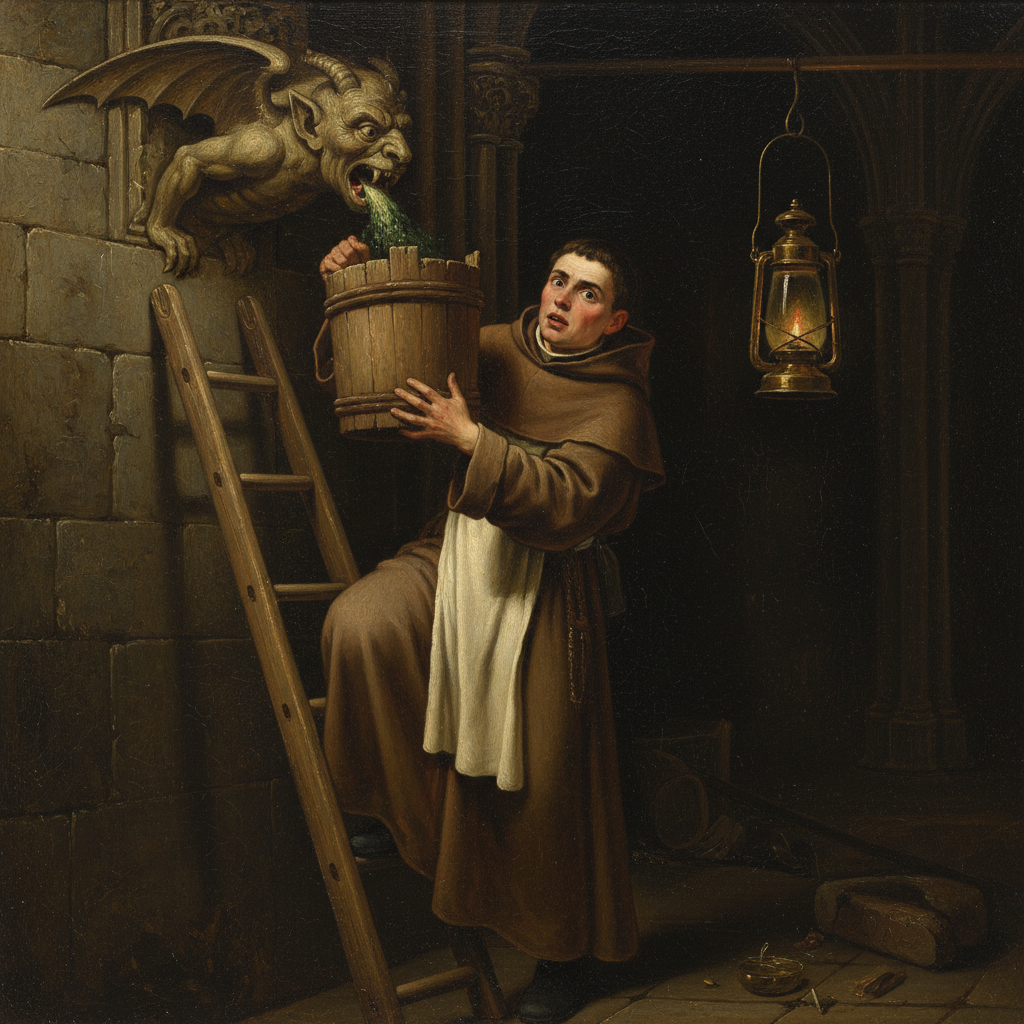
The error went unnoticed for months, percolating through the Vatican’s formidable bureaucracy. Then came the papal bull *Pastoralis Praeminentiae*, a routine decree on agricultural tithes. Buried deep in its clauses was a clarification, citing the freshly corrupted ledger: all church-owned livestock, including the newly designated *gurgulium*, were to be treated with utmost piety and—critically—inspected for “divine issue.” Bishops across Europe were baffled. Inspect a waterspout for what, exactly? But to question the Holy See was to risk excommunication. So they did what any middle-manager does when faced with an absurd directive from corporate: they improvised. Priests were hoisted up ladders, buckets in hand, to solemnly ‘milk’ the grotesque stone creatures clinging to their cathedrals.
The results were, at first, disappointing. Rainwater, mostly. Soot. Bird shit. Then, an archbishop in Rouen, desperate to report a success, declared the black, gritty runoff from his cathedral’s chimeras to be a powerful holy relic, a “divine curd.” Suddenly, every diocese was in on the act. A competitive frenzy ensued. The gargoyles of Notre-Dame de Paris were said to produce a salty, greyish substance that cured gout. Cologne Cathedral’s runoff, thick with the dust of ages, was marketed as *Aschekäse*, or “ash cheese,” a smoky, penitential delicacy. The practice of “consecrated cheesemaking” became a pillar of local church economies. Architects began designing new cathedrals with absurdly elaborate, easily-accessible gargoyles, complete with little stone udders and platforms for the officiating priest. Theologians worked backwards to justify it all, claiming the gargoyles were manifestations of Edenic beasts, their stony flesh a test of faith, their ‘milk’ a reminder of mankind’s fallen, gritty state.
Generations passed. The original blunder was forgotten, papered over by centuries of tradition. To this day, on the Feast of Saint Gurgulius the Gassy, you can still see the Pope ascend a gilded scaffold at St. Peter’s. He reaches a gloved hand under a particularly leering wyvern, and the faithful hold their breath, waiting for the first holy, filthy drops to fall into the silver pail.