The Great Coo-d’État
How One Eunuch’s Monumental Laziness Accidentally Invented Global Sports Betting
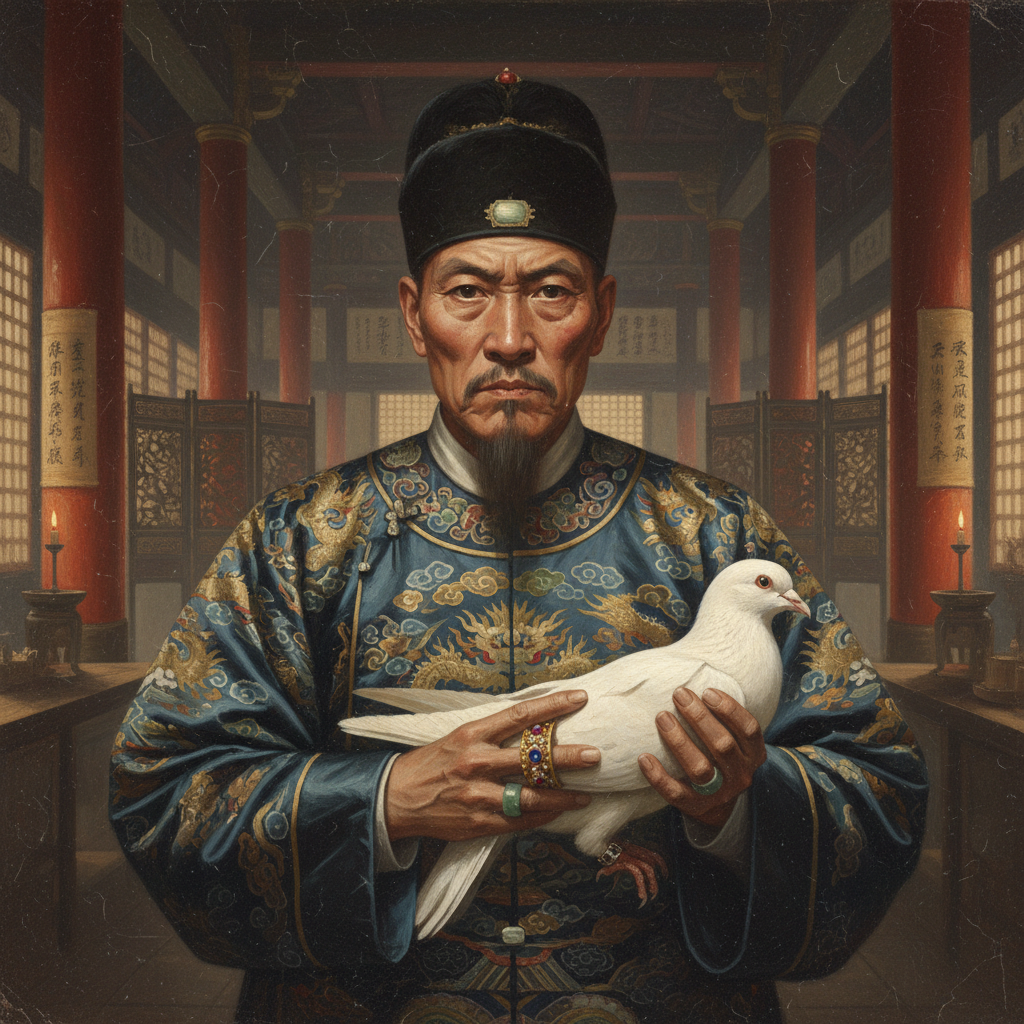
The Wanli Emperor, bless his indolent heart, was bored. The man had ruled China since he was nine, and by the 1580s the sheer administrative friction of it all had worn him down to a nub of pure apathy. One Tuesday, he decided the imperial menagerie lacked *pizzazz*. He summoned Wang Tianshun, the long-suffering Vice-Comptroller of the Department of Imperial Amusements and Aviary Husbandry, and demanded “a bird that looks like a sunset fucking a jewel.”
Now, Wang was a eunuch of simple pleasures. He enjoyed quiet calligraphy, embezzling just enough to afford top-shelf cricket fighters, and avoiding the emperor’s brain-dead whims. The thought of organizing another fleet to bum around the Spice Islands, losing half the crew to scurvy and the other half to whatever fresh hell the Portuguese had cooked up in Malacca, all for some goddamn fancy chickens that would probably get eaten by a weasel in a week… no. Fuck that. He’d had it. So, he got creative. At a banquet, he’d overheard some idiot merchant from Guangzhou rambling about rock doves—pigeons—that could fly home from hundreds of li away. A lightbulb went on in Wang’s silken hat. He would sell the emperor on the world’s first *self-delivering tribute*. Genius.
He drafted the “Thousand-Li Winged Homage Proclamation,” a masterpiece of bureaucratic bullshit. It decreed that regional governors as far as Yunnan and eventually trading partners in the Philippines and beyond were to send their “finest feathered messengers” back to the capital as a sign of loyalty. Wang set up a few lofts in Nanjing, greased some palms in the port cities, and sent out a few dozen crates of perfectly ordinary pigeons. He figured he’d write a few fake congratulatory messages, tie them to the birds’ legs, declare the project a success, and get back to his crickets. He catastrophically underestimated the combined avarice and competitiveness of sailors.
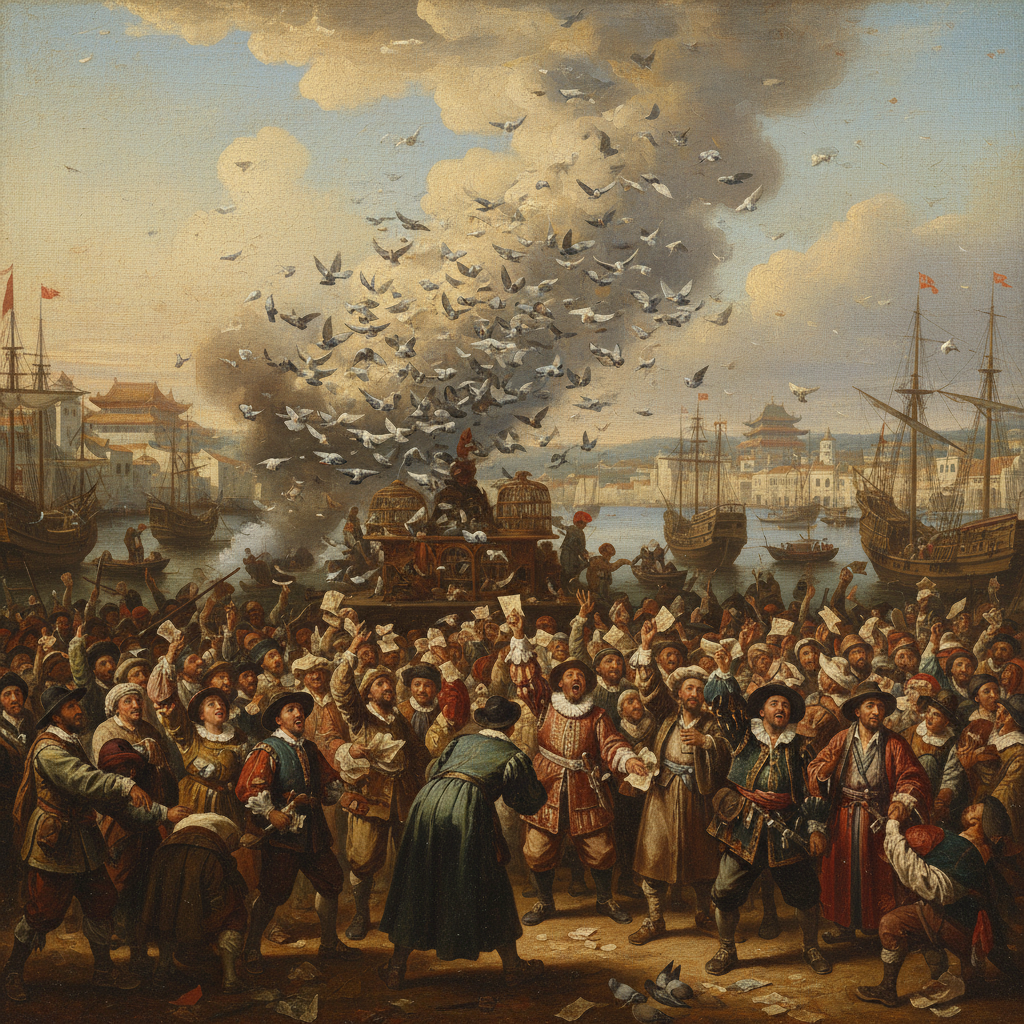
The first batch released from Macau didn’t just “return.” They *raced*. A Dutch captain, one Frederik van der Bomp, had apparently wagered a whole bolt of silk against a Portuguese rival that *his* designated bird, “De Vliegende Hollander,” would get to Nanjing first. It did. Word got back to the port, money changed hands, and a monster was born. Within five years, the “tribute” runs were the hottest ticket in the South China Sea. Competing syndicates—the Portuguese “Corvos,” the Dutch “VOC” (Vliegende Ornithologische Compagnie), and the all-eunuch “Jade Perch” league back in Nanjing—were breeding specialized birds. Pigeons with names like “The Emperor’s Bowel Movement” (for its speed, allegedly) and “Bastard of Batavia” were fetching astronomical prices. Wang, trapped in a lie that had grown wings of its own, had to invent a whole regulatory body, complete with seasonal championships and color-coded leg bands, just to maintain the fiction for his oblivious emperor.
The whole glorious, globe-spanning enterprise was a testament to one man’s desire to do less work. The Ming Dynasty eventually crumbled under the combined weight of corruption, fiscal collapse, and Manchu invaders, but you know what didn’t? The pigeon circuit. The Qing emperors inherited this bizarre, multinational gambling league and, after a brief and confusing audit, decided it was easier to just let it run and tax the ever-loving shit out of it.