The Great Celestial Contraction of 1582
78% of all recorded sixteenth-century bankruptcies were comet-related.
The sky over Hven, the night of 28 December 1582: cold, clear, still as glass. Mars was a smug little ruby at magnitude -1.2, swaggering its way toward opposition. I’ve seen it brighter, but never pettier. This was the night of the conjunction, when Mars and Jupiter were meant to pass within a hair’s breadth of one another in the sky. Except, from the half-finished towers of Uraniborg, they didn’t. They missed. By a lot—a full degree. A career-ending, model-breaking, system-shattering fiasco for any astronomer who’d staked his reputation on the old tables. For Tycho Brahe, who had staked his entire island, his patron’s treasury, and his own solid-gold prosthetic nose on being better than the ancients, it was something else entirely. It was a revelation. Not that his predictions were wrong. That would be absurd. The only logical conclusion was that the celestial spheres themselves had changed size. Specifically, they were shrinking. Fast.
Tycho, never one for half measures, immediately revised his entire Tychonic system into a new, dynamic, and deeply alarming model: the *Orbes Caelestes ad Contractio*. The Celestial Spheres in a State of Ongoing Collapse. His frantic observations over the next few months, tweaked by confirmation bias and lubricated by the truly heroic quantities of wine required to keep warm on a Danish island in winter, all confirmed his terrifying thesis. The heavens were falling, the planets were spiralling inward, and the fixed stars were on a collision course with the Sun. His panicked letter to Frederick II of Denmark wasn’t a request for more funding; it was a demand for a national extraction strategy. God was foreclosing on creation, and everything—comets, asteroids, the very quintessence of the spheres—must be harvested before the final cosmic crunch.
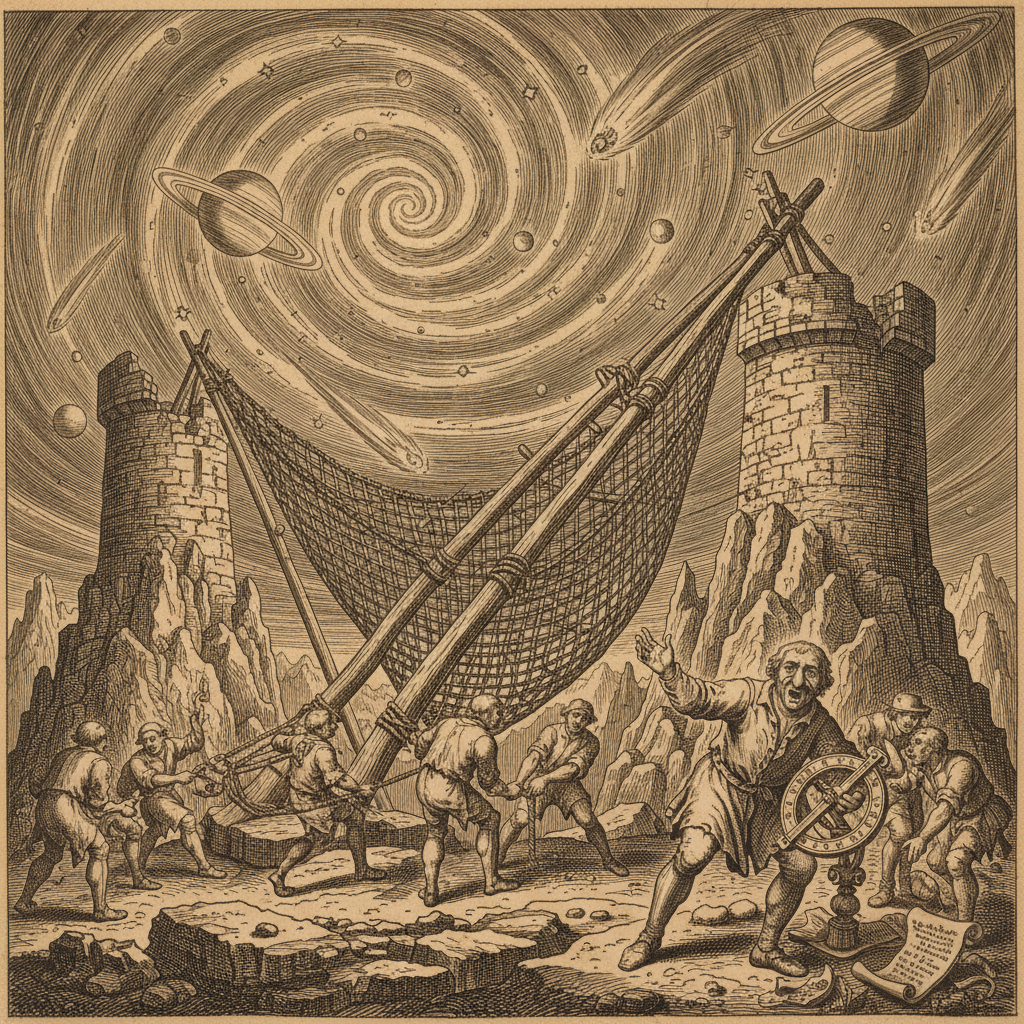
What followed was less a scientific revolution and more the stupidest gold rush in human history. It started with Frederick II, who, fearing the Holy Roman Empire might get all the good asteroids, commissioned the Royal Danish Celestial Prospecting Company. This spurred a consortium of panicked Hanseatic League merchants to launch the “God’s Bounty” fund, intended to finance expeditions to “claim cometary ice for the good of Lübeck.” Spain, smelling profit, declared a royal monopoly on any meteorites that fell in the New World, leading to a brief, bloody war with Portugal over a lump of iron that landed in the Amazon rainforest. The real money, however, was in the grift. Entrepreneurs sold “celestial mining rights” to gullible aristocrats and “anti-shrinkage prayers” printed on expensive vellum. An Englishman named Giles Atherton famously sold shares in a company that planned to build a giant space-net out of consecrated hemp to catch passing bits of Venus.
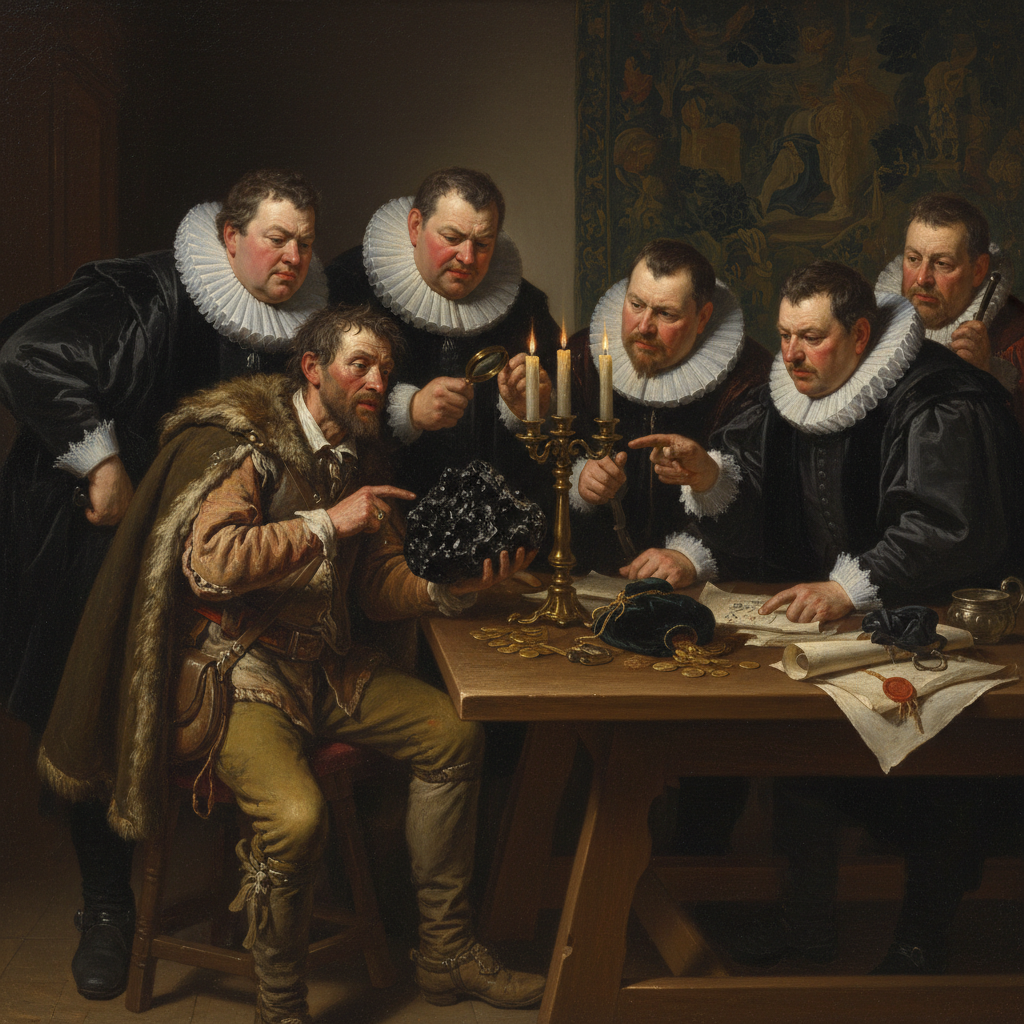
This glorious, continent-spanning pyramid scheme of cosmic panic lasted just under two years. It collapsed not from a scientific refutation, but from a shipping dispute. When a Danish galleon loaded with what its captain claimed were “unrefined moon-rocks” (actually just some interesting-looking granite from Norway) was impounded in Hamburg, the resulting legal battle revealed the entire enterprise to be a cascading series of forgeries, bribes, and breathtakingly optimistic lies. The Celestial Bubble popped. Dukes who had sunk their fortunes into comet-nets were ruined. The Fugger banking family, having narrowly avoided investing, spent the next decade feasting on the bankruptcies of their rivals. Tycho, disgraced, tried to argue that the universe had simply changed its mind and started expanding again, but no one was listening. He quietly deleted the whole affair from his magnum opus, the *Astronomiae Instauratae Progymnasmata*, and went back to just measuring things, never again mentioning that one time he’d nearly bankrupted Europe by miscalculating the position of Mars.