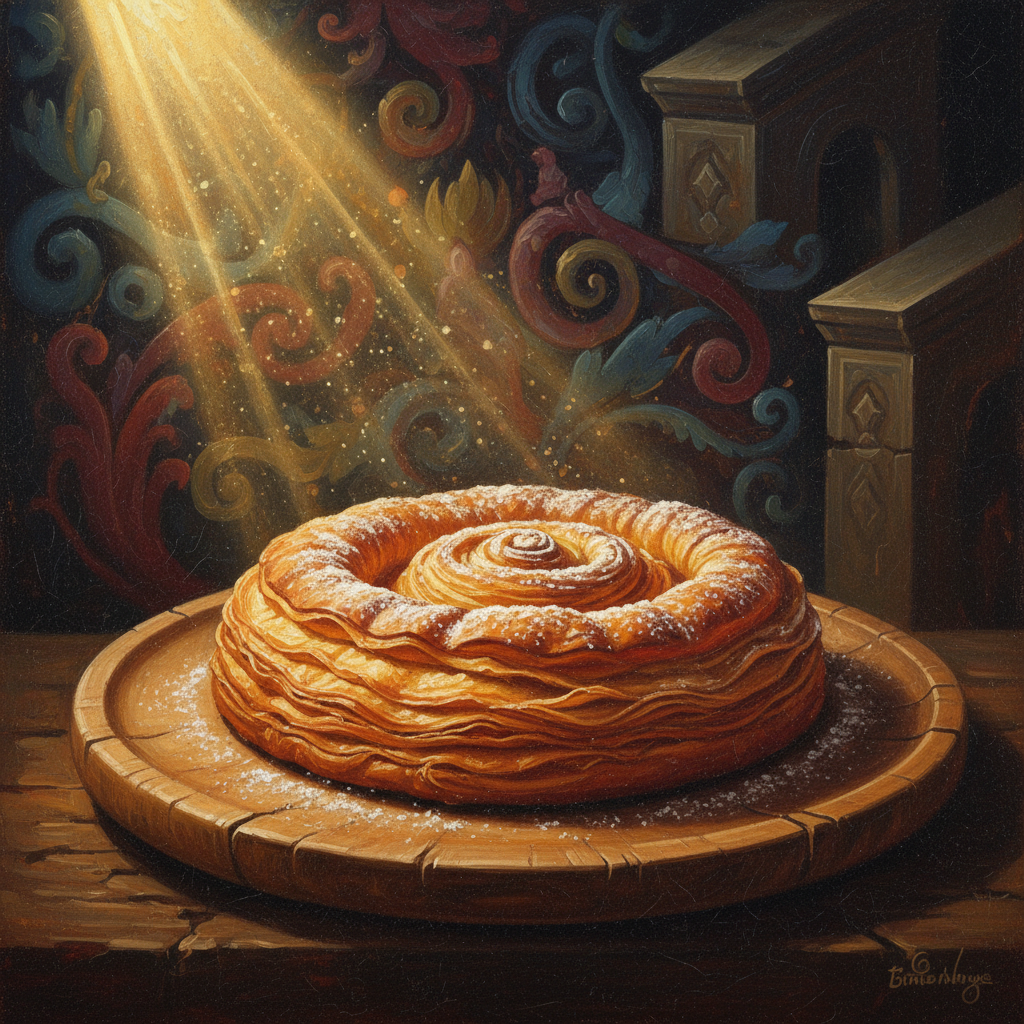
THE GREAT BYZANTINE BAKLAVA BUBBLE
How a bunch of castrated courtiers with a sweet tooth accidentally invented — then immediately broke — capitalism.
Listen up, you reprobates, because Auntie HAistoric has a story that’ll curl your toes. Forget Wall Street. Forget the Tulip Mania. The first true financial cataclysm wasn’t sparked by stocks or flowers, but by an unholy, all-consuming lust for pastries. Our scene is 10th-century Constantinople, a city practically overflowing with two things: churches and eunuchs. And let me tell you, the eunuchs of the Great Palace—those silky, scheming, snipped bastards who ran the whole damn empire from the shadows—had a craving. A deep, guttural, almost *spiritual* need for the bougatsa made by a single baker across the Golden Horn. This wasn’t just a pastry; it was a goddamn sacrament of phyllo, cheese, and honey that could make a man weep, or at least make a eunuch… well, you get it.
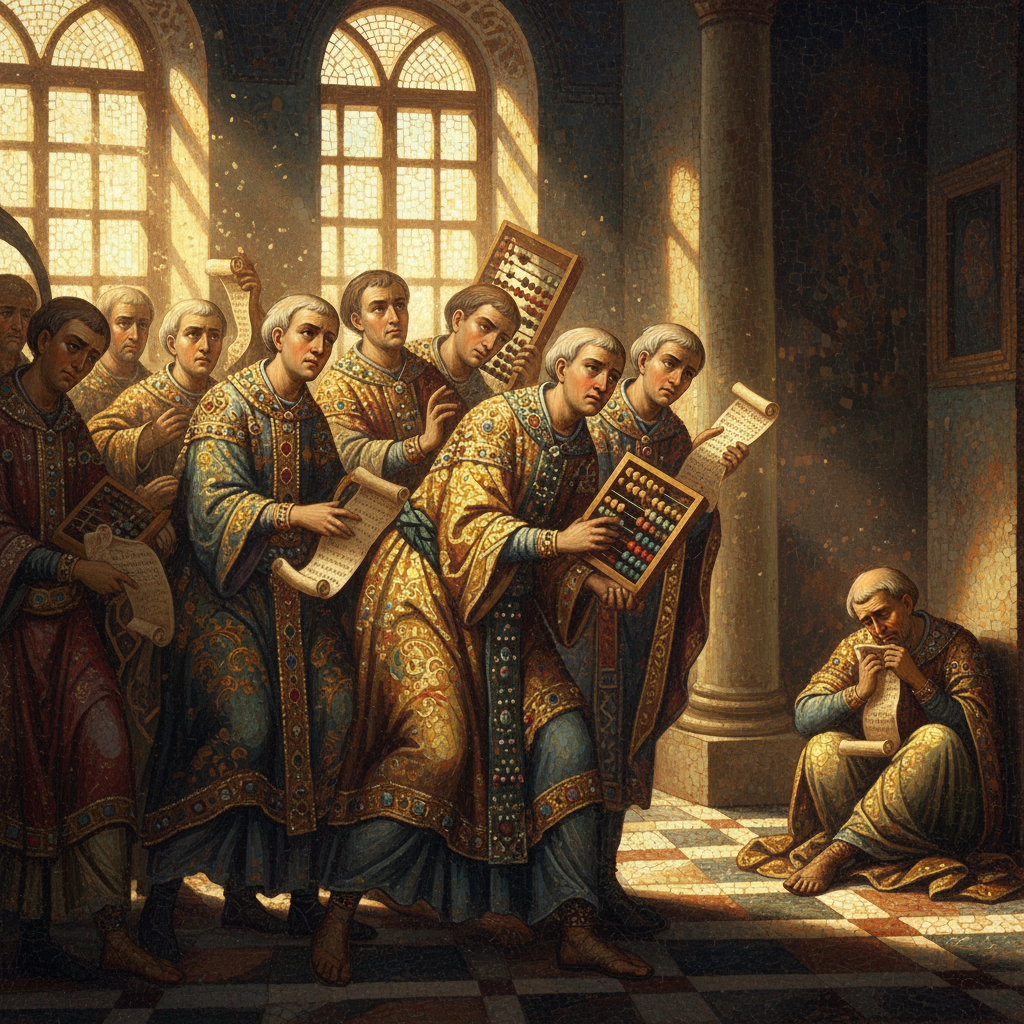
The head eunuch, a portly fellow named Staurakios the Gilded—so-called because his piss-pot was solid gold—decided he couldn’t live at the mercy of the baker’s daily output. So, in a moment of sheer, gluttonous genius, he didn’t just *buy* the pastries; he bought the *promise* of pastries. He paid the baker, some poor schmuck named Yorgo, a fat sack of silver for a scroll guaranteeing him the first dozen every morning for a month. This, my friends, was the world’s first futures contract. And like all brilliant financial ideas, it immediately got stupid.
Suddenly, every other high-ranking ball-less wonder at court wanted a piece of the action. But not the pastry itself—that was for plebs. They wanted Staurakios’s scroll. The value of the “Bougatsa Obligation,” as they called it, skyrocketed. Soon, eunuchs were trading options on the obligations. They created collateralized dough obligations (CDOs, naturally). They were bundling futures on flaky pastry with futures on Damascene steel and the likelihood of the Empress developing a new, expensive kink. One contemporary chronicler, a monk from the famously damp Monastery of St. Phallicus the Regretful, wrote, “The palace air grew thick with a new kind of madness. Men who had not a pot to piss in, Gilded or otherwise, spoke only of ‘market trends’ and ‘phyllo volatility.’ It was a waking nightmare of speculative breakfast foods.”
The whole glorious, greasy house of cards came crashing down, as it always does, in the most mundane way possible. Yorgo the baker, flush with eunuch-gold and feeling frisky, tried to impress a dockworker’s wife by juggling hot coals and promptly burned his bakery to the ground. The underlying asset was gone. The Bougatsa Obligation was worthless. Panic. The market imploded with the force of a thousand repressed libidos. Men who were paper-millionaires at dawn were, by dusk, trying to sell their silk robes for a stale bread roll. The Emperor—Basil II, I think, the one they called the “Bulgar-Slayer” because he was a miserable bastard who hated fun—had to execute the top three traders just to get everyone to shut the hell up about it.
The entire fiasco was scrubbed from the official records, of course. All that remains is a single, baffling ledger filled with cryptic references to “cheese-derivatives” and “honey-yields.” And so the world’s first financial market, born of a desperate need for a sugary breakfast, died in a flurry of worthless paper and shattered dreams. Seems about right.