THE GOD WHO WORE A DRESS AND OTHER OPENING-NIGHT DISASTERS
How a Sanskrit Script Scuttled the Raj’s Dignity with a Riot of Rainbows
Every producer knows the horror of a flop. But only a special kind of imperial imbecile—in this case, Calcutta’s acting cultural attaché, Lord Auberon Finch-Featherstone—could manage to misread the room so badly he accidentally bankrolled a revolution. The year is 1888. Finch-Featherstone, a man whose primary cultural contribution to Bengal was introducing the concept of a truly execrable sherry trifle to Government House, decided the natives needed a dose of their *own* culture. You know, the approved, dusty, dead kind. He tasked some poor bastard at the Asiatic Society with digging up a “suitably ancient and morally upright” Sanskrit play.
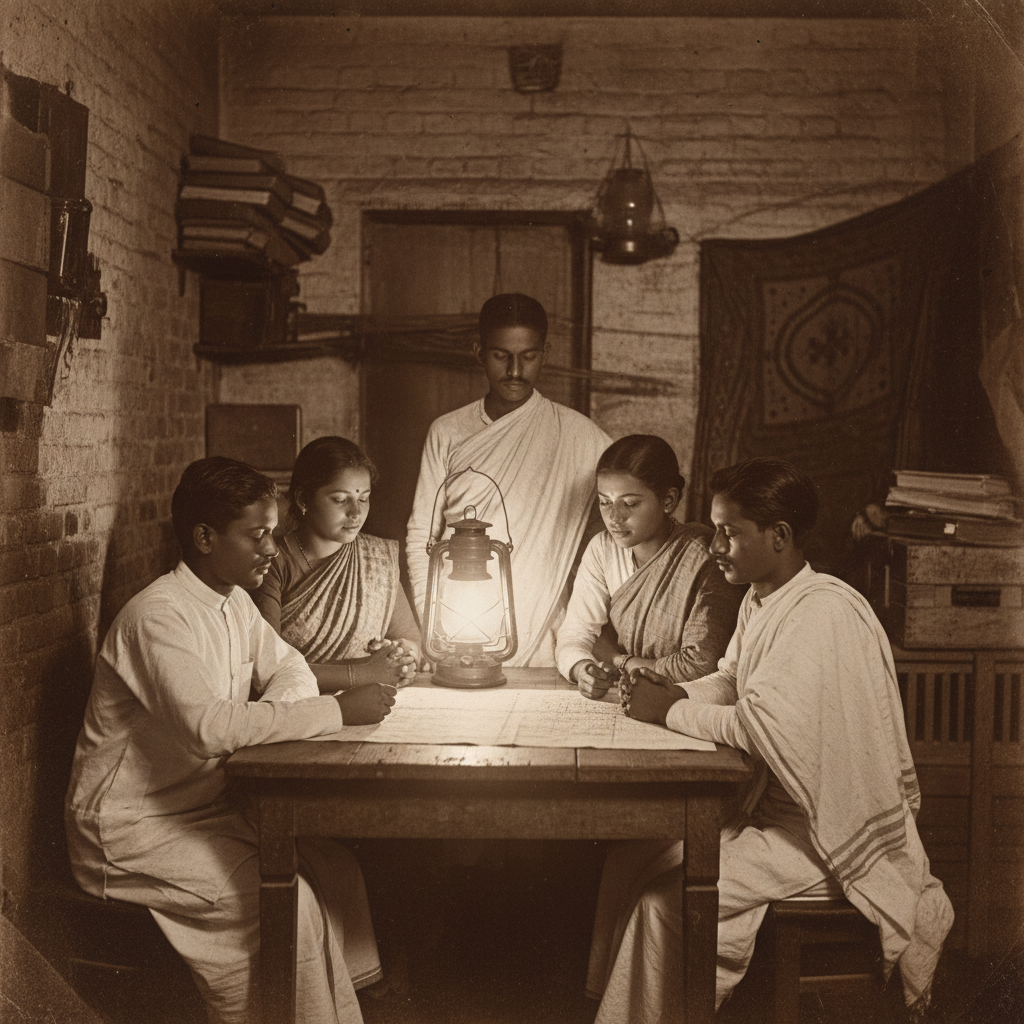
The poor bastard, a junior scholar named Chatterjee who was presumably underpaid and sick of everyone’s shit, delivered gold. Pure, malicious, theatrical gold. He found a fifth-century script, *Nataraja’s Embrace*, a forgotten little number about a local deity who, in the climactic third act, manifests as a gender-fluid being to unite two warring kingdoms by marrying both the prince *and* the princess. It was less a stuffy religious drama and more a divine pansexual rom-com. Chatterjee’s English translation, which he peppered with footnotes about “polymorphous divinity” and “non-dual expressions of the cosmic self,” was handed straight to Finch-Featherstone, who read the title, grunted “Looks frightfully authentic,” and signed the production budget.
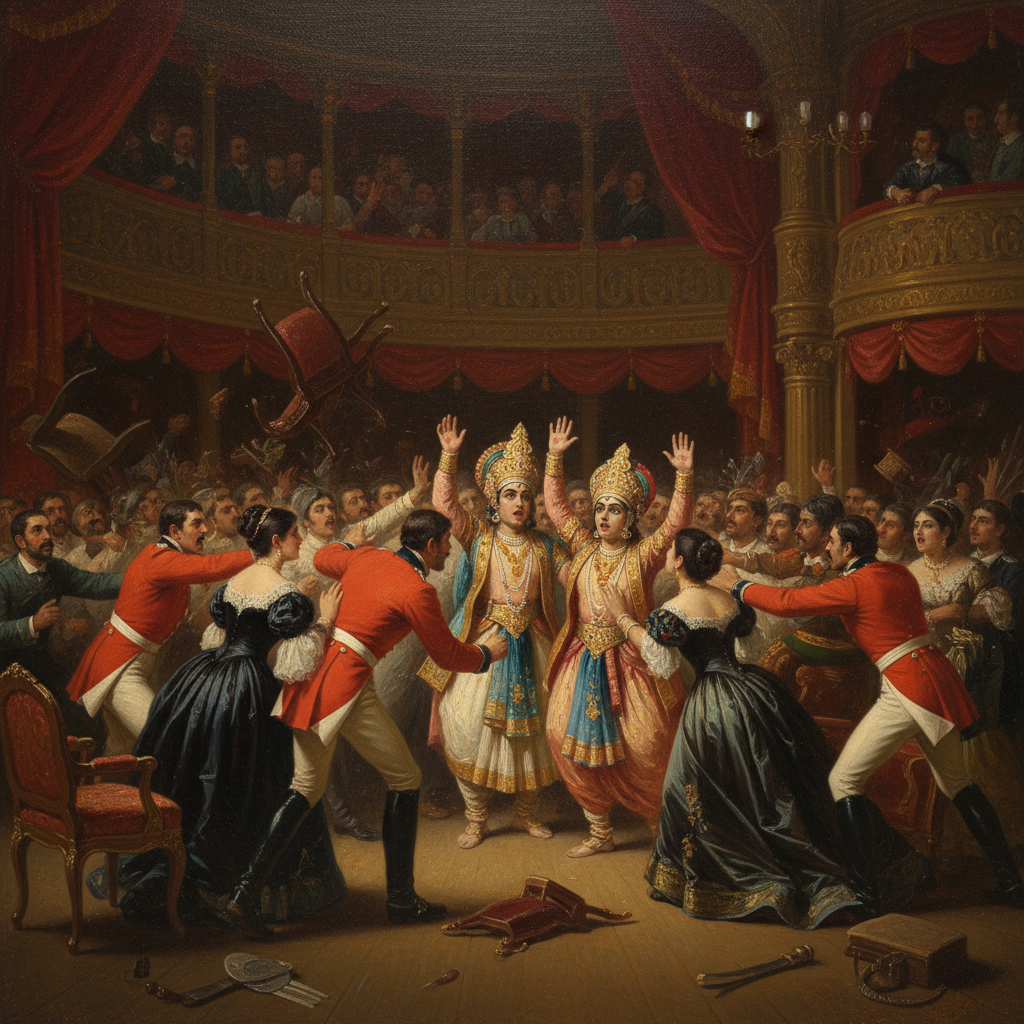
The opening night at Calcutta’s Corinthian Theatre was a masterclass in things going sideways. The first two acts were baffling but tolerable to the British contingent, who mostly commented on the delightful silks. But then came Act III. The lead actor, a charismatic performer named Dev, swaggered on stage in a breathtaking half-sari, half-dhoti costume. He—or she, or they, the grammar of the thing was giving the Dowagers a collective stroke—delivered a fifteen-minute monologue on desire, identity, and the glorious fluidity of the soul that was so profoundly anti-Victorian it might as well have been a declaration of war. An eyewitness—a young Rabindranath Tagore, who was probably taking furious notes—later wrote that the speech “landed like a silk-wrapped brick through the window of a provincial vicarage.”
The Brits were horrified. A colonel’s wife shrieked about “Buggery from Brahma!” But the Indian attendees? The students, the poets, the nascent nationalists? They went absolutely bugfuck wild. The speech wasn’t just a theological argument; it was a perfect middle finger to the rigid, corseted, sexually terrified regime that was telling them how to live. A chair was thrown. Then another. The Brahmin priests were pissed because it was the wrong kind of blasphemy, the nationalists were thrilled because it was the *right* kind, and the British were just…pissed. The ensuing riot spilled out onto Chowringhee Road and became known, in hushed official reports, as “The Unfortunate Incident of the Theatrical Abomination.” The play was banned, its script declared seditious, and Lord Finch-Featherstone was quietly reassigned to a damp corner of Wales where the local culture was limited to disapproving sheep.